


Time is literally running out for the conventional range of computers that we now use. Since the advent of fast and complex systems in the 1960s, all hardware design has been based on the principle of the clock.
This is in the guise of a microelectronic crystal that emits rapid pulses of electricity to synchronise the flow of data. So much so, that such a crystal can be best described as the heart of the Pentium processor and other similar chips.
Despite this apparent success story, progress has now overtaken the ubiquitous clock and turned it into the computer's Achilles heel. The fatal flaw is that computer systems are now so complex that clocks are imposing limitations on performance.
But help is at hand. In response to this massive problem, a group of UK scientists have developed a new generation of hardware blocks and design tools based on the ideas originally introduced in the 1950s. Their asynchronous, or clock-free systems, hold out the exciting promise of extra speed, safety, security and miniaturisation.
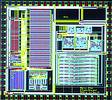
"The new designs already work well in the laboratory and are only awaiting the development of software tools so that they can be produced commercially," says Professor Alex Yakovlev, who leads the team of researchers in the Department of Computing Science at Newcastle University, northeast England.
They presented two groundbreaking papers at an international symposium on advanced research in asynchronous circuits and systems at Manchester, England. One paper explains the latest techniques the team has developed for synthesising asynchronous systems; the other relates to measuring time intervals and what is known as metastability, a problem which may be the cause of the death knell for conventional computers.
The root of the problem here is that electrical pulses, travelling at the speed of light, are not fast enough to keep accurate time as they visit tens of millions of transistors on a single chip. The result is that errors begin to occur in data.
This metastability phenomenon is a fundamental and insoluble problem which is causing increasing difficulty for designers who have to balance the demand for speed and complexity of systems with the need for reliability.
"In binary terms, incoming data has a metastable state in which it is neither true nor false," says Professor Yakovlev. "A resulting system failure would be inconvenient to a PC user and could result in a disaster in an industry where reliability is critical, such as aviation."
Asynchronous systems rely on a protocol of data transmission and acknowledgement which is not regulated by time. This can happen locally in a computer or globally between computers. Data is exchanged by means of a 'handshake', or agreement on the mutually acceptable protocol.
Computer clocks generate heat as well as high frequencies, because they consume large amounts of power. To abolish them would allow portable devices to run on less power, enabling further miniaturisation.
There is an added security bonus with this fresh approach. Hackers would also be troubled by asynchronous systems, because the irregular pattern of data transmission allows the information to be encrypted far more effectively than at present.
Professor Yakovlev believes that the clock-based system is nearing the end of its useful life, with designers facing increasing difficulties as systems become more complex.
"One of the problems is that all graduates entering the industry are immediately taught to design systems with clocks," he adds. "It will be difficult to persuade them to change their ways. We have shown that asynchronous systems work, but we need to develop simple tools for commercial design and testing purposes. In my opinion, this is the last piece of the jigsaw," he added.
One of the barriers is that designing asynchronous systems requires the use of a new hardware design language involving concepts of concurrency, partial order, causality, handshake communication and so on and which are generally unknown to an average electronic engineer.
One such language is called Petri Nets. At Newcastle, scientists are developing a design system which overcomes this problem by automatically translating a Petri Net description of the intended circuit behaviour into an orthodox logic design language as asynchronous circuit designs are mapped out.
Such innovations are making asynchronous technology a more attractive commercial proposition and there are signs that the world is now at the dawn of the transitional period.
Scientists talk of an intermediate class of systems being developed and called GALS for globally asynchronous, locally synchronous. It is an open secret in IT circles that international electronics company Philips has produced an experimental pager built from asynchronous circuits and is developing other devices based on the same principle.
It is also rumoured that a leading manufacturer is designing the next generation of computer processor with at least some asynchronous elements. Time moves on as times change.
For more information contact Mick Warwicker, Newcastle University, 0944 191 222 7850, or see www.cs.nel.ac.uk/people/alex.yakovlev






© Technews Publishing (Pty) Ltd | All Rights Reserved
 printer friendly version