

Power Electronics / Power Management


SABS addresses dangers of power adaptors to consumers

28 October 2020 Power Electronics / Power Management

The increased use of devices and appliances has resulted in the increased use of adaptors as well as adaptors-on-adaptors in South Africa. This creates a risk of fires, short circuiting and damage or malfunction of appliances. South African National Standard (SANS) 164-0 covers the specific requirements for plugs, sockets and adaptors and will lead to a new range of plugs and sockets in South Africa. The South African Bureau of Standards (SABS) demonstrated the new range of plugs and sockets in a virtual media briefing held in early October.
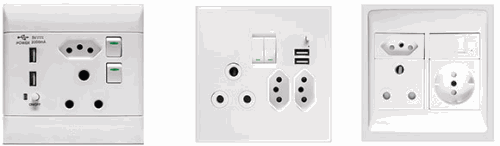
Figure 1. Examples of new socket installations.

“With the array of appliances and devices that have become commonplace in today’s world, it is critical to ensure that the plugs and sockets are also changing to accommodate the more compact designs of plugs. New homes and offices should be fitted with the sockets according to the latest revision of SANS 164-0 and the different parts. We need to be aware of the improved switching arrangements of switched socket outlets, the inclusion of SANS 164-2, compact design for 16 A plugs and most importantly the warnings that advise consumers not to use multiple adaptors plugged into one another,” says Jodi Scholtz, lead administrator of SABS.
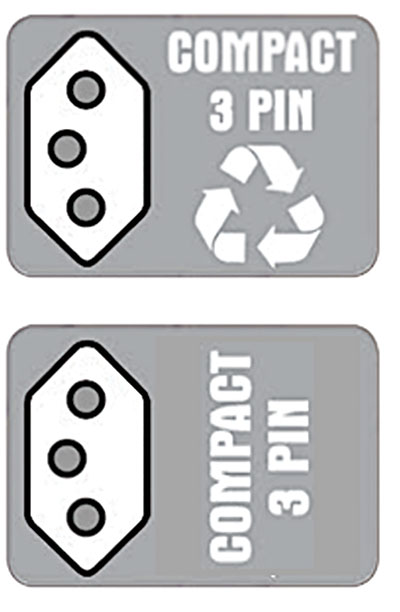
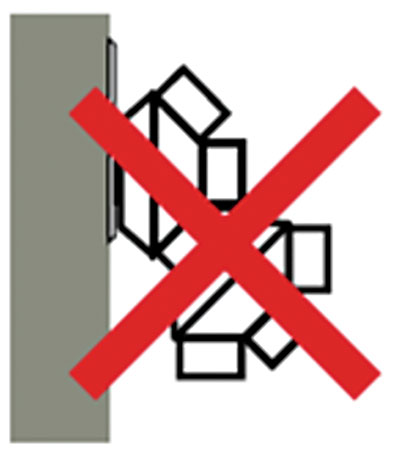
Figure 2. Logos for rewireable (top) and non-rewirable (bottom) plugs and socket outlets.


Figure 3. Warning sign to prevent multiple adaptors being plugged into one another.

The revisions to the standard, published in July 2020, incorporate changes in technology covered in SANS 60884-1: Plugs and socket outlets for household and similar purposes. SANS 60884-1 is an adoption of the International Electrotechnical Commission (IEC) 60884-1 standard which also covers the general requirements for plugs and socket outlets.

New socket installations

In the last few years, various iterations of the new design have been available on the market (some of which are shown in Figure 1), which accommodate the following types of plugs:

• 3-pin plugs (old type).

• Compact 3-pin plugs.

• USB outlets.

• Switches.

Summary of the amendments in SANS 164-0

• Reducing the minimum clearance of an adaptor body to socket outlet surface to 8,0 mm from 12,0 mm.

• Introducing the symbol for adaptors not permitted to be plugged into one another in order to avoid straining the socket outlet. This was due to a safety risk to the consumer as the straining of the socket outlet can cause a short circuit between the neutral and live pins. This symbol has to be embossed on the adaptor to warn consumers on the danger of plugging adaptors into one another.

• Examples are provided to show how multiple switched socket outlets for fixed installation should be switched.

• Since 2018 the wiring code (SANS 10142-1)

requires socket outlets in electrical installations to meet SANS 164-2, at every socket outlet point, however other configurations (such as SANS 164-1) may also be installed onto the same outlet.

• The changes in SANS 164-0 are generic to all the SANS 164 series of standards, namely Part 1 to Part 6. This means that SANS 164 series plugs and socket outlets have to comply with SANS 164-0.

The SANS 164 series falls under SABS Technical Committee (TC) 067 Sub-committee (SC) 03 titled ‘Electricity distribution systems and components: Electrical accessories’. The scope of the TC covers standards for electrical accessories such as switches, plugs and socket outlets, home automation devices, connectors, adaptors, couplers, cord extension sets and conduits (cable management systems) for use in household and similar low-voltage applications.

The TC067 SC03 consists of representatives from associations, manufacturers, regulators, power utility, testing laboratories, government departments and academic institutions. Should any member of the public be interested in joining the SC, they are welcome to submit their interest via www.sabs.co.za.




Share this article:
Share via emailShare via LinkedInPrint this page

Further reading:

Powering the IoT
Uniross Batteries Power Electronics / Power Management
Choosing the right battery is not simply a technical detail, but a defining factor in the longevity and cost-effectiveness of any IoT deployment.

Read more...
The move to DC infrastructure
IOT Electronics Power Electronics / Power Management
The shift toward direct current infrastructure in data centres is accelerating as operators pursue higher efficiency, improved reliability, and stronger alignment with renewable energy goals.

Read more...
Power inductor for automotive applications
Würth Elektronik eiSos Power Electronics / Power Management
The WE-MXGA inductor features RDC values up to 25% lower and a saturation current up to 47% higher compared to other components currently available on the market.

Read more...
High-performance DC-DC converter
Conical Technologies Power Electronics / Power Management
With a wide 9 - 40 V DC input range, the Claf Power DWHB400-F24xxN series is a high-performance DC-DC converter family ideally suited for 12 V and 24 V battery-based systems including vehicles, off-grid installations, and distributed power architectures.

Read more...
DC-DC converters for next-generation IoT
iCorp Technologies Power Electronics / Power Management
AIPUPOWER’s K78XXJT-500R3 and K78XXJT-500R3-LB give designers a compact, high-efficiency power option for battery-powered and space-constrained systems, combining up to 96% efficiency with no-load input current as low as 0,2 mA.

Read more...
240 W in compact form factor
Brabek Power Electronics / Power Management
The cost-effective and reliable RECOM RACPRO1-S240E DIN-rail mount AC-DC series is only 125 x 139 mm and 39 mm wide, yet provides 240 W output.

Read more...
You cannot manage what you cannot measure
Power Electronics / Power Management
South African sites are generating solar energy. Most still have no idea what is consuming it… or when, or why. Intelligent load management hardware is changing that.

Read more...
Scalable and intelligent power solution
Power Electronics / Power Management
Designed for Africa’s rapidly evolving energy landscape, Bluetti’s ES125 offers a scalable, intelligent power solution that delivers reliable and cost-efficient electricity for uninterrupted operations.

Read more...
Simulating grid abnormalities
Conical Technologies Power Electronics / Power Management
Simulating grid abnormalities has become an essential part of validating systems such as inverters, UPS units, photovoltaic inverters, and EV charging infrastructure.

Read more...
Evaluation board for STPMIC25 PMIC
Power Electronics / Power Management
The STEVAL-PMIC25V1 is a power management IC evaluation board for the highly integrated STPMIC25, which is designed to manage the power requirements of the core, memory, and interfaces of the STM32MP2x series MPU.

Read more...


While every effort has been made to ensure the accuracy of the information contained herein, the publisher and its agents cannot be held responsible for any errors contained, or any loss incurred as a result. Articles published do not necessarily reflect the views of the publishers. The editor reserves the right to alter or cut copy. Articles submitted are deemed to have been cleared for publication. Advertisements and company contact details are published as provided by the advertiser. Technews Publishing (Pty) Ltd cannot be held responsible for the accuracy or veracity of supplied material.


© Technews Publishing (Pty) Ltd | All Rights Reserved