

Power Electronics / Power Management


Double the power output from new Tadiran battery

25 November 2020 Power Electronics / Power Management

Tadiran has developed the latest in its PulsesPlus HLC battery range, doubling the power output of its previous offering.

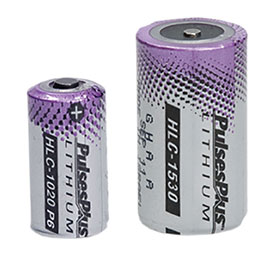
Recently the company launched the C-type HLC which represented a huge improvement from a power perspective in comparison to former generations. Now it has introduced the P6 generation, small sized HLC-1020P6 which again doubles the power capability of the renowned PulsesPlus battery.

This technology enables a small component in a 1/2 AAA form factor to deliver power for all available radio protocols together with additional advantages: it needs less installation space which is especially important for IoT applications such as small smart sensors. Secondly, smaller cells with the power of considerably larger products are just more cost-efficient.

Requirements for an electrical energy source in the metering and IoT industry are demanding. Despite a long lifetime of up to 20 years these decentralised systems have the need to cover high current peaks of various radio protocols existing in the market. To provide a reliable solution for this industry, Tadiran invented the PulsesPlus technology which combines an ultra-low self-discharge lithium thionyl chloride battery with a hybrid layer capacitor (HLC). The battery stores the energy while the hybrid layer capacitor provides the power for pulses.
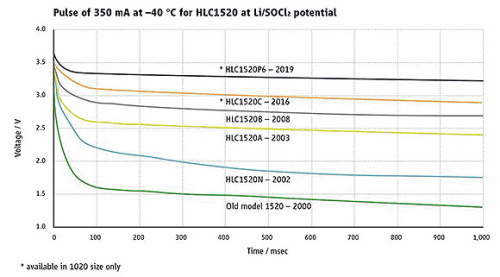
Figure 1. Improvements across Tadiran HLC generations.

Both components are made from high-quality raw materials refined in a precisely engineered manufacturing process. The result is an optimal power supply for any long-term application in even harsh environments.

Nevertheless, there is always room for improvement to add value to the market by new innovative solutions. Consequently, in the past the lithium thionyl chloride system was optimised in capacity, self-discharge and voltage loss. The time was therefore right to focus research on the hybrid layer capacitor, responsible for providing power for radio and other pulses over the full temperature range from -40°C up to +85°C. The task was to gather more power capability into a given form factor.

Figure 1 shows the development of the Tadiran HLC performance over the years when undergoing a pulse of 350 mA at -40°C.

The performance of the first HLC in the year 2000, generating a voltage of approximately 1,3 V after 1 msec, has improved generation upon generation. While the B-type model (developed in 2008) was designed to deliver approximately 2,7 V under defined conditions, the P6-type is the first system that clearly exceeds the 3,0 V barrier.

At the same time the other advantages of HLC technology remain valid:

• Only one power-providing component up to 3,9 V level.

• No balancing needed.

• Extra low self-discharge over the entire lifetime.

• No negative ageing effects.

• High equivalent capacity to cover long pulses.


Credit(s)


Share this article:
Share via emailShare via LinkedInPrint this page

Further reading:

Quality batteries are critical for IIoT
Uniross Batteries Power Electronics / Power Management
Batteries intended for use in industrial operations must indeed offer complete reliability under extreme environmental conditions, resistance to vibration and harsh environments.

Read more...
12 kW hybrid inverter
Power Electronics / Power Management
Sungrow recently unveiled its next-generation residential energy storage solution, expanding its power range from 5 kW to 12 kW with the introduction of the new MG12RL hybrid inverter.

Read more...
40 W and 75 W railway DC/DC converter
Brabek Power Electronics / Power Management
RECOM has announced two new cost-efficient DC/DC converters for the rail market with an ultra-wide 11:1 input range to cover all nominal input voltages from 24 to 110 V DC.

Read more...
Power modules for solid-state transformers
RS South Africa Power Electronics / Power Management
Microchip’s new 3,3 kV silicon carbide modules deliver the required thermal performance and efficiency for SSTs to increase power available for token generation.

Read more...
Solving South African power problems with locally built intelligence
Editor's Choice Power Electronics / Power Management
Smart metering infrastructure in South Africa remains patchy. The rollout has been slow, coverage is inconsistent, and for the most part, granular per-unit measurement simply does not exist.

Read more...
Wide range power module
Power Electronics / Power Management
The latest DC-DC modules from Würth Elektronik are characterised by high resilience to voltage transients on the 24 V bus and an extremely wide input-voltage range from 3,5 V to 38 V.

Read more...
Generating negative voltages from a positive supply
Altron Arrow Editor's Choice Passive Components
It is common for IoT devices, industrial sensors, meters, and medical equipment to require both a positive and negative voltage, and this article explains the options available to produce a negative rail from a positive rail supply.

Read more...
Addressing latency and signal integrity challenges
Altron Arrow DSP, Micros & Memory
Strengthening Microchip Technology’s data centre solutions portfolio, its XpressConnect retimers support high-bandwidth architectures, while helping reduce integration complexity.

Read more...
Precision timing in compact package
Altron Arrow Telecoms, Datacoms, Wireless, IoT
Designed for use in harsh environments, the EX-423 incorporates a four-point mounted quartz crystal structure that improves shock resistance and reduces g-sensitivity.

Read more...
Selecting primary batteries for maximum service life
Uniross Batteries Power Electronics / Power Management
Primary batteries play an important role in IoT applications. Designed for longevity, they have a high-energy capacity and are often used in standalone applications where charging is impractical or impossible.

Read more...


While every effort has been made to ensure the accuracy of the information contained herein, the publisher and its agents cannot be held responsible for any errors contained, or any loss incurred as a result. Articles published do not necessarily reflect the views of the publishers. The editor reserves the right to alter or cut copy. Articles submitted are deemed to have been cleared for publication. Advertisements and company contact details are published as provided by the advertiser. Technews Publishing (Pty) Ltd cannot be held responsible for the accuracy or veracity of supplied material.


© Technews Publishing (Pty) Ltd | All Rights Reserved

