



[Sponsored] In a world increasingly defined by connected systems, edge intelligence, and accelerating automation, the ability to build scalable, responsive, and maintainable engineering applications has never been more essential. At the heart of this evolution lies LabVIEW – a platform that empowers engineers with a seamless interface between software logic and real-world hardware.
LabVIEW enables rapid development of sophisticated measurement, control, and data acquisition systems without the overhead of traditional programming. As industries and academia in South Africa push toward smart infrastructure, advanced manufacturing, and STEM education reform, LabVIEW stands out as a strategic enabler of innovation.
Why LabVIEW still leads in 2025
LabVIEW’s continued relevance comes down to one word: automation. With native support for hardware abstraction, real-time processing, and system-level integration, LabVIEW allows engineers to focus on design and functionality instead of debugging thousands of lines of code.
Its graphical environment simplifies the creation of rich user interfaces, event-driven architectures, and parallel processing systems. Engineers can prototype faster, iterate more efficiently, and deploy scalable solutions that meet the increasing demands of modern engineering.
Beyond productivity, LabVIEW supports multi-core processors, FPGAs, and real-time systems right out of the box. Its ecosystem integrates seamlessly with Python, REST APIs, cloud platforms, and databases – making it an ideal fit for digital transformation efforts across Africa.
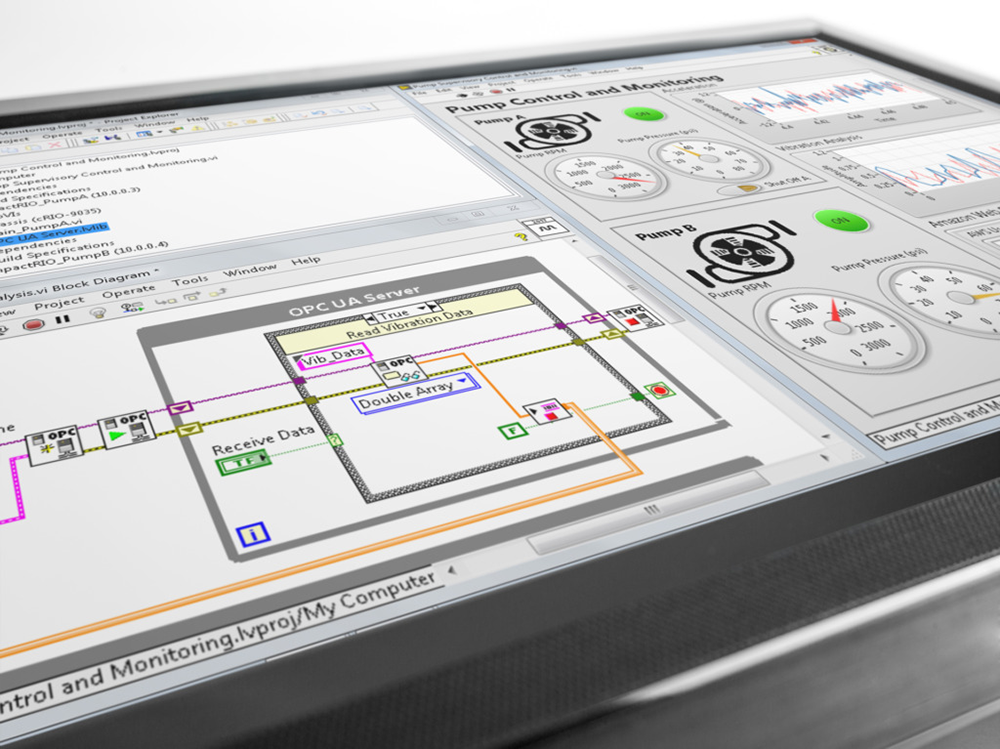
The architecture behind scalable automation
Modern engineering systems demand modularity and maintainability. LabVIEW offers architectural frameworks such as the Queued Message Handler (QMH), Actor Framework, and Delacor QMH, enabling engineers to manage asynchronous events, separate logic layers, and build robust applications that grow without collapsing.
These frameworks empower teams to build clean, testable modules that support collaboration, reduce downtime, and ensure long-term reliability. Whether developing a test bench, embedded system, or factory automation solution, LabVIEW helps teams stay focused on innovation instead of infrastructure.
Bridging hardware and high-level control
South Africa is entering a new phase of industrial development. From grid modernisation and smart metering to defence systems and health tech, engineers need tools that bridge the gap between sensors and strategic decision-making.
LabVIEW accelerates this bridge. Its intuitive interface and broad hardware compatibility mean faster time-to-market, lower development costs, and reduced need for low-level firmware or external development resources. For universities, it provides a gateway to real-world tools used in global R&D; labs, aligning education with emerging industry expectations.

Future-ready: AI, cloud, and real-time insights
LabVIEW is not standing still. New integrations enable interoperability with Python-based AI models, cloud dashboards via SystemLink, and gRPC APIs for remote monitoring and control. This makes LabVIEW not only a development tool but a strategic platform for integrating AI and IIoT features using standardised interfaces and protocols.
Engineers can now design systems that support predictive diagnostics, autonomous testing, and real-time feedback loops – all within a single graphical environment. These capabilities will be essential as African industries scale up their ambitions in global value chains.
The takeaway
Engineering today is not just about solving problems. It is about building frameworks that adapt, systems that scale, and interfaces that empower. LabVIEW continues to be the platform where these elements converge.
For South African engineers, researchers, and educators, now is the time to explore what LabVIEW can unlock. Whether you are automating a factory, upgrading a lab, or launching a startup, LabVIEW offers a future-focused toolkit to help you lead with confidence.
As an NI Authorised Distributor, McKinsey Electronics supports engineers and educators across the region in adopting advanced test and automation platforms, including LabVIEW. Through regular delivery of LabVIEW Core 1 and Core 2 programs, McKinsey Electronics helps professionals build foundational and intermediate skills aligned with the Certified LabVIEW Associate Developer (CLAD) certification. These trainings provide a strong basis for those seeking to validate their LabVIEW proficiency and pursue roles in system integration, test engineering and automation development.
McKinsey Electronics will offer a free 5-day LabVIEW Core 1 & 2 training this October in South Africa. Early-bird registration opens next month. Stay tuned.






© Technews Publishing (Pty) Ltd | All Rights Reserved
 printer friendly version