



ABB Electrification is charting a bold path towards a net-zero future with its Mission to Zero programme, a blueprint that combines energy efficiency, electrification, and digital innovation to accelerate the transition to clean energy. By setting ambitious targets for its own operations and empowering customers to follow suit, ABB is helping build a more sustainable, resilient energy system, both globally and here in South Africa.
“ABB’s Mission to Zero reflects our commitment to environmental stewardship and social responsibility, aligning closely with global sustainability goals and South Africa’s Just Energy Transition objectives,” says Bradley James, product marketing director, Electrification Distribution Solutions (ELDS) South Africa. “Our aim is to decarbonise operations, while enabling industries, municipalities, and utilities to do the same through technology, innovation, and collaboration.”
Blueprint for Net Zero
Mission to Zero is ABB’s strategic initiative to achieve zero emissions, zero accidents, and zero waste across its operations while supporting customers in reaching their own carbon neutrality goals. By 2030, ABB aims to achieve net-zero emissions at its global factory sites.
The programme’s approach rests on four pillars:
• Planning: Developing a clear roadmap to net-zero operations.
• Innovation: Implementing electrification, EV infrastructure, and energy-efficient processes, supported by ABB’s energy management systems.
• Sustainability: Setting and achieving measurable targets, such as reducing CO2 emissions by 15% or increasing renewable energy usage by 15%.
• Monitoring: Continually evaluating performance with digital solutions that provide real-time insights into energy use and efficiency.
“By combining the right applications with carefully designed energy architectures, our customers can achieve significant reductions in carbon emissions and energy losses, while also realising cost savings and meeting environmental certification requirements,” explains James.
Lessons from global sites
The Mission to Zero blueprint has already been applied at ABB sites around the world, with measurable results. At ABB’s Dalmine factory in Italy, for example, the integration of PV, smart energy management, and asset monitoring technologies has enabled the site to generate more than 20% of its own energy during summer months. Over two years, it has cut CO2 emissions by more than 2200 tons.
ABB has also promoted circularity by certifying products and processes through life cycle assessments and environmental product declarations. These initiatives ensure that sustainability is embedded not only in operations, but in the full lifecycle of ABB’s products.
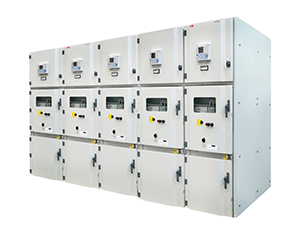
Closer to home, ABB’s South African operations have embraced Mission to Zero principles by manufacturing Compact Secondary Substations (CSS) locally and introducing new SF6-free gas switchgear solutions, reducing reliance on greenhouse gases.
Addressing South Africa’s power challenge
In a country grappling with loadshedding and grid instability, energy efficiency and innovation are critical. ABB sees the challenge as an opportunity to foster resilience and reduce dependency on fossil fuels. “Currently what we are witnessing is a lack of available power for our country as a whole, forcing our utility to implement loadshedding and load reduction,” notes James.
“Our business pushes our manufacturing facilities to utilise less power while respecting our environment and executing it safely. This promotes development and innovation in ABB to be more creative in generating, storing, and utilising power more efficiently, reducing reliance and stress on our electricity grid.”
Technologies such as microgrids, battery energy storage, and advanced power management systems are central to ABB’s solutions. These enable local businesses and municipalities to integrate renewable energy, optimise consumption, and improve energy security.
Energy Efficiency Movement
ABB also champions the Energy Efficiency Movement (EEM), a global initiative designed to accelerate the adoption of energy efficiency solutions. Through collaboration, the EEM enables stakeholders to share best practices, drive innovation, and unlock energy-saving strategies.
“Local companies can get involved by joining the EEM, participating in events, conducting energy audits, upgrading to energy-efficient equipment, and encouraging employee engagement in energy-saving practices,” says James.
ABB’s technologies are well aligned with South Africa’s Just Energy Transition (JET), which seeks to balance decarbonisation with energy security and inclusive economic growth. “ABB can play a pivotal role in supporting South Africa’s net zero and climate goals through our advanced technologies, local presence, and global expertise in clean and resilient energy systems,” James explains. “We can accelerate renewable energy integration, promote efficiency, and support grid modernisation, which is critical to enabling a sustainable, inclusive energy transition.”
The role of digitalisation
Digital technology is at the core of ABB’s Mission to Zero. Smart energy management solutions, data-driven insights, and advanced automation allow organisations to make informed, real-time decisions about power use. “At ABB, we believe digitalisation is key to unlocking a low-carbon future,” James stresses. “Our digital technologies give customers the visibility, intelligence, and control needed to manage energy more sustainably, transforming ambition into action on the path to net zero.”
One example is ABB’s SSC600 SW, the first virtualised protection and control solution for smart substations. By decoupling software from specific hardware, customers can consolidate multiple systems on a single platform, reduce maintenance costs, and optimise IT infrastructure, all while maintaining robust power protection and control.
“This is a game-changer,” says James. “It not only simplifies operations, but also contributes directly to energy efficiency and sustainability goals.” ABB’s Mission to Zero goes beyond internal sustainability; it is about setting an example and enabling others to follow. From embedding circular economy principles into product design to advancing digitalised energy management, ABB is showing what is possible when innovation meets commitment.
“As a business, we see sustainability not just as a responsibility, but as an opportunity to innovate and create value,” concludes James. “Mission to Zero is about driving change within ABB, across industries, and in communities. By working together, we can move towards a future that is cleaner, smarter, and more resilient.”
For more information contact ABB Electrification,
| Tel: | +27 10 202 5067 |
| Email: | liatile.erasmus@za.abb.com |
| www: | www.abb.co.za |
| Articles: | More information and articles about ABB Electrification Products |






© Technews Publishing (Pty) Ltd | All Rights Reserved
 printer friendly version