



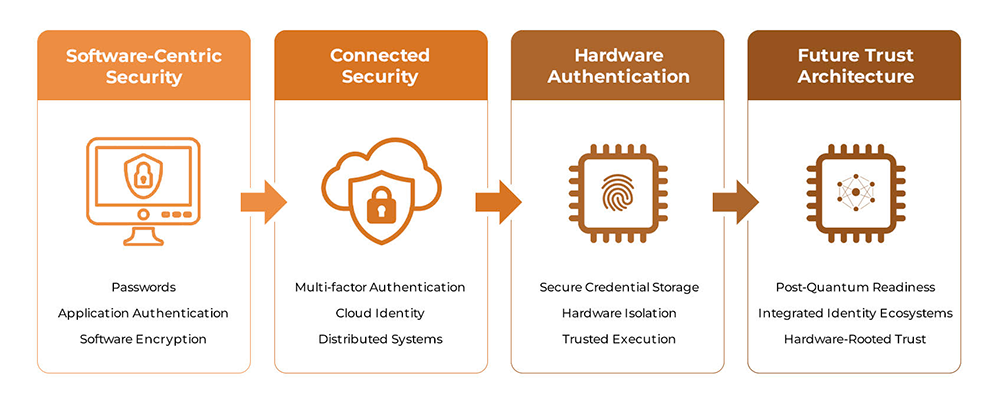
[Sponsored] For years, many enterprise security architectures treated hardware primarily as the execution layer, while software handled authentication, access control and trust decisions. That model is beginning to shift. As connected systems become more distributed, longer-lasting and exposed to future cryptographic risks, authentication is moving closer to the silicon level.
This transition is becoming increasingly relevant as security environments extend far beyond traditional enterprise networks. Industrial systems, communications infrastructure, transportation platforms, healthcare technologies and connected edge devices increasingly operate as highly distributed ecosystems with lifecycles extending ten years or more. Authentication architectures integrated into these environments increasingly require a long-term perspective that extends beyond immediate deployment requirements.
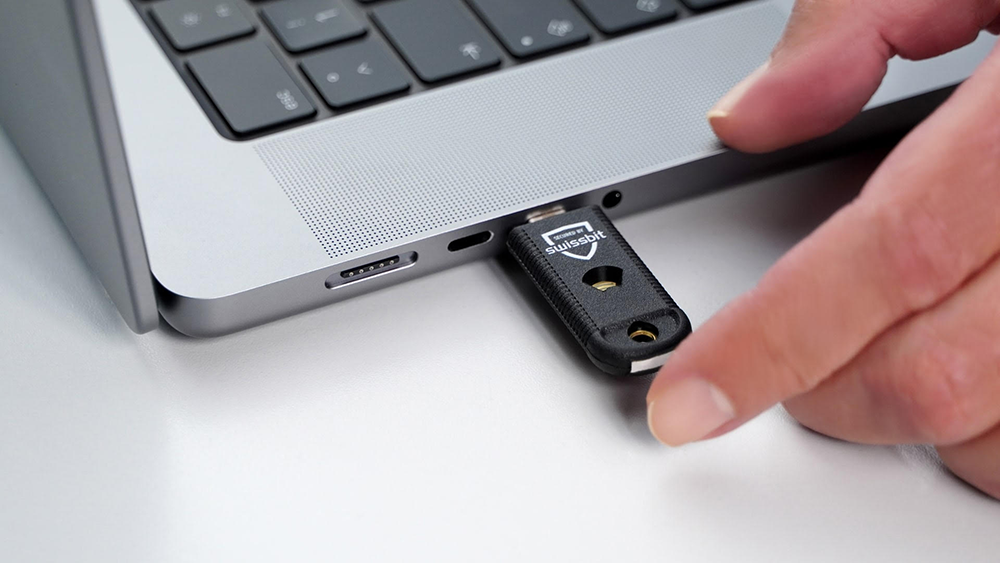
Swissbit’s recent iShield Key developments reflect this broader transition occurring across identity and security architectures. Through its roadmap, the company expanded its hardware authentication capabilities by introducing HID Seos integration for converged physical and digital access, while presenting an iShield Key Post-Quantum Cryptography Evaluation Platform designed to support future authentication environments. Swissbit also previewed face biometric verification with liveness detection as part of its longer-term direction. Together, these developments indicate a larger movement toward hardware-based identity and future cryptographic readiness rather than isolated feature additions.
This transition is becoming increasingly important because security environments continue expanding beyond conventional enterprise networks and computing platforms. Industrial systems, communications infrastructure, transportation systems, healthcare technologies and connected edge devices now operate as part of highly distributed ecosystems that frequently remain active for ten years or longer. Authentication and trust architectures embedded in these systems, therefore, require a lifecycle perspective that extends well beyond current deployment requirements.
Post-quantum cryptography discussions frequently focus on future computational capabilities, yet the engineering implications already influence present-day design decisions. Security researchers and infrastructure providers increasingly evaluate scenarios involving long-term data protection, in which information encrypted today may continue to carry strategic or operational value for many years.
This consideration is commonly associated with ‘store now, decrypt later’ scenarios, in which encrypted information captured today could become accessible through future quantum computing capabilities. The practical timeline for quantum systems capable of compromising current public-key cryptographic methods continues to evolve, yet engineering teams designing long-lifecycle systems increasingly view future readiness as an architectural consideration rather than a distant research topic.
The industry response accelerated through the standardisation of post-quantum cryptographic approaches, including
The implementation stage introduces engineering considerations that directly influence hardware design. Traditional public key cryptographic systems, such as RSA and ECC, rely on number-theoretic problems, such as integer factorisation and discrete logarithms, and comparatively compact key structures. Post-quantum approaches frequently use lattice-based mathematical operations involving polynomial transformations, matrix calculations and larger cryptographic structures. These differences influence several system parameters simultaneously.
Memory allocation requirements increase because larger keys and certificates require more storage. Processing workloads evolve because computational operations involve different mathematical behaviours. Power consumption characteristics also change because authentication functions increasingly require additional computational activity. Security implementations similarly require greater attention to timing behaviour, electromagnetic emissions, and power analysis considerations.
These factors increasingly move security architecture closer to the silicon layer.
Swissbit's recent authentication developments illustrate how this transition is beginning to appear in practical hardware implementations. The company's iShield Key platform initially focused on FIDO authentication and phishing-resistant access mechanisms. Recent additions extend this architecture beyond conventional authentication workflows by integrating physical and logical access environments into a unified hardware model. HID Seos support enables the same device to operate across physical access systems and secure digital authentication environments, while maintaining a hardware-rooted security architecture.
The significance extends beyond combining multiple functions in a single device, as this approach shifts the source of trust.
Organisations traditionally operate separate authentication infrastructures across physical and digital environments. Employees often use badges for facility access while maintaining independent authentication methods for digital systems and applications. Unified hardware authentication architectures create an opportunity to consolidate identity functions within a protected hardware environment where authentication credentials and cryptographic operations remain isolated from broader software layers.
Swissbit's Post-Quantum Cryptography Evaluation Platform further demonstrates this architectural direction by focusing on evaluating authentication flows, integration requirements, and user experience considerations ahead of finalised specifications and certification processes. This approach shifts discussions toward practical implementation rather than theoretical algorithm comparisons.
Another important aspect of Swissbit's recent direction involves shifting security discussions from authentication functions toward authentication ecosystems. Hardware authentication historically focused on credential storage and user verification, while future deployment environments increasingly require interaction across identity platforms, access systems and evolving security frameworks. The integration of digital authentication with physical access environments through technologies such as HID Seos illustrates how trust mechanisms are becoming interconnected across broader operational infrastructures.
This becomes particularly relevant for industrial environments and critical systems where users, devices and applications increasingly operate within shared security architectures. Hardware-rooted identity platforms can therefore support a more consistent trust model across multiple environments, while simplifying authentication workflows and creating greater continuity throughout system lifecycles. Swissbit's recent developments suggest that authentication technologies are evolving toward integrated security architectures that extend beyond conventional access control functions.
The engineering relevance becomes increasingly evident in embedded and industrial environments, where processing capability, thermal conditions, memory resources, and power budgets operate within defined boundaries. Cloud infrastructure can generally accommodate additional computational requirements by scaling resources. Embedded systems frequently require more precise architectural planning because future security capabilities directly affect hardware resources and long-term system behaviour.
The broader direction visible through Swissbit's roadmap reflects a familiar pattern previously observed across semiconductor development. Signal processing functions moved toward dedicated engines. Artificial intelligence increasingly relies on hardware acceleration. Power management capabilities evolved toward specialised silicon environments. Security increasingly follows a similar path, in which authentication, identity management, and cryptographic processing become integrated architectural functions rather than isolated software layers.
For engineering teams developing systems expected to operate over the next decade, post-quantum readiness is increasingly a system-level design consideration involving trust architecture, hardware capabilities, and lifecycle continuity.
As an authorised Swissbit distributor in South Africa, McKinsey Electronics supports regional engineering teams by providing access to technologies that align authentication, hardware security, and trusted storage architectures with evolving system requirements and long-term deployment strategies.
For more information visit McKinsey Electronics,






© Technews Publishing (Pty) Ltd | All Rights Reserved
 printer friendly version