


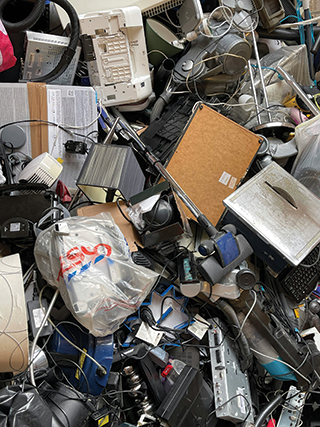
Every year millions of electrical and electronic devices and appliances, including mobile phones and computers, are thrown away. These discarded devices are considered e-waste – now the fastest growing waste stream in the world – and can become a threat to both health and the environment if they are not disposed of and recycled properly.
Limpopo recently launched its E-Waste for Youth Employment in Limpopo Province Project, which they believe will change this narrative.
The project is being implemented by the International Labour Organization (ILO) in conjunction with the Department of Forestry, Fisheries and the Environment (DFFE) and the Limpopo Department of Economic Development, Environment and Tourism (LEDET) with funding from the Government of Japan.
According to the World Health Organization (WHO) less than a quarter of e-waste produced globally in 2022 was known to be formally recycled, however e-waste streams contain valuable and finite resources that can be reused if they are recycled appropriately. South Africa generates between 360 000 and 530 000 tonnes of e-waste every year and yet only 7 to 12% is properly recycled. The rest often ends up in landfills or is informally handled, releasing harmful toxins like lead and mercury that contaminate soil, water and air and are harmful to both humans and animals.
The one-year E-Waste Project will address the twin challenges of high youth unemployment in the region and environmental degradation by promoting sustainable e-waste management and creating economic opportunities within the circular economy. It is designed to empower youth, women and persons with disabilities through technical training, business development support and market linkages in the e-waste recycling sector.
“The support of the government of Japan in the form of $1,5 million (nearly R26 million) towards the project signifies the proactive steps being taken to address several challenges facing Limpopo. This one-year initiative is not just about training and employment; it is about creating a paradigm shift,” says Mr. Januma Takuya, second secretary at the Japanese Embassy.
“Limpopo Province faces significant challenges in managing e-waste,” said Mr. Mafu Nkosi, LEDET chief director. “The improper disposal of electronic waste in landfills and open sites poses serious environmental and health risks, while the informal nature of the sector leaves waste pickers and entrepreneurs without adequate social protection, job security, or fair wages. The project aims to strengthen policy frameworks, develop skills and support the establishment of youth-led
South Africans to educate themselves about e-waste and to look for the many opportunities within their municipalities and within businesses who are implementing e-waste management,” explained Nkosi.
His views were echoed by Mr. Alexio Musindo, ILO Pretoria director, “This partnership brings awareness for responsible
For more information visit www.ledet.gov.za






© Technews Publishing (Pty) Ltd | All Rights Reserved
 printer friendly version