


Africa
A new player has entered the local electronics manufacturing industry. Although details are not yet confirmed, this company, with over 40 years of experience in electronics manufacture and design, will be transferring to local ownership, allowing customers to access its world-class manufacturing technology and experience. The company offers high-quality production at competitive costs, honed from years of competition in the international market. Those interested in exploring this opportunity for PCB population or final assembly and test can contact Mark Mundell at +27 (0)83 339 5882.
The government of Denmark has pledged DKK40 million (roughly R64 million) to help South Africa meet its future goals of a low-carbon economy and reducing the growth of greenhouse gases through the deployment of low carbon technologies in the country. An agreement signed between the two countries will see the Danish International Development Assistance (DANIDA) organisation providing financial support to South Africa to invest in wind-based electricity generation while the Danish will also give technical support to Eskom to integrate renewable energy into the electricity supply.
Nigerian Communications Satellite (NIGCOMSAT) Limited has selected satellite specialist Newtec to provide a Ka-band hub platform including terminals to offer B2B and B2C broadband services. The broadband platform will enable cost-effective voice, data, video, Internet and application service solutions over Nigeria via the NigComSat-1R satellite. It is believed the system will provide download speeds as high as 45 Mbps.
Overseas
Companies
Sharp has agreed to sell a 3% stake in the company to Samsung, and pledged to provide a stable long-term supply of LCD panels for large-size TVs and small- and medium-sized panels for mobile devices to Samsung. Sharp will issue new shares in exchange for Samsung’s investment of 10,4 billion yen.
Cadence Design Systems has entered into a definitive agreement to acquire Tensilica for approximately $380 million in cash. Further expanding Cadence’s IP portfolio, Tensilica provides configurable dataplane processing units that are optimised for embedded data and signal processing targeted at mobile wireless, network infrastructure, auto infotainment and home applications.
RF Micro Devices announced that it has been selected by a leading smartphone manufacturer to supply multiple 3G/4G LTE components into “a recently announced fourth-generation flagship smartphone platform.” Although the smartphone manufacturer in question was not named, a clue may lie in the fact that RFMD’s announcement came just one day after Samsung débuted its Galaxy S4. The unspecified smartphones will feature RFMD’s recently announced RF7388 multimode multi-band (MMMB) 3G/4G PA, multiple variants of its RF73xx family of LTE PAs, and its antenna control solutions.
Industry
The Semiconductor Industry Association (SIA) announced that worldwide sales of semiconductors reached $24,05 billion for the month of January 2013, an increase of 3,8% from January 2012. Global sales for January 2013 were 2,8% lower than the December 2012 total of $24,74 billion, reflecting normal seasonal trends. Regionally, year-over-year sales increased in the Americas (10,5%) and Asia Pacific (7,8%), but decreased in Europe (-4,9%) and Japan (-12,3%).
Process control is considered a key portion of the greater industrial market, and as a result is highly influenced by those factors that affect the manufacturing industry. This industry also includes building controls, such as HVAC, and commercial controls, such as inventory control products. Manufacturing controls are slated to account for over $85 billion in revenue for 2013 and 54% of the process control electronics for the year, while commercial-grade controls will reach $72,8 billion and will make up the remaining 46% of revenue. The semiconductor market for process control is projected to reach nearly $7,1 billion in worldwide 2013 revenue, a slight increase of 5% from 2012, with average annual growth projected at 7% over the next five years.
Technology
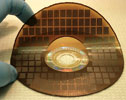
UCLA researchers have developed a groundbreaking technique that uses a DVD burner to fabricate micro-scale graphene-based supercapacitors that can charge and discharge a hundred to a thousand times faster than standard batteries. These micro-supercapacitors, made from a one-atom–thick layer of graphitic carbon, can be easily manufactured and readily integrated into small devices such as next-generation pacemakers. Using this technique, they were able to produce more than 100 micro-supercapacitors on a single disc in less than 30 minutes, using inexpensive materials.
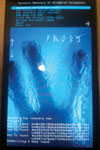
A team of German researchers has managed to crack the powerful encryption in Google’s Android 4.0 operating system (codenamed Ice Cream Sandwich) which is used to protect sensitive user information in devices such as smartphones. In an act of supreme irony, the system was hacked by freezing it in a process codenamed FROST (Forensic Recovery of Scrambled Telephones), which slows the device’s RAM chips enough so that its contents can be hacked before they have time to be erased.
Graphene has revealed yet another area of technology where its unique qualities could prove revolutionary. Scientists at the University Of California, Berkeley, have demonstrated an electrostatically driven earphone that, without any acoustic optimisation, produces an audio frequency response comparable to a pair of high-end Sennheiser headphones. The secret to the device’s performance lies in the fact that, since graphene is so strong, the earphone’s diaphragm is incredible thin and light, and therefore requires no damping. No damping also means low power consumption, opening the way for use in a multitude of portable electronics.
The development of a plastic, printable analog-to-digital converter (ADC) promises to make applications such as electronic 'freshness sensors' for food feasible. This represents the final piece of the puzzle, with the other elements required – sensor, amplifier and radio transmitter – having already been invented in a practical format and for a reasonable price point. The ADC has a resolution of 4 bits and a speed of 2 Hertz.






© Technews Publishing (Pty) Ltd | All Rights Reserved
 printer friendly version