


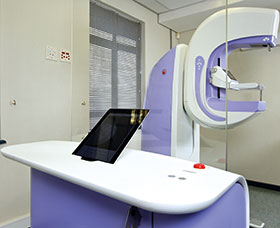
CapeRay, a company spun out from the University of Cape Town and built upon a collaboration with De Beers, has made a breakthrough in breast cancer diagnosis. By uniquely combining full-field digital mammography (FFDM) and 3D automated breast ultrasound (ABUS), its new machine – named Aceso after the Greek goddess of healing – can dramatically improve diagnostic success compared to existing technologies.
Another advantage of Aceso is greater patient throughput, with only 10 minutes required to gather a full set of images, compared with 30 minutes when separate FFDM and ABUS systems are employed. The dual-modality system will also be significantly cheaper than separate FFDM and ABUS systems, will cause less physical discomfort to patients, and will reduce their exposure to radiation.
The development of the Aceso system has taken some six years and R30 million, some of which came in the form of grant funding from the National Institutes of Health in the USA. Support was also provided by the DTI through its SPII (Support Programme for Industrial Innovation), EMIA (Export Marketing and Investment Assistance) and patent matching funding.
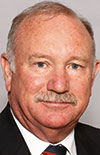
The steep cost of developing such state-of-the-art medical equipment certainly presents a formidable barrier to entry, but the potential returns are astronomical. CapeRay CEO, Kit Vaughan, explains: “We believe that we can sell 40 to 50 systems in South Africa over the next five years, while the international sales could reach 10 times that amount in one year, i.e., about 500 systems per annum by 2020. At a target selling price of $250 000, that translates into considerable revenue but is still only 3% to 5% of the global market. The key for CapeRay will be to establish a joint venture with a major international player – something we are currently working on.”
Aceso was designed exclusively in South Africa, and the majority of its manufacture is also conducted locally. The design includes a variety of printed circuit boards, some of which are fabricated offshore but sourced through local suppliers, and all the board assembly is done locally.
“We use local contract manufacturers to fabricate some of the components such as the covers for Aceso, as well as the frame for the C-arm. We do all the final assembly and testing in-house at our premises in Westlake,” says Vaughan. “We do purchase some ‘off-the-shelf’ components such as the X-ray tube, the X-ray generator and the ultrasound beam formers but all the key components, such as our digital X-ray camera, hermetically sealed breast platform, gantry and acquisition workstation are built locally.”
The time when all the hard work and money that’s gone into Aceso’s development starts to bear fruit is nigh. In April and May 2014 it was successfully used in a clinical trial conducted at the University of Cape Town, and it is currently being put through its paces at Groote Schuur Hospital. “We anticipate receiving the CE Mark by mid-2016,” says Vaughan, “which will enable us to sell our system here in South Africa and in Europe, and we will then set in motion the application for FDA approval. That should take another six months.”
Mammography
Mammography – an X-ray image of the breast – has been around since the 1960s and over the past 30 years screening mammography has saved many lives. Although it is considered the gold standard for screening, the technique does have one major drawback: it fails to detect early stage cancers located in dense breast tissue. This is a major problem since 40% of women have dense breasts and a missed diagnosis, known as a false negative, can have devastating consequences for the women concerned. It can take a further year or two before the cancer is detected, during which period the tumour may have grown rapidly in size and perhaps metastasised to other regions of her body. Not only will the treatment costs have escalated steeply, the prognosis for a successful outcome will have diminished significantly. The key to success, therefore, is early detection.
Roughly one in every eight women is susceptible to breast cancer and, according to the National Cancer Registry (which has not been updated since 2010), more than 6000 South African women are likely to be diagnosed with the disease per year. The risk of developing it starts increasing dramatically over the age of 20, with women in their fifties at the most risk.
For more information contact Kit Vaughan, CapeRay, +27 (0)21 702 4299.






© Technews Publishing (Pty) Ltd | All Rights Reserved
 printer friendly version