


To keep pace with the steady growth of communications services, high data rate SDH short-haul radios are used in the access part of transmission networks because of their fast deployment. These radios are operated at the dedicated frequency bands above 18 GHz according to the ETSI and ITU recommendations.
Since feeder waveguides become more lossy at these frequencies, the radio equipment is usually located outdoors close to the antenna to maintain optimal system performance. The need for extremely high link reliability is accommodated by protecting the link with redundant transceiver equipment - separate operating and standby transceivers are used at each station to serve a single transmission channel. If the operating unit fails the service is automatically transferred to the standby equipment.

These are commonly interconnected with the dedicated antenna by couplers, resulting in substantial reduction of link performance - eg the application of 3 dB couplers at each station yields a decrease of the system value by approximately 6,5 dB. Moreover, the redundant transmitter has to be switched off to avoid any multipath interference. Consequently, this solution does not allow monitoring of the transmitter. Failures occurring during the redundant stage are not detected, and should the operating transceiver fail, the transmission is interrupted until maintenance personnel exchange the equipment.

Marconi has established a hot-standby solution for high-capacity short-haul radios that avoids this problem and moreover exhibits only a reasonable impact on the system performance. It is based on Spinner's 'high reliable' waveguide switch. The transceivers are connected via waveguides to two opposite ports of the transfer switch. One of the remaining ports of the waveguide switch is connected with a 10 dB coupler that routes the signals of the operating equipment to the common antenna port. The coupler supplies a 10 dB receive signal portion via the isolator and the respective path of the waveguide switch to the assigned redundant transceiver. In the reverse (transmit) direction this path exhibits a suppression of more than 50 dB owing to the isolator. Consequently, both transceivers are connected fully operationally to the hot-standby switching circuitry.
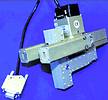
The actual operating transceiver is directly routed through the switch and the coupler to the antenna port with inherently low insertion loss (less than 0,7 dB) mainly resulting from the coupler insertion loss. Functionality of the redundant transceiver is ensured by steadily monitoring the 10 dB receiver signal and the transmitter output signal that is attenuated within the isolator. If the operating transceiver fails, the dedicated direct and redundant waveguide paths of the waveguide circuitry are interchanged by controlling the waveguide switch and service is immediately taken over by the 'hot-standby' equipment. The complete waveguide circuitry is assembled within a housing that allows direct mounting and interfacing to the feeder port of an antenna without the need of additional waveguide hardware.
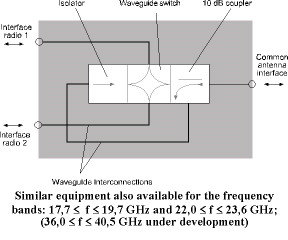
Commonly, the RF ports of the radio units are interconnected with flexible waveguides to hot standby circuitry. A small board for the logic control of the waveguide switch is also located in the housing. This board is associated with two DC cables for interconnection with both radio units to accommodate independent power supply and control signals of the equipment stage for the logic. Thus, failed equipment can be exchanged without interruption of service.
| Tel: | +27 11 728 4757 |
| Email: | info@mbsiliconsystems.co.za |
| www: | www.mbsiliconsystems.co.za |
| Articles: | More information and articles about MB Silicon Systems |






© Technews Publishing (Pty) Ltd | All Rights Reserved
 printer friendly version