


After a series of countrywide seminars by Bob Willis from the UK’s SMART Group, organised by Technews and sponsored by a panacea of local and overseas companies, questions still remain.
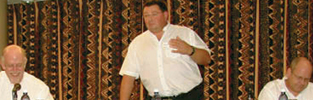
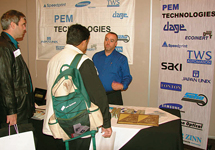
Despite the fact that the seminar I attended in Cape Town in November was one of the best I ever attended regarding lead-free, the debate continues. The SMART Group from the UK, headed by Bob Willis from askBobWillis.com fame, touched on the various pressing issues. The seminar was well presented and well attended and I counted 72 people in Cape Town alone, although arguably this included sponsors, Technews, and the Bob Willis team.

Being a one-day seminar only it is understandable that not everything could be handled in-depth. Indeed, the Q&A session in the afternoon raised many questions and there were also issues addressed that resulted in a clearer view on certain legal and technical aspects - and this brings the famous EU cut-off date of 1 July to the fore. Many attendees were under the impression that virtually everything was signed and sealed by the European Union's legal requirements. However, the situation is far from being cast in stone when it comes to the legal aspects. In fact I recently received an e-mail confirming my doubts. A couple of months ago the EU issued a 148 page report highlighting the changes in the already existing exemptions. One has to keep in mind that RoHS not only covers lead but also cadmium, mercury, hexavalent chromium and non-metals, like the organics. So one has to take an holistic approach and consider all angles of the RoHS legal issues.
For SA companies wanting to export outside Africa, like the EU and the Far East, all aspects of RoHS legalities will have to be fully understood and adhered to. In South Africa there is no RoHS law yet, so in principle, one can still carry on as if nothing has happened. The legal situation in China will be even more complex in early 2007.

In the EU, as an example, lead has been exempted recently for: "Lead in solders for transducers used in loud-speakers with sound pressure levels of 100 dB(A) and more, for products that have to comply with the test requirements of the standard EN54-3" There are many more.
In the USA, no RoHS-like legislation has been brought forward. Each state could have its own legislation there. So it is that California has enacted its own RoHS rule, known as SB20/SB50, taking effect in January 2007. States in the USA like Maine, Connecticut, Florida and California have already enacted rules governing the use of mercury.
For manufacturers, exporters and companies targeting the Chinese market a more daunting task awaits them. Compliance for export to China is different. Products will need a specific RoHS marking, products will need to comply with a 3C label (China Compulsory Certification). Although such plans have not been finalised yet, China seems to aim at the unique use of state-owned Chinese certification laboratories or agencies for certification of RoHS products. The Chinese will assume the principle of ′guilty until innocence is proven′. On the other hand, the EU has not specified compulsory markings nor is there documentary proof needed upon entry into the EU.
There is little, if any, information of what constitutes due diligence, while the penalties of non-compliance are also not clear. Various states in the EU will have a wide scope to act independently and could in fact issue more stringent or lenient measures. The whole lead-free legal aspect becomes the field for legal experts.
What can we do from the technical aspect? Concerned companies and organisations with intent to export outside Africa should strive to:
1. Assess the company's exposure to these RoHS laws versus the intended geographical areas, be informed on the various changes and exemptions, and evaluate the company's readiness.
2. For the EU, find out if specific products require certification. There are eight categories in the EU with the applicable exemptions. Study them. China has a totally different approach starting with a default condition: "Everything is considered a hazard unless you can prove, document and certify otherwise."
3. Adopt and apply standards. Document all incoming goods and components - traceability will once again become almost as important as with the military electronics of 20 years ago.
4. Take note that most component manufacturers bring out components with metalisation terminations having no lead. This is the default condition, often called COTS (components off the shelf). It is no longer lucrative for component manufacturers to cater for the hungry and well-paying military market of yesteryear. The high volume producers like cellphone companies call the shots now. You will have to fall in there and use lead-free terminated components.
5. The above point (4) has far-reaching technological repercussions. A recent study by IMEC (Brugge, Belgium) lists the various interfacing problems that can have a detrimental influence on the solder joint reliability and end product quality. This was also shown during the Bob Willis presentation with some interesting slides.
6. Consult with IPC and consider adopting with, or without modification, the generic standard IPC1752 that can be freely downloaded from its website www.ipc.org.
7. Document your components, parts and materials used during manufacturing, and have your process well-documented and audited.
8. Consider a formal training session with both a theoretical part and practical hands-on workshop lasting 1,5 days in total with IPC certification for lead-free. The complete course on DVD and also a printed version of the IPC1752 is available from myself: e-mail evdwijng@xsinet.co.za for information.
9. My website www.solderingsa.co.za will soon be up to assist interested companies mainly with technical issues regarding RoHS in South Africa.
This information shared above serves as an indication of what lies ahead and lists measures that can be introduced to facilitate RoHS transition in SA for companies preparing for export. Successful manufacturers will also have to acquaint themselves with the intricacies of hot-tear shrink holes, dull joints, longer time to wet, and last but not least, the less understood phenomenon of 'tin whiskers' that is so prevalent with high tin content solders.
About the author:
Eddy Van den Wijngaerd, Pr.(Tech), Industrial Eng, has a 36-year background in the electronics industry and is currently a consulting engineer and IPC certified trainer for South Africa.
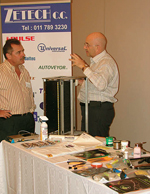
The following are some of the comments received back from delegates:
″It cleared up a lot regarding the RoHS compliance and what it is about. It also enlightened one on being prepared for future products and manufacturing processes. Although there is still a lot of research being done regarding lead-free solder and the manufacturing difficulties with it, the seminar put us in perspective with regard to what to expect for the future.″
″The seminar gave a good overview (and some detail) regarding the current status of RoHs. The information was provided by those very much ′in the know′!″
″We need the export market and need to comply to be able to trade… Thus the seminar was important in several respects for: the area to look and find where failure would occur when equipment is in the field; improving on the design of PCBs to have minimal rework; areas where RoHS will impact on durability and reliability of our products.″
″The seminar was very interesting. It covered the subjects in depth and was presented with well-documented slideshows and worldwide expertise was delivered.″
″My lead-free knowledge was very basic and I found all the new information very useful.″
″The seminar was valuable because it is important to be on top of all developments in the electronics field.″
″It was very informative ... and actually helped with our own Pb-free production.″
″Few companies truly understand the effect RoHS will have on the electronic industry. The seminar highlighted the real issues on the lead-free effect. Moisture-sensitive devices (MSD), tin whiskers, and static are issues that need serious attention. The seminar brought this into the open. Sadly, this industry is still controlled by stone age mentality.″
″It gave a very good overview of the issues with practical tips and advice. Such experience cannot be bought!″
″It was very interesting to see what happened throughout the world and how they do comply. It is clear that this change to lead-free is a problem, not only for South Africa, but also in other countries.″
″Getting first hand info from the experts, re-assured us that our own lead-free manufacturing process was up to standard.″
″This lead-free seminar was very informative and had very knowledgeable overseas speakers. It was value for money times a hundred. Well worth attending!″
″Very practical comments were delivered on all aspects of lead-free soldering. It was clear that the presenters had real hands-on experience in this area.″
For more information contact Eddy Van den Wijngaerd, +27 (0) 21 7125964, evdwijng@xsinet.co.za






© Technews Publishing (Pty) Ltd | All Rights Reserved
 printer friendly version