

Design Automation


Full dynamic reconfiguration capabilities added to trial EDA software

13 August 2003 Design Automation

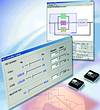
A new version of Anadigm's programmable analog EDA tool, AnadigmDesigner2, gives trial users full access to all the software's features, including the ability to construct circuits that can be reconfigured on-the-fly by a system microprocessor. V2.3 of AnadigmDesigner2 further automates the analog design process with additional new configurable analog modules (CAMs) that users drag and drop to build a complex analog circuit.

"Dynamic reconfiguration is a totally new capability for programmable analog circuits, and system designers are seeing its potential to reduce the cost of designing, customising, and supporting their products," said Brian Hodges, vice president of worldwide marketing at Anadigm. "They are eager to see it in action, so now we are including this feature within every trial copy of AnadigmDesigner2."

Giving designers an analog equivalent to the FPGA, Anadigm's dynamically reconfigurable FPAAs implement signal conditioning, complex filtering, closed-loop control, and other analog applications in a wide range of embedded systems. They are the first programmable analog ICs on the market that can adapt within the system to perform different functions, adjust to different environmental conditions, or compensate for sensor degradation.

This EDA tool allows designers to construct circuits using pre-qualified, drag-and-drop CAMs for which they set the parameters. AnadigmAssistant tools included with AnadigmDesigner2 v.2.3 further abstract the analog design process to the functional level by automating the construction of complex filters and PID (proportional, integral, derivative) controllers.

In this version of AnadigmDesigner2, three new functions are added to the already comprehensive CAM library: a transimpedance amplifier, a gain limiter stage, and a gain switch. The transimpedance amplifier CAM is aimed at systems with a photodiode interface - such as medical diagnostic or currency validation equipment - where it allows the FPAA to convert an input current into an output voltage. Users simply point and click to set the ratio of the current-to-voltage conversion. The gain limiter CAM creates an adjustable gain function such that the output voltage is limited to a programmable level. As a result, the gain stage has a continuous input and continuous output that are always valid. The gain switch CAM creates a gain stage with two switchable input terminals.

A multimedia demonstration of AnadigmDesigner2 v2.3 can be viewed at www.anadigm.com and a free trial copy is available for download. A complete evaluation kit with a development board, entry-level software, and updated documentation is available through the local distributor.

For more information contact Memec SA, 011 897 8600.


Share this article:
Share via emailShare via LinkedInPrint this page

Further reading:

Quad-Apollo MxFE reference design
Design Automation
The Quad-Apollo MxFE reference design exemplifies a complete, high-performance platform for every-element direct-RF sampling digital beamforming using Analog Devices’ Apollo mixed-signal front-end technology.

Read more...
MIKROE signs multi-year deal with Renesas
Dizzy Enterprises Design Automation
MIKROE has signed a multi-year MCU development tool support deal with Renesas, which commits MIKROE to providing development tools for 500 of Renesas’ most popular MCUs.

Read more...
Future Electronics and SnapMagic announce CAD model integration to support faster design cycles
Future Electronics Design Automation
Engineers can now download verified symbols, footprints, and 3D models directly from supported product pages, enabling a smoother transition from component selection to PCB layout.

Read more...
Pulsonix 14.0 advances design
Design Automation
Pulsonix’s latest PCB design software platform further strengthens simulation and brings significant enhancements in mechanical-electrical 3D integration, smarter comparison tools, and enhanced usability features.

Read more...
Silicon Labs’ Simplicity AI-enabled SDK
Design Automation
Silicon Labs recently unveiled a new way it is helping developers and their AI agents collaborate through its Simplicity AI SDK.

Read more...
Accelerate development of AI-enabled embedded systems
Design Automation
ADI’s CodeFusion Studio (CFS) is a modern embedded software development platform aimed at accelerating the creation of AI-enabled embedded systems.

Read more...
STM32CubeIDE for Visual Studio Code
Design Automation
STM32CubeIDE has moved from prerelease to official release marking a milestone in the deployment of STM32CubeIDE for Visual Studio Code.

Read more...
Siemens’ software selected for verification and validation
ASIC Design Services Design Automation
Siemens Digital Industries Software recently announced that Veloce Strato CS and Veloce proFPGA CS have been deployed at Arm, a longtime user of Veloce, as part of its design flow for Arm Neoverse Compute Subsystems.

Read more...
Enhanced graphics on STM32U3
Design Automation
ST has introduced a new program designed specifically for users working with its mainstream STM32 MCUs, including STM32C0, U0, WBA, and U3 series.

Read more...
Semicon Summit 2025 - Dubai: Direct access to global chipmakers, built for Africa’s engineering needs
Design Automation
[Sponsored] The future of South Africa’s technology ecosystem depends on deeper integration with global supply chains and tighter alignment with semiconductor manufacturers. That alignment takes presence, interaction, and shared focus on real systems.

Read more...


While every effort has been made to ensure the accuracy of the information contained herein, the publisher and its agents cannot be held responsible for any errors contained, or any loss incurred as a result. Articles published do not necessarily reflect the views of the publishers. The editor reserves the right to alter or cut copy. Articles submitted are deemed to have been cleared for publication. Advertisements and company contact details are published as provided by the advertiser. Technews Publishing (Pty) Ltd cannot be held responsible for the accuracy or veracity of supplied material.


© Technews Publishing (Pty) Ltd | All Rights Reserved

