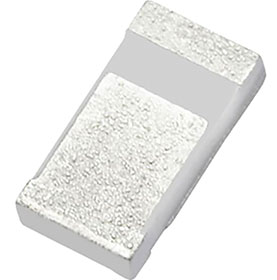
Taoglas’ WLA.01 2.4GHz loop antenna is a high efficiency, miniature SMD, edge mounted ceramic antenna for tight space requirements in Wi-Fi, WLAN, Zigbee, Bluetooth and 802.11 applications. It uses the main PCB as its ground plane, thereby increasing antenna efficiency, and is tuned for different PCB sizes by simply changing the value of the matching circuit. At 3,2 x 1,6 x 0,5 mm, the WLA.01 is one of the smallest antennas available worldwide, and is delivered on tape and reel.
Many module manufacturers specify peak gain limits for any antennas that are to be connected to that module. Those peak gain limits are based on free-space conditions. In practice, the peak gain of an antenna tested in free space can degrade by at least 1 or 2 dBi when put inside a device. Ideally, therefore, designers should go for a slightly higher peak gain antenna than mentioned on the module specification to compensate for this effect.
Upon testing of any of its antennas with a device and a selection of appropriate layout, integration technique or cable, Taoglas can make sure any of its antennas’ peak gain will be below the peak gain limits. It can then issue a specification and/or report for the selected antenna in the device that will clearly show it complying with the peak gain limits, so designers can be assured they are meeting regulatory requirements for that module.
For example, a module manufacturer may state that the antenna must have less than 2 dBi peak gain, but it is not necessary to select an embedded antenna that has a peak gain of less than 2 dBi in free space, as this would result in a less optimised solution. Taoglas recommends going for a slightly higher free-space peak gain of 3 dBi or more if available. Once that antenna gets integrated into the device, performance will degrade below this 2 dBi peak gain due to the effects of the ground plane, surrounding components and device housing.
High performance RF signal conditioning RFiber Solutions
Telecoms, Datacoms, Wireless, IoT
The AM3269 from Mercury Systems is a high-performance RF preselector module designed to improve receiver sensitivity and signal integrity in demanding electronic warfare, signals intelligence, test, and communications applications.
Read more...Nordic expands nRF Cloud with firmware vulnerability scanning RF Design
Computer/Embedded Technology
nRF Cloud identifies vulnerabilities in firmware and shows exactly which deployed devices are affected, empowering device manufacturers to address EU Cyber Resilience Act requirements.
Read more...RF filters explained RFiber Solutions
Telecoms, Datacoms, Wireless, IoT
As RF environments become increasingly crowded, RF filters play a critical role in maintaining signal quality, improving system performance, and ensuring reliable operation.
Read more...Industrial connectivity without compromise
Telecoms, Datacoms, Wireless, IoT
The IR315 combines 4G LTE, Wi-Fi, Ethernet, and VPN technologies into a rugged, industrial-grade platform that enables seamless connectivity across a wide range of applications.
Read more...Module provides 4G LTE Cat 1 bis connectivity Dizzy Enterprises
Telecoms, Datacoms, Wireless, IoT
Mikroe adds 4G LTE Cat 1 bis connectivity where reliable data transmission and low power consumption are critical with the GC02S1-EU2 module.
Read more...Enabling next-generation FPGA and SDR innovation RFiber Solutions
Telecoms, Datacoms, Wireless, IoT
Puzhi Electronic Technology has established itself as a dynamic provider of advanced ARM and FPGA-based solutions, delivering a comprehensive ecosystem of products designed for modern embedded and high-performance computing applications.
Read more...Magnetic mount antenna takes the hassle out of 4G installations iCorp Technologies
Telecoms, Datacoms, Wireless, IoT
Designed for fast, tool-free installation, the YECN022CA 4G magnetic mount whip monopole antenna gives wireless devices a dependable cellular link in the field, where installation time and signal reliability both matters.
While every effort has been made to ensure the accuracy of the information contained herein, the publisher and its agents cannot be held responsible for any errors contained, or any loss incurred as a result. Articles published do not necessarily reflect the views of the publishers. The editor reserves the right to alter or cut copy. Articles submitted are deemed to have been cleared for publication. Advertisements and company contact details are published as provided by the advertiser. Technews Publishing (Pty) Ltd cannot be held responsible for the accuracy or veracity of supplied material.









 printer friendly version