


Although 2022 has been largely in financial turmoil, there was a lot of growth in terms of engineering technology. Many new advances were made, and new and innovative products were announced and released.
The major drive this year was on miniaturisation, renewable energy, EV power management, 5G, and IoT with the Matter protocol headlining often. Security also featured regularly in many new SoCs and SoMs that were announced, as did advances in AI and ML on SoCs.
The Matter protocol
Matter is a software foundation for connected systems. It is a combined effort between many of the largest semiconductor companies worldwide to provide one communications protocol to connect compatible devices and systems with one another. The protocol aims to ensure that smart home and industrial devices are secure, reliable and seamless to use.
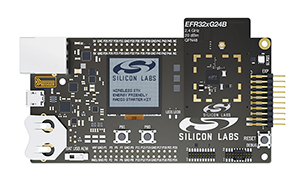
Silicon Labs was first to announce a new addition in the form of the BG24 and MG24 families of 2,4 GHz wireless SoCs for multiple-protocol operations. This combined hardware and software platform is used to enable AI/ML applications and high-performance wireless operation to battery-powered edge devices. The family of devices is Matter ready and incorporates PSA Level 3 Secure Vault protection.
Miniaturisation and low SWaP designs
Miniaturisation of components and designs was another common theme amongst new product releases. From individual components to SoCs and SoMs, sizes are continuously becoming smaller and the power consumption of these modules is decreasing. Driving this is the move towards longer battery life and lower heat generation.
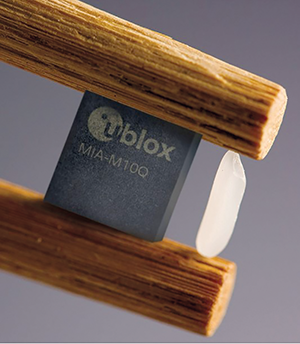
u-blox released the smallest GNSS chip. Measuring only
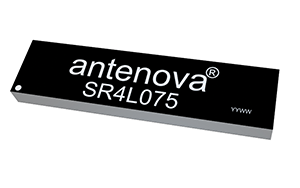
Not to be outdone, Antenova arrived at the miniaturisation party with a small-space antenna measuring only 40 x 10 mm. The SMD antenna operates on most 4G and 5G bands between the ranges of 617 MHz and 3,8 GHz. Its light weight of only 3 grams makes it ideally suited to small, handheld designs.
Wireless systems: 5G, Wi-Fi 6
5G was another hot topic on manufacturers’ lists. Many modules were released onto the market that were either 5G or Wi-Fi 6 capable.
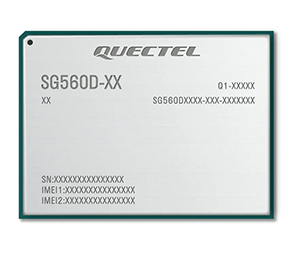
Quectel announced the SG560D smart module, a multi-mode 5G module with built-in Android OS. Based on the high-performance 64-bit octa-core processors with built-in GPU, the module is perfect for industrial and consumer applications requiring high data rates. For communication, the module supports both 5G and Wi-Fi 6E but is still compatible with older 4G/3G modes.
The latest Espressif MCU also arrived with an embedded Wi-Fi 6 radio. The ESP32-C6 SoC integrated 2,4 GHz Wi-Fi 6, Bluetooth 5 (LE) and 802.15.4 protocol. The module consists of dual high-performance 32-bit RISC-V processors, one clocked at 160 MHz, and a second low-power processor clocked at up to 20 MHz.
The increase in the number of IoT devices worldwide is a huge driver for both 5G and Wi-Fi 6 technologies. With these wireless systems becoming more prevalent, IoT devices are promising to become more common.
Ultra-wideband location tracking
GNSS modules are high-performance location tracking devices but have one major drawback. In dense urban canyons or indoors, the satellite signal is not received, rendering the modules incapable of finding an accurate location. This is where UWB enters.
UWB-enabled devices have the ability to connect with similar devices in their vicinity, thereby getting positional information via a network of devices. These UWB-enabled devices can understand both motion and relative position in areas where a GNSS signal cannot be received. This allows highly precise location services down to centimetre level.
UWB technology is still in its infancy but is poised to make a huge difference to everything that involves positioning, sensing and related automation.
Power management and renewable energy
With the unrelenting worldwide surge towards renewable energy, power electronics and power management modules are becoming cutting-edge. Modules are becoming increasingly smaller but at the same time are able to handle more power.
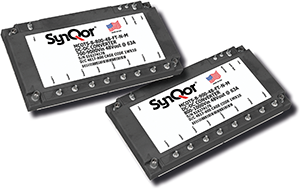
Case in point are the 3 kW power modules from SynQor. These encased modules are high-power, high-efficiency DC-DC converters that are capable of down-converting 1000 V DC to a voltage between 37 and 53 V DC, with an efficiency of 96,8% at full load current. Moreover, multiple converters can be integrated into a design to provide increased power output or to support redundancy.
With the critical energy situation in the country, SA engineering has risen to the challenge to provide novel solutions to the challenges facing it.
Creslow Energy Solutions was established as a local manufacturer of clean energy storage systems. The storage systems operate in two ways: either as a backup system that works in conjunction with an inverter, or as an off-grid system that requires an inverter and solar panels. A critical advantage of these batteries is that each battery can be customised to suit specific requirements.
Peco Power is another local company that is trying to use energy storage systems to provide a meaningful socio-economic impact. The Peco PowerBrick is an off-grid solution designed to be affordable for low-income households but still rugged enough to be able to withstand harsh South African climates. The units integrate solar and LiFePO4 batteries and can be daisy-chained to provide up to 2500 Wh of storage at a continuous power output of 500 W.






© Technews Publishing (Pty) Ltd | All Rights Reserved
 printer friendly version