

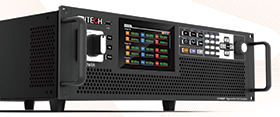
In modern power systems, testing under ideal conditions is no longer sufficient. Real-world electrical grids are inherently unstable, subject to disturbances such as voltage sags, swells, harmonics, interruptions, and frequency deviations. These anomalies – often caused by load switching, faults, lightning, or equipment failure – can significantly impact the performance of power electronic equipment. As a result, simulating grid abnormalities has become an essential part of validating systems such as inverters, UPS units, photovoltaic (PV) inverters, and EV charging infrastructure.
Testing under simulated abnormal conditions ensures that equipment can operate reliably in the field. Without such validation, devices may fail when exposed to real disturbances, leading to downtime, equipment damage, or safety risks. Engineers use these simulations to assess system immunity and confirm robust operation under non-ideal supply conditions.
Equally important is compliance with international standards. Regulations such as IEC 61000-4-11 and related specifications define immunity requirements for voltage dips, interruptions, and other disturbances. Meeting these standards ensures not only product reliability but also electromagnetic compatibility within the broader grid environment.
Another critical aspect is the verification of protection mechanisms. By simulating overvoltage, undervoltage, and frequency deviations, engineers can confirm that systems respond correctly – disconnecting outputs or issuing alarms when necessary. In renewable energy applications, fault ride-through capability is especially important. Grid codes require inverters to remain connected during short-term voltage fluctuations (LVRT/HVRT) to support grid stability, making accurate simulation indispensable.
Modern four-quadrant grid simulators, such as the IT7900 series, significantly enhance this testing capability. Unlike conventional sources, a four-quadrant simulator can both source and sink power, enabling bidirectional energy flow. This allows realistic emulation of grid-connected systems where energy may be fed back into the grid, such as regenerative drives, energy storage systems, and vehicle-to-grid (V2G) applications. These simulators also support programmable disturbances, arbitrary waveform generation, and energy recovery – returning absorbed power back to the grid, reducing operating costs.
As grid complexity increases with the integration of renewable energy and distributed systems, four-quadrant simulation platforms are becoming essential tools for developing robust, compliant, and future-ready power electronics.
Setting a new benchmark for high-power DC load testing Conical Technologies
Test & Measurement Power Electronics / Power Management
The new ITECH IT8900G/L high-speed, high-power DC electronic load offers a powerful combination of speed, scalability, precision and high-power density.
Read more...Quality batteries are critical for IIoT Uniross Batteries
Power Electronics / Power Management
Batteries intended for use in industrial operations must indeed offer complete reliability under extreme environmental conditions, resistance to vibration and harsh environments.
Read more...12 kW hybrid inverter
Power Electronics / Power Management
Sungrow recently unveiled its next-generation residential energy storage solution, expanding its power range from 5 kW to 12 kW with the introduction of the new MG12RL hybrid inverter.
Read more...40 W and 75 W railway DC/DC converter Brabek
Power Electronics / Power Management
RECOM has announced two new cost-efficient DC/DC converters for the rail market with an ultra-wide 11:1 input range to cover all nominal input voltages from 24 to 110 V DC.
Read more...Power modules for solid-state transformers RS South Africa
Power Electronics / Power Management
Microchip’s new 3,3 kV silicon carbide modules deliver the required thermal performance and efficiency for SSTs to increase power available for token generation.
Read more...Solving South African power problems with locally built intelligence
Editor's Choice Power Electronics / Power Management
Smart metering infrastructure in South Africa remains patchy. The rollout has been slow, coverage is inconsistent, and for the most part, granular per-unit measurement simply does not exist.
Read more...Wide range power module
Power Electronics / Power Management
The latest DC-DC modules from Würth Elektronik are characterised by high resilience to voltage transients on the 24 V bus and an extremely wide input-voltage range from 3,5 V to 38 V.
Read more...Selecting primary batteries for maximum service life Uniross Batteries
Power Electronics / Power Management
Primary batteries play an important role in IoT applications. Designed for longevity, they have a high-energy capacity and are often used in standalone applications where charging is impractical or impossible.
Read more...4 kW e-mobility DC-DC converter Brabek
Power Electronics / Power Management
The RECOM RMOD4000 series of compact, plug-and-play DC-DC converters is a cost-effective solution to provide isolated 14 V, 28 V, or 56 V DC network rails from a high input voltage between 180 and 950 V DC.
Read more...Aluminium case upgrade boosts performance Vepac Electronics
Power Electronics / Power Management
The SQBF Quarter Brick 300 W DC to DC Converter is now available in a newly upgraded metal case designed to deliver improved durability and superior electrical performance across demanding applications.
While every effort has been made to ensure the accuracy of the information contained herein, the publisher and its agents cannot be held responsible for any errors contained, or any loss incurred as a result. Articles published do not necessarily reflect the views of the publishers. The editor reserves the right to alter or cut copy. Articles submitted are deemed to have been cleared for publication. Advertisements and company contact details are published as provided by the advertiser. Technews Publishing (Pty) Ltd cannot be held responsible for the accuracy or veracity of supplied material.

