


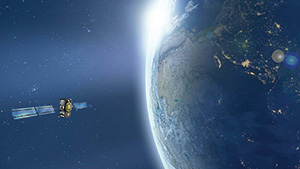
Over the past two decades, satellite-based positioning has become an indispensable, everyday technology that we constantly rely on – often even without being aware of it.
With the relentless expansion of applications and use cases, driven largely by falling cost of ownership and improvements in positioning accuracy, there will soon be one GNSS receiver in operation for every person on the planet. But now, with the accuracy challenge all but solved, security is becoming a key factor slowing the development of new, lucrative business models and emerging critical applications.
That’s why there is so much excitement around a new service from Galileo, the EU’s global navigation satellite system (GNSS). First conceived in 2013, Galileo’s open service navigation message authentication (OS NMA) system lets GNSS receivers ensure that the satellite signals they receive are, indeed, from Galileo satellites and that they have not been modified. The approach makes it more difficult for hackers and other bad actors to spoof GNSS receivers by feeding them fraudulent signals. The European GNSS constellation will be the first to offer authenticated navigation messages to civilian users free of charge.
The approach the European GNSS Agency (GSA) adopted to authenticate the signals is already well established for digital communication on the Internet. It consists of appending an encrypted authentication signature to GNSS navigation messages, which can be used to verify the messages based on a hybrid symmetric/asymmetric key approach.
The service will only be available to advanced GNSS receivers that are able to securely store a copy of the public key used to decrypt the authentication message and to ensure that it can be trusted. To ensure that current users of Galileo’s navigation services do not see their service interrupted, the new navigation messages, broadcast on Galileo’s E1B frequency band, will be fully backward compatible. This means that older receivers will still be able to use them to determine their position, simply without the value-add of message authentication.
A critical step towards fully secure positioning
The move by the GSA comes in response to growing demand across industries for secure positioning technology. “At the GSA, we work in close collaboration with the industry to design and leverage Galileo’s unique capabilities and rapidly develop new applications to respond to user needs,” said Fiammetta Diani, head of market development at the GSA.
OS NMA, step one in the agency’s plans, will not entirely solve the GNSS security challenge. It will, however, considerably raise the level of sophistication that such attacks require, benefiting a variety of applications that are frequent targets of spoofing attacks. These include smart tachographs used in trucks, taxis and ride sharing vehicles and tracking devices used in commercial cargo and fishing vessels. Reliably flagging spoofing attempts will make it more difficult for companies to skirt legislation by tampering with the GNSS receivers.
GNSS data authentication will also play an important role in so-called mission critical use cases – think advanced driver assistance systems, autonomous driving, or any number of risk-prone commercial activities. And, by mitigating one of GNSS’s main vulnerabilities, it will no doubt add value in less critical ones as well, in retail and logistics, smart cities and connected industries.
Leveraging OS NMA from day one
As a leading supplier of GNSS receivers for telematics solutions, we at u-blox have long been at the front line in bringing the benefits of OS NMA to our customers. Through our active involvement in the EU-led group of experts on the smart tachograph, for example, we are helping drive the implementation of OS NMA. That’s why it should hardly come as a surprise that our latest GNSS platforms (u-blox M9 for standard precision positioning, u-blox F9 for high precision positioning) are designed to leverage Galileo’s authenticated navigation signals from the day they go live.
“We are glad to see that a key player in GNSS manufacturing, such as u-blox, is already looking forward to exploit Galileo new features and in particular the open service navigation message authentication to contribute to safer road transportation in European roads and beyond,” says GSA’s Fiammetta Diani.
OS NMA is one of the cornerstones of our approach to increase the security and reliability of our GNSS receivers. It adds to improvements made by concurrently monitoring signals from several GNSS constellations on multiple frequency bands, as well as integrating other data, such as input from inertial sensors. That being said, for Galileo and for u-blox, OS NMA is just one more stepping stone towards fully secured GNSS-based positioning technology.
| Tel: | +27 21 555 8400 |
| Email: | sales@rfdesign.co.za |
| www: | www.rfdesign.co.za |
| Articles: | More information and articles about RF Design |






© Technews Publishing (Pty) Ltd | All Rights Reserved
 printer friendly version