In this era of mobile devices, battery life is one of the primary factors that affects the user experience. While implementing power saving technology inside devices is important, it is only one part of the solution. Given the increasing capabilities and greater power requirements of mobile devices, original equipment manufacturers (OEMs) also improve battery life by substantially increasing battery capacity.
For example, architectures like 1S2P (one cell in series with two cells in parallel), that use two cells in parallel to increase overall capacity, have become more popular. The downside of higher battery capacity is a corresponding increase in charging time. To minimise charging time, improvements in battery technology increase charge current from 2C up to 3C or 6C (xC is x times the current that would pass through the rated ampere-hours of a battery in an hour). For example, a 2000 mAh cell could utilise up to 12 A of charging current without negatively affecting battery reliability.
High current requires special care to ensure safe charging and discharging. When using cells in parallel, developers also need to take care of impedance and initial capacity mismatches. This article will explore how to charge batteries in a 1S2P arrangement with high performance, as well as how to partition the charger and fuel gauge between the host and battery pack to increase system flexibility, minimise power dissipation, and improve the overall user experience.
Charger basics and why fuel gauge partitioning matters
The key components of a battery charging system are the charger itself and the fuel gauge that reports metrics such as the battery state of charge (SOC), time to empty, and time to full. The fuel gauge can be implemented either on the host side or in the battery pack (see Figure 1).
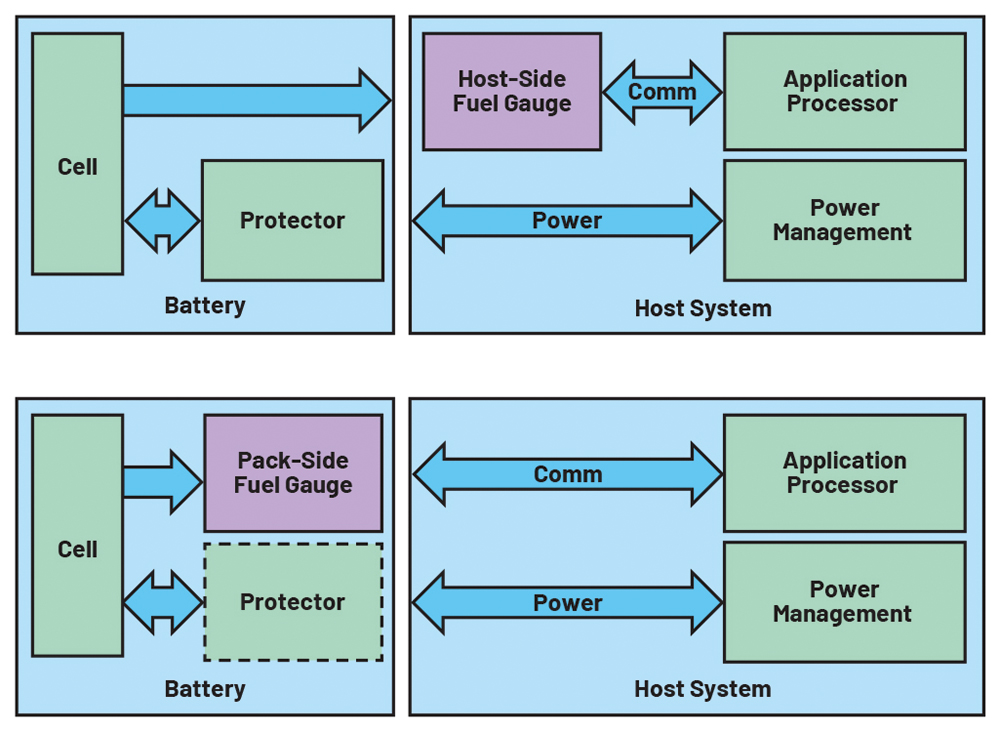 Figure 1. The battery fuel gauge can be implemented on the host side or in the battery pack.
When implemented in the battery pack, the fuel gauge requires non-volatile memory to store battery information. MOSFETs on the power path monitor charging/discharging currents and protect against dangerous conditions. A device like the MAX17330 from Analog Devices is a battery fuel gauge with built-in protection circuitry and battery charger capabilities (see Figure 2).
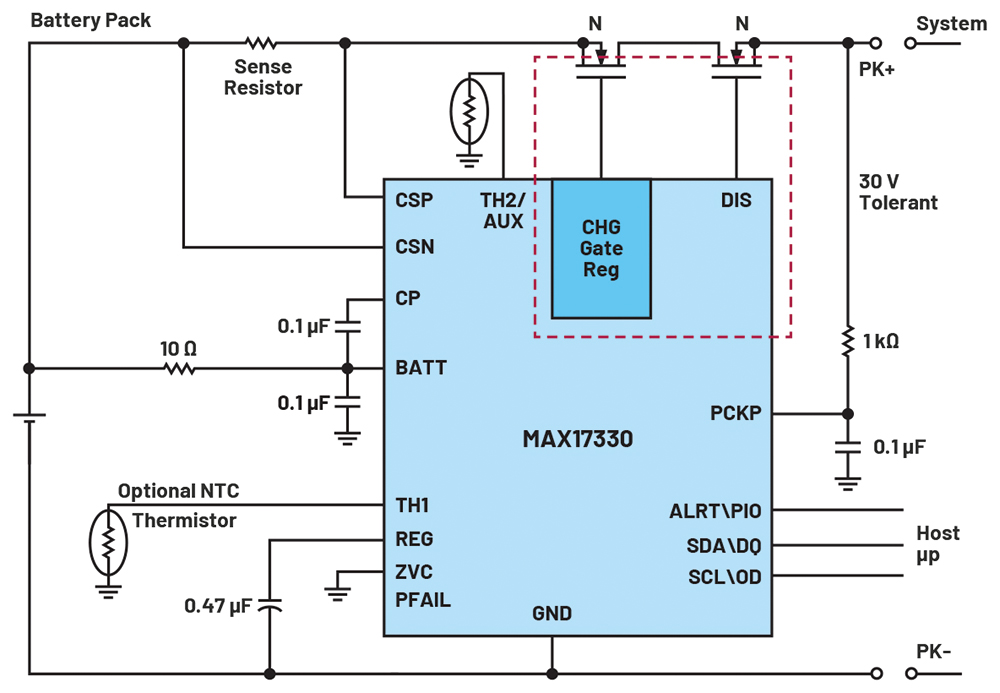 Figure 2. Block diagram showing a fuel gauge with charging MOSFET regulation.
The charging MOSFET can be regulated with fine granularity to implement a linear charger that can be used as a standalone device when the charging source is limited to 5 V and the charge current is in the range of 500 mA. Since lithium battery charging exceeds 3,6 V for 99% of the charge curve, power dissipation is limited.
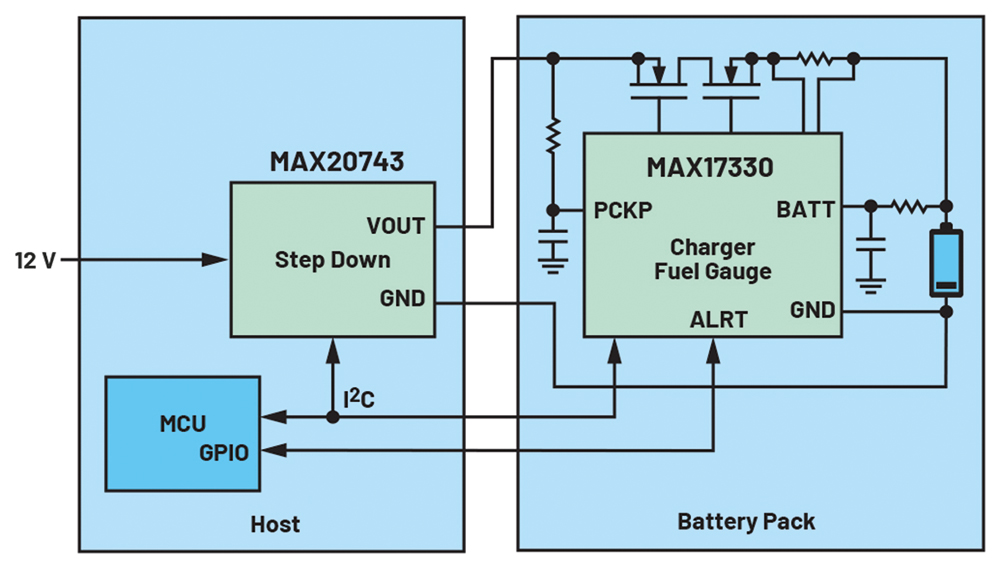 Figure 3. A block diagram for high voltage/high current fast charging system.
A high-voltage charging source and high charging current can be accommodated using a step-down converter in front of the charger to regulate its output voltage (see Figure 3). This also minimises dropout and therefore reduces power dissipation on the charging MOSFET.
Implementing a fuel gauge in the battery pack enables the battery to become smart, enabling advanced charging scenarios and capabilities. For example, the fuel gauge can store the charging profile suitable for the cell inside the battery pack in its non-volatile memory. This has the added benefit of offloading charging from the host microcontroller unit (MCU). Now the host MCU only needs to manage the ALRT signal coming from the battery pack to increase/decrease the output voltage of the step-down converter according to the alert type received:
• CP: heat limit → decrease the voltage.
• CT: MOSFET temperature limit • decrease the voltage.
• Dropout: • increase the voltage.
A programmable step-down converter like the MAX20743 uses the PMBus to allow fine regulation of the output current. Integrated MOSFETs in the step-down converter support charging currents up to 10 A. In addition, since the PMBus uses I2C as its physical layer, a single I2C bus can be used to manage both the step-down converter and fuel gauge.
The following example shows a way to charge a single 3.6 V lithium cell. Figure 4 shows the time domain shape of the voltages and the currents in the charging system. Specifically, the graph shows the battery voltage, battery current, and output voltage of the buck converter.
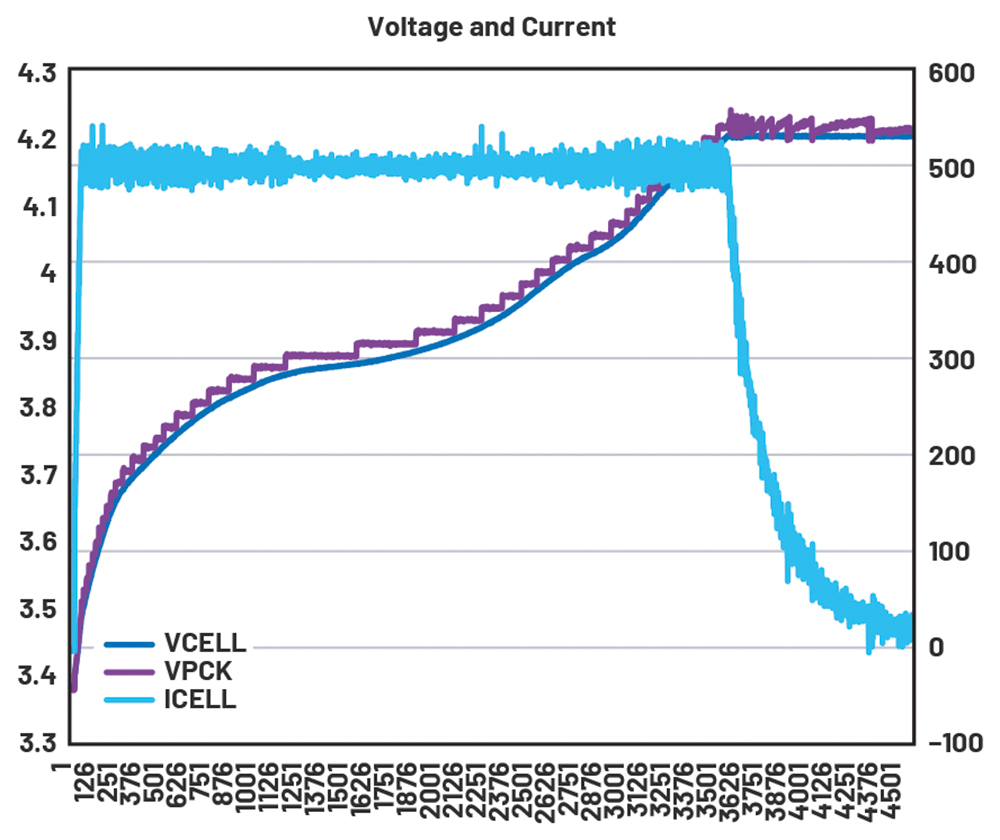 Figure 4. A single cell fast charging for a 3.6 V lithium cell.
As can be seen, the step-down converter output (VPCK) is set to 50 mV above the battery voltage. This output voltage is constantly increased to avoid dropout as well as to minimise overall power dissipation.
Battery safety management
With the high currents involved in fast charging, OEMs must be able to guarantee safe charging. Thus, a smart fast charger must monitor several important parameters as part of its overall battery management. For example, by monitoring battery temperature and ambient/room temperature, a fast charger can determine when to reduce the charging current and/or lower the termination voltage to assure safety and improve the lifespan of the battery, according to cell manufacturer specifications and recommendations.
The voltage and current can be adjusted over temperature to comply with the six-zone JEITA temperature settings (see Figure 5) and with three-zone step-charging based on the battery voltage.
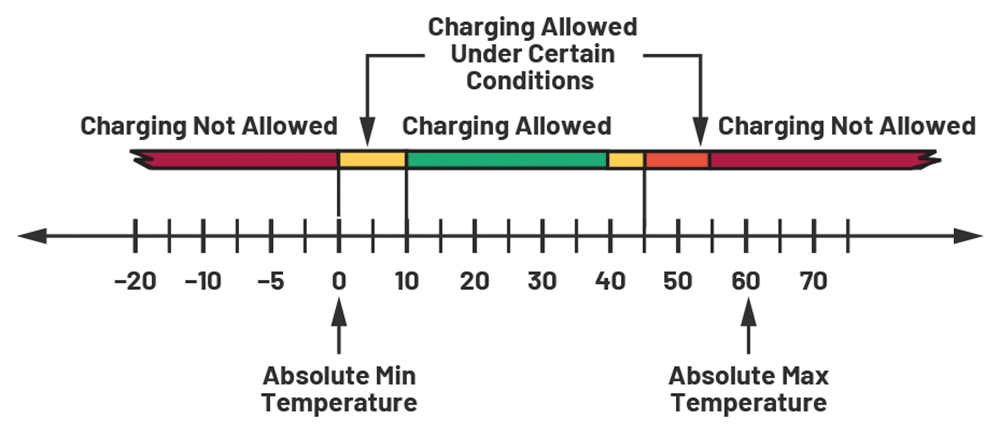 Figure 5. Six-zone JEITA temperature ranges.
Battery lifespan can be further improved using a step-charging profile that changes charge current according to battery voltage. Figure 6 shows a step-charging profile that uses three charge voltages and three corresponding charge currents. Transitioning between the stages can be managed through a state machine.
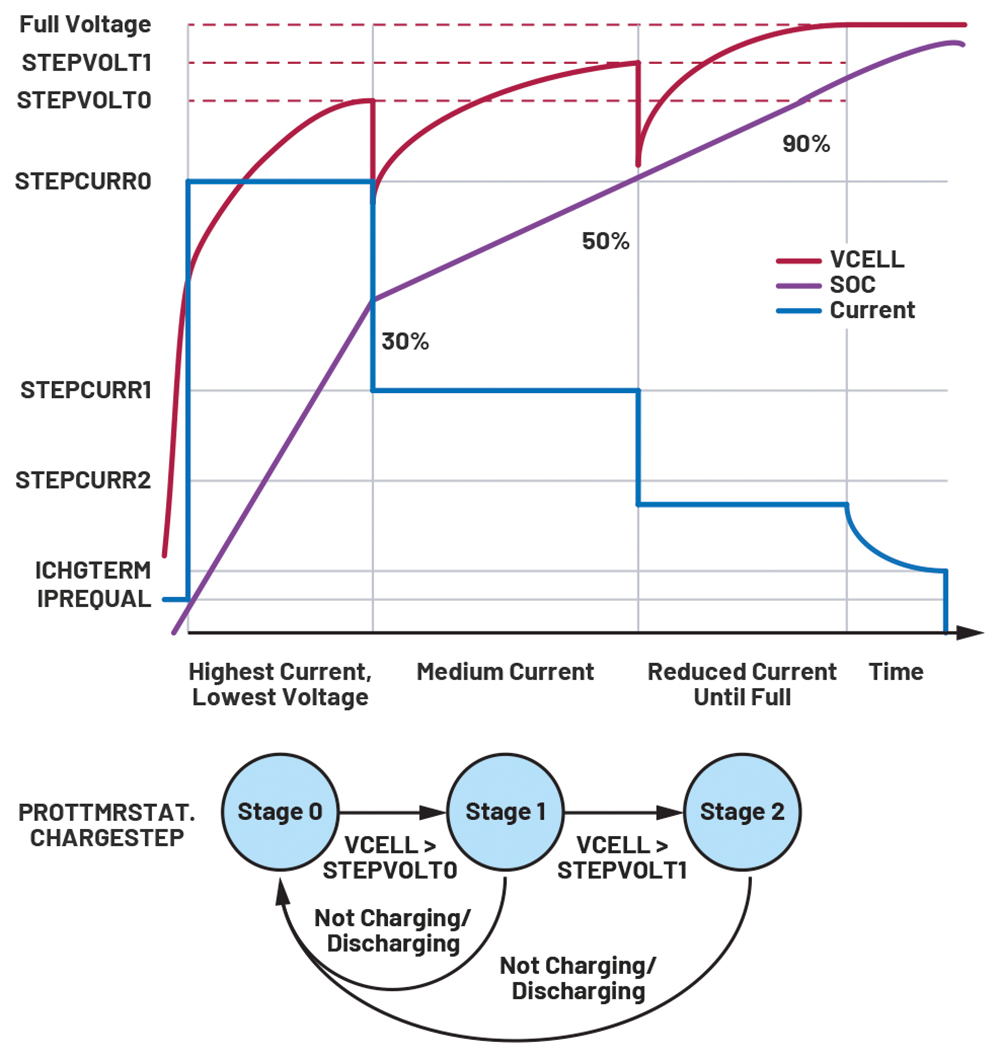 Figure 6. A step-charging profile with a state machine for managing the transition between stages.
Parallel charging
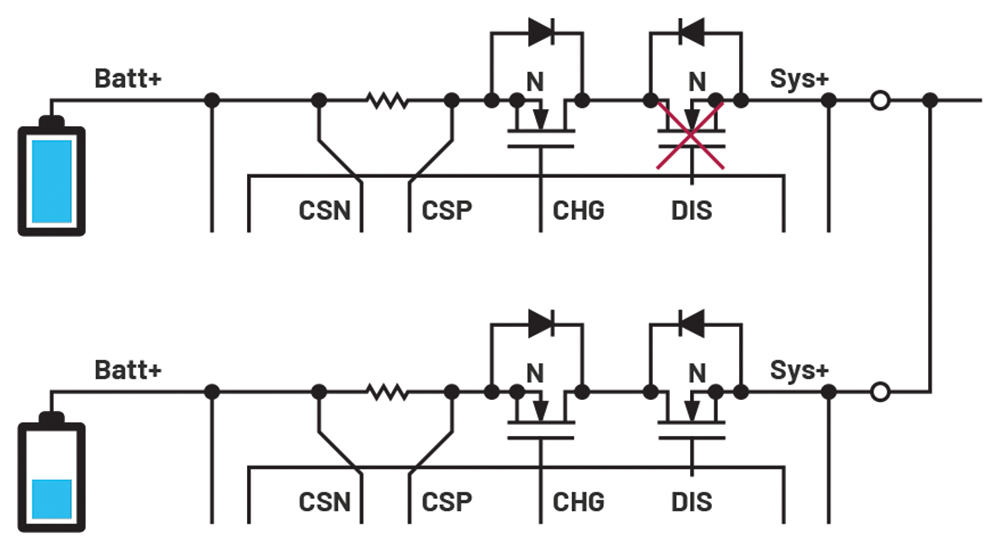
Parallel charging of multiple cells requires additional management. For example, the charger must prevent cross charging when the two batteries’ voltages differ by more than 400 mV. Cross charging can be tolerated for a limited time only when the lowest cell charge is too low to support system loading (see Figure 7).
Conclusion
Moving charging and fuel gauge functionality from the host side to the battery pack allows individual control of each battery in a 1S2P configuration. Rather than requiring the host MCU to fully manage charging, a smart charger itself can manage its own output according to an optimal charging profile. Because management on the host side is limited to managing ALRT signals generated by the fuel gauge, systems can easily adapt to different battery packs.
A smart charger can also block charging and discharging when needed to prevent cross charging. This approach increases the flexibility of a typical fast charging system, where battery mismatches are not considered. In addition to simplifying design and the overall charging process, OEMs can minimise power dissipation, and ensure safe charging and discharging across a wide range of applications, all while improving the user experience with faster battery charging.
| Tel: | +27 11 923 9600 |
| Email: | [email protected] |
| www: | www.altronarrow.com |
| Articles: | More information and articles about Altron Arrow |






© Technews Publishing (Pty) Ltd | All Rights Reserved
 printer friendly version