


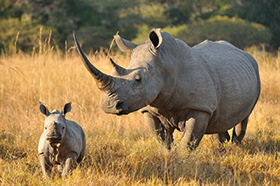
Between 2006 and 2022, over 9400 African rhinos were lost to poaching, while almost 500 rhinos were killed in South Africa in 2023 alone. These numbers are alarming, and rhino poaching remains a highly sensitive issue in the country. But in the face of this ongoing crisis, advanced technologies such as data creation, aggregation, and AI are emerging as crucial tools in protecting these endangered animals, writes Priaash Ramadeen, co-founder and CEO of The Awareness Company.
September was Rhino Poaching Awareness Month, which serves as a stark reminder of the challenge we face. Criminal networks are becoming more sophisticated, utilising advanced tools to pursue rhinos, which have become a high-value asset in the illegal wildlife trade. This means anti-poaching units, game rangers, military forces, and private organisations must treat rhino protection with the same strategic precision as they would any other valuable asset.
Rhino conservation isn’t just about stopping poachers; it’s about implementing a full-scale security operation. South Africa is home to nearly 80% of the world’s rhinos, and the Kruger National Park, one of the country’s largest wildlife reserves, has been ground zero for much of this conflict. Due to its sheer size and dense wildlife population, it’s a challenging environment to protect. Organised crime syndicates exploit these vast areas, knowing the limits of the resources available to game reserves.
The fundamental issue here is one of situational awareness. Without real-time intelligence, security teams are often left playing catch-up – scrambling between incidents, unsure of what’s unfolding on the ground. This is where technology like The Awareness Company’s software HYDRA becomes a gamechanger.
HYDRA provides instant data creation and aggregates data from drones, cameras, sensors, and mobile apps to provide a comprehensive picture of what’s happening across these large landscapes. Instead of reacting after poachers have struck, AI-automated insights allow teams to proactively monitor and predict where threats are most likely to arise. This level of situational awareness transforms rhino protection into a high-tech security operation, ensuring that anti-poaching teams can stay one step ahead.
Rhino poaching is influenced by countless variables: weather conditions, terrain, seasonal changes, the movement of animals and people, and historical poaching data. Manually processing and making sense of all these factors would be nearly impossible. But with AI, HYDRA can quickly analyse large datasets, identify patterns, and generate predictive models, allowing anti-poaching teams to focus their efforts where they are needed most.
For example, just as security systems in high-value facilities use predictive intelligence to pre-empt intrusions, HYDRA’s insights enable rangers and security forces to identify potential hotspots for poaching activity before criminals strike. This allows resources to be deployed efficiently, maximising the effectiveness of patrols while minimising unnecessary costs. Furthermore, AI-powered recognition technologies can help detect unusual activity – such as the movement of vehicles or humans in restricted areas – enabling rapid responses.
Fortifying defences
Like other forms of criminal activity, poaching tends to spike in certain periods. Traditionally, when poaching threats rise, resources are ramped up, but when activity subsides, efforts are scaled back. This reactive approach is both costly and inefficient. Instead, by continuously improving our use of data and AI, we can maintain readiness year-round, sharpening our defences even during quieter times. This ensures anti-poaching teams are always prepared, without driving up operational costs.
Poaching isn’t just a local problem; it’s a multinational issue involving intricate networks of buyers, sellers, and intermediaries. Therefore, the data we gather must account for the bigger picture: cross-border movements, global economic pressures, and international demand for rhino horn. Just as global corporations need comprehensive intelligence to secure their assets across multiple locations, wildlife reserves must adopt a similar strategy to combat poaching.






© Technews Publishing (Pty) Ltd | All Rights Reserved
 printer friendly version