


As the IoT continues to transform industries, design decisions around wireless connectivity components become increasingly complex. Engineers often face the dilemma of choosing between ICs and wireless modules for their IoT applications. Both options offer unique benefits and trade-offs, impacting factors such as design complexity, cost, scalability, and time to market.
Understanding ICs and modules
An IC (SoC) is a semiconductor device that contains a processor, memory, and other functional elements on a single chip. Engineers designing with ICs must develop a supporting PCB, including antenna design, RF matching, power management, and other components.
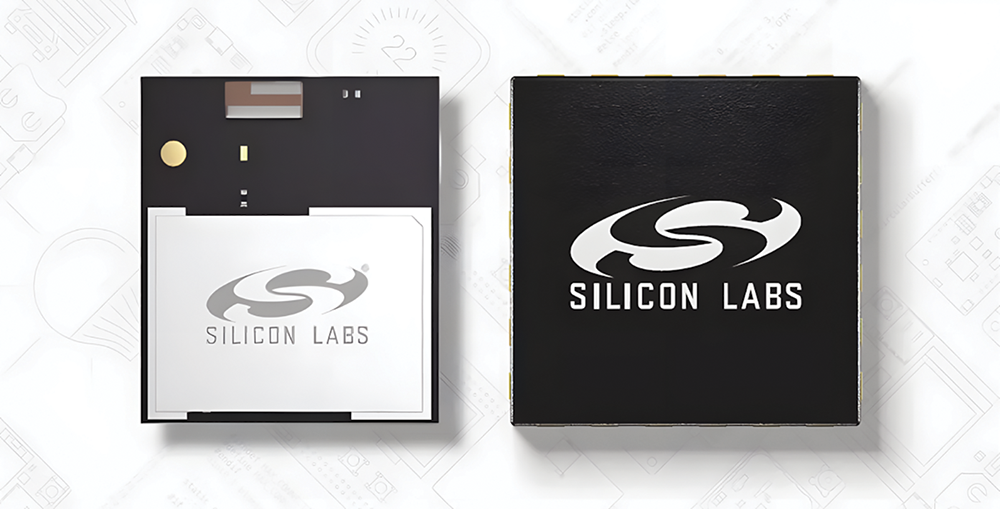
A module, on the other hand, is a pre-integrated system that includes an IC along with all necessary supporting components, such as RF-pin/built-in antenna, EMC shielding, power supply filtering, RF matching components, antenna components, and worldwide regulatory certifications. Modules are designed to minimise the hardware environment required to implement a complete solution, reducing design complexity and certification efforts.
Design and development considerations for ICs and modules
RF design complexity
• IC: RF engineers must meticulously design and optimise antenna layouts, PCB trace lengths, and matching networks. Even slight variations in layout can degrade signal performance, requiring extensive debugging.
• Module: Pre-optimised RF design eliminates the need for complex antenna placement and matching, reducing development time and effort.
Certification and compliance
• IC: Products using SoCs require separate regulatory approvals for each target market (FCC, CE, etc.), which can be costly and time-consuming.
• Module: Modules come with pre-certified regulatory approvals, significantly reducing certification costs and risks.
Time to market
• IC: The complexity of RF design and certification can delay product launches by 3-6 months.
• Module: Faster development cycles enable quicker market entry, a crucial advantage for competitive industries.
Cost analysis
• IC: Lower initial component costs, but higher design and certification expenses. Suitable for large-scale production where economies of scale justify the investment.
• Module: Higher per-unit costs, but reduced design and development expenses. Ideal for low to medium production volumes.
Hidden costs of IC design
Designing with SoCs introduces hidden costs that are often overlooked:
• RF expertise: Hiring specialised RF engineers can be a costly exercise.
• Lab equipment: Spectrum analysers, anechoic chambers, and other RF test equipment can be very costly.
• PCB layout: Achieving optimal antenna performance requires iterative PCB design and manufacturing cycles.
• Certification costs: Regulatory testing for SoCs can be exorbitant over a five-year period.
SiP vs PCB modules
When choosing between ICs and modules, another consideration is the form factor used.
SiP modules
System-in-Package modules integrate multiple components into a single package, offering a compact solution with optimised RF performance, smaller size (<12 x 12 mm), pre-integrated components, advanced packaging techniques, optimised for high-performance applications, and, therefore, requires careful thermal and mechanical design.
PCB modules
PCB modules consist of a carrier board with components mounted separately. They offer easier development and in-house prototyping, more flexible design changes, easier second sourcing, and generally larger size (>10 x 10 mm).
SiP modules for miniaturised IoT dsigns
Silicon Labs’ System-in-Package modules, such as the BGM220S, exemplify the benefits of module-based design. These modules feature integrated RF components and shielding, offering superior size and performance optimisation for space-constrained applications like wearables and smart sensors. With a compact 6,5 x 6,5 mm footprint, SiP modules reduce PCB real estate, while ensuring robust RF performance.
When to choose IC over Module
ICs are ideal when:
• High production volumes justify the upfront design and certification costs.
• The design team has access to RF expertise and advanced lab facilities.
• Custom RF optimisation is critical for the application.
Modules are preferable when:
• Rapid time to market is essential.
• Regulatory certification costs need to be minimised.
• The application requires a compact and standardised design.
A Balanced Approach
As can be seen, the decision between IC and module depends on specific project requirements, resources, and business goals. Silicon Labs’ ability to provide both solutions ensures that customers can seamlessly transition from modules to SoCs as their production volumes and design capabilities evolve. By partnering with a single supplier, companies can protect their software investment and optimise their IoT designs for long-term success.
| Tel: | +27 11 608 0144 |
| Email: | sales@nuvisionelec.co.za |
| www: | www.nuvisionelec.com |
| Articles: | More information and articles about NuVision Electronics |






© Technews Publishing (Pty) Ltd | All Rights Reserved
 printer friendly version