


LTE Cat 1 is a popular, familiar, resilient technology that provides good coverage at a reasonable cost, but device OEMs and chipset vendors have realized that Cat 1 module-based products costs could come down even further if a dedicated Cat 1bis chipset with send and receive functions delivered over a single antenna is offered. The original Cat 1 specification in 3GPP Release 8 required two antennas, but Cat 1bis offers significant cost optimisation benefits by using a single antenna.
The Cat 1bis standard in 3GPP Release 13 formalises the common but informal use of single antenna Cat 1 devices. Originally part of GSMA Release 13 in 2016, Cat 1bis did not really gain much attention until 2023 when a growing number of IoT applications started to recognise that LTE Cat 1bis offers a significant upgrade to standard Cat 1 with a long lifespan and an appealing cost base.
Operating in all LTE frequencies, the higher data rate gives Cat 1bis a clear advantage in power consumption over Cat M and NB-IoT when transmitting. This is because Cat 1bis transmits more data with less power and this allows for a shorter time in transmit mode, during which the module consumes maximum power.
Gaining traction
Recent cellular module forecasts from ABI Research show that Cat 1bis will replace nearly 70% of the LTE Cat 1 market by 2029. Popular use cases include industrial routers, home security and automation, smart electricity meters, fleet management and point of sale (POS) devices. Cat 1bis, in common with Cat 1, is in a cellular sweet spot, offering more than adequate performance for video applications, attractive cost and the assurance that LTE networks will be in operation until at least the end of this decade.
The lower cost of Cat 1bis is its compelling advantage. Outside of China, Cat 1bis modules are at least 30% cheaper than Cat 1, with even greater reductions seen in China, reports ABI Research. Network roaming is also a benefit as 4G roaming agreements are well established for Cat 1 and by extension Cat 1bis. That is in stark contrast to the roaming challenges seen today with NB-IoT and Cat-M in international markets.
Accelerated uptake
The accelerated uptake is borne out by IoT Analytics which expects to see double digit growth for Cat 1bis. Although the firm reports that only 6% of the cellular IoT module market in Q1 2024 was Cat 1bis based, it is the best-selling cellular IoT module type in China. In addition, LTE Cat 1bis has experienced the steepest climb in year-on-year shipments and the market forecasts are for a continued upward trend in this regard, resulting in 14% revenue growth from Cat 1bis sales in 2024.
Modules with broad appeal
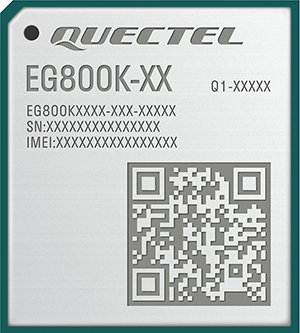
To serve this demand, vendors have been bringing LTE Cat 1bis modules to market, offering compact modules that have low power consumption and are suitable for a wide variety of use cases. One example is the Quectel EG800K, an LTE Cat 1bis module designed in a compact and unified form factor. Based on 3GPP Rel-14 LTE technology, the module supports Cat 1bis, delivering maximum data rates of 10 Mbps downlink and 5 Mbps uplink. The module’s dimensions are
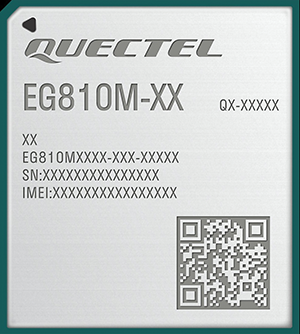
Another option is the Quectel EG810M LTE Cat 1bis module which also offers maximum data rates of 10 Mbps downlink and 5 Mbps uplink in an LGA form factor of
When to consider Cat 1bis
Cat 1bis is an ideal connectivity option for a wide range of IoT use cases and applications. These include:
• Point of sale terminals – Cat 1bis has been adopted to allow both mobile merchants and retailers in large stores to take advantage of ubiquitous cellular coverage to process transactions. Cat 1bis throughput is comfortably able to support POS communication and offers a secure, low-cost solution for retailers.
• Smart meters – The low power consumption of Cat 1bis makes it ideal for long-life meter deployments of ten years or even more in some cases. Smart meters can be simply installed and utility providers can be assured that the cellular connection will be available for the life of the meter. The low cost of Cat 1bis is essential for meter deployments, which can number in the tens of millions of units.
• Vehicle telematics units – Vehicles, by definition, are mobile, so Cat 1bis makes an ideal connectivity solution because coverage is near-total. Devices can roam from country-to-country and throughput is adequate for in-vehicle applications, including video. This market is also cost-sensitive, so being able to access globally-adopted LTE networks with good performance is compelling for this sector.
• Asset-tracking devices – Tracking assets accurately relies on uninterrupted access to connectivity so positions can be reported and status and usage monitored. Cat 1bis is easily able to handle these types of data payload and, importantly, in this sector, can offer near-complete global coverage thereby assuring asset owners that their devices can be tracked.
Cat 1bis is a well-understood, and now, increasingly popular technology with a large installed base in markets across the globe. The volumes of modules and devices being shipped today that contain Cat 1bis assure the technology’s market status for the coming decade and Quectel believes that Cat 1bis will remain a popular cellular connectivity option for at least the next ten years, especially since mobile operators are not yet even thinking of deactivating their LTE networks.
Ultimately, LTE Cat 1bis may be replaced by enhanced and newer technologies such as 5G Reduced Capacity (RedCap) and enhanced RedCap (eRedCap), but that technology is yet to mature and is some years away from mainstream adoption. The balanced blend of performance, cost, and coverage that Cat 1bis offers to developers and IoT organisations right now means developers can confidently select the technology.
| Tel: | +27 11 608 0144 |
| Email: | sales@nuvisionelec.co.za |
| www: | www.nuvisionelec.com |
| Articles: | More information and articles about NuVision Electronics |






© Technews Publishing (Pty) Ltd | All Rights Reserved
 printer friendly version