


In 2024, mobile network coverage of 3G or higher was available to 96% of the global population, with gaps in the least developed and landlocked developing countries. Even with high population coverage, there are still many geographic cellular coverage gaps since networks are concentrated in urban and suburban centres. Many rural and remote locations, even in developed nations, have spotty or limited cellular or LPWAN service.
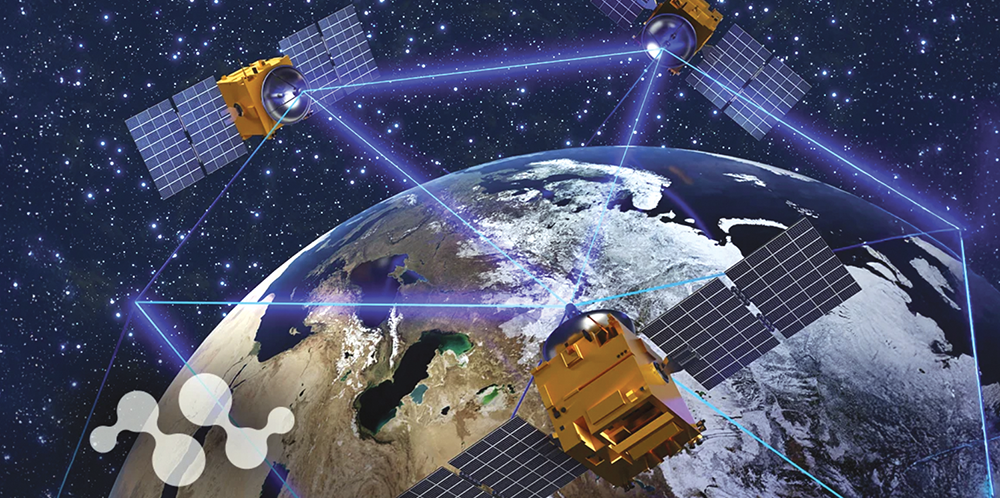
Enter non-terrestrial networks, or NTNs. These networks fill cellular coverage gaps in remote areas by extending terrestrial networks. They are not subject to disruptions from natural disasters or sabotage, so they can serve an important role in emergency communications. NTNs are a great fit for outdoor use cases, such as tracking assets that are moving across geographies or networks such as logistics or livestock tracking, as well as connecting to fixed assets in remote areas like electrical infrastructure or oil and gas pipelines.
Satellites present the largest opportunity to extend cellular coverage, but there are many types of satellite communication technologies. Commercial network operators have chosen different technical approaches, so how can your organisation know which partnerships to pursue?
Technological approaches to satellite IoT
Operators with LEO and GEO satellite networks are taking one of two technological approaches, using either proprietary technology or direct-to-cell technology.
Proprietary technology includes infrastructure that is not commercially available to other operators. Whether that infrastructure is specialised satellites that connect directly to proprietary devices, terrestrial workstations, telematics devices, or a software platform, proprietary solutions offer an end-to-end experience. One example of a proprietary operator is ORBCOMM, which owns more than 30 LEO satellites and corresponding ground infrastructure.
NB-IoT over NTN: The 3GPP organisation develops specifications for all cellular technologies, including narrowband IoT (NB-IoT). NB-IoT has had global adoption and the last few 3GPP updates extended the standard to non-terrestrial networks. 3GPP Rel-19 provides a major step forward in the integration of NTNs with 5G by its inclusion of a complete gNodeB (gNB) on a satellite, which minimises the need for a ground network. Commercial operator Skylo uses legacy Viasat GEO satellites and existing devices for its NB-IoT NTN.
NTN LoRaWAN combines a mature LoRa ecosystem with GEO and LEO satellites, which act as LoRaWAN gateways in the sky. The use cases are sensor oriented, such as gathering real-time temperature and moisture data, monitoring electrical grid infrastructure for vibrations or water meters readings. At least three companies have commercialised these LoRaWAN NTNs, including EchoStar Mobile with GEO satellites, Lacuna space and Plan-S with LEO constellations.
Direct-to-cell technology uses LEO satellite systems that can communicate directly with commercially available cellular devices, bypassing cell towers on land. Cellular is then possible in rural, remote, or disaster areas. Depending on the operator, voice, text, and data communications are enabled. Starlink is one example, launching direct-to-cell services with over 320 specialised satellites, partnering with mobile carriers to use their existing licensed spectrum.
The future of IoT with non-terrestrial networks
Regardless of the IoT use case, coverage is always an issue. Companies must carefully plan for fallback depending on where in the world the application operates. Now there is the potential to have a fallback technology that will likely be available everywhere. This gives the benefits and scale of standard technologies with the ability to connect over satellite anywhere in the world.
The Semtech HL7810 and HL7812 did not need a hardware change to meet Skylo certification requirements; instead, a firmware update supplied all necessary technical changes. The modules that are already being used for LTE coverage now offer this additional capability with no additional hardware costs.
With Semtech 3rd generation LoRa chips the low power benefit of LoRaWAN now becomes available for direct to satellite connectivity, with the opportunity to keep full interoperability with terrestrial LoRaWAN networks.
| Tel: | +27 21 421 8292 |
| Email: | marian.ledgerwood@futureelectronics.com |
| www: | www.futureelectronics.com |
| Articles: | More information and articles about Future Electronics |






© Technews Publishing (Pty) Ltd | All Rights Reserved
 printer friendly version