



[Sponsored] Power delivery has always been a key requirement of electronic systems, but the way power is generated, distributed, and consumed is changing rapidly. Renewable energy installations and energy storage systems are introducing new power sources, while industrial automation and electric vehicle charging infrastructure are pushing current levels higher. At the same time, users are demanding smaller, more modular form factors. As a result, designers must pay close attention to electrical ratings, thermal management, and efficiency.
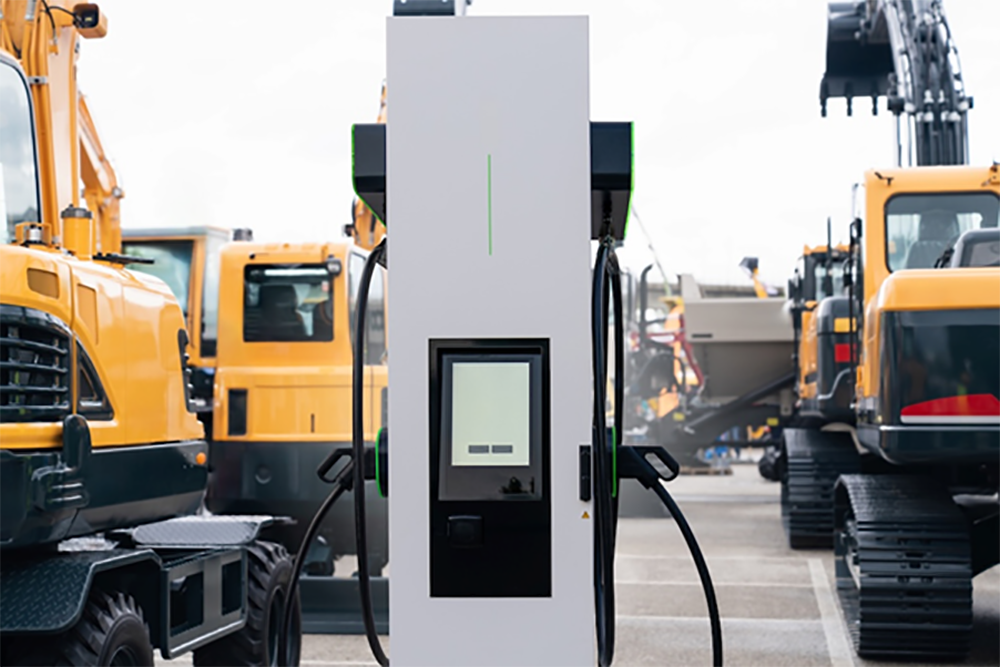 Electrification is entering the heavy industrial vehicle market.
What is less frequently discussed is that many power-related failures are not the result of electrical miscalculation. Instead, they originate as mechanical problems. Vibration and thermal cycling cause material relaxation and wear, directly influencing how effectively power is transferred over the lifetime of a system. In harsh operating environments, these mechanical factors often determine whether a power connection remains reliable or becomes a point of failure.
Mechanical behaviour defines electrical performance
At high current levels, the distinction between mechanical and electrical design becomes blurred. Contact resistance, often treated as a fixed characteristic early in the design process, is in fact dynamic. It depends on the condition of the contact surfaces, the force pressing them together and their ability to remain stable over time.
Even a small increase in contact resistance can have a significant effect in power applications. Power losses rise with the square of the current, accelerating material ageing and further degrading contact quality. What initially appears to be an electrical overheating issue is often triggered by mechanical changes at the contact interface. As power densities continue to rise, these interactions can no longer be ignored.
Contact normal force
One of the most important mechanical parameters in a power connector is contact normal force. This is the force with which two mating surfaces are pressed together. Adequate normal force ensures that surface films and oxides are disrupted, allowing stable metal-to-metal contact.
Consistent normal force leads to predictable, low contact resistance. If that force relaxes over time, resistance rises and power losses increase. Elevated operating temperatures accelerate this process, as metals and spring elements experience stress relaxation. In high-current connectors, this creates a feedback loop in which increased resistance causes heating, further reducing contact force.
However, simply increasing normal force is not a universal solution. Excessive force raises insertion and extraction forces and accelerates mechanical wear. The challenge for connector designers is to strike a balance, delivering enough force to maintain low resistance throughout the life of the product, while preserving usability and durability. This balance becomes increasingly critical as current levels and operating temperatures rise.
Hidden damage
In many power and energy applications, connectors are exposed to continuous low-level vibration. Wind turbines, solar tracking systems, rail equipment, mining machinery and industrial drives all introduce mechanical motion into the system. Even when vibration amplitudes are small, they can cause microscopic movement at the contact interface.
This phenomenon, known as micro-motion, can lead to fretting corrosion. As contact surfaces move against each other, wear debris and oxides form, degrading the contact surface and increasing resistance. Unlike major mechanical failure, fretting progresses slowly and can remain undetected until overheating or intermittent faults reveal the damage.
Power contacts are particularly vulnerable because higher currents amplify the effects of resistance variation. Environmental sealing can protect against moisture and contaminants, but it does not eliminate fretting if contact geometry and compliance are poorly suited to vibration. Managing micro-motion therefore requires careful mechanical design rather than relying solely on environmental protection.
The effect of mating cycles
Power connectors are often required to withstand repeated mating and de-mating during installation, maintenance, and service. Each mating cycle alters the contact surfaces slightly. Over time, wear can change contact geometry and reduce the effective contact area.
In connectors that rely on multiple contacts or blades to carry high current, mechanical wear can also affect current sharing. If one contact path degrades faster than others, current concentrates into fewer paths, creating localised thermal hotspots. These hotspots accelerate ageing and can ultimately lead to failure, even when overall current remains within the nominal rating.
Design features such as controlled wipe length, appropriate plating systems, and compliant spring structures play an important role in managing wear and maintaining uniform current distribution throughout the connector’s service life.
Designing power in harsh conditions
Designing reliable power connectors for demanding environments requires an integrated view of mechanical and electrical performance. Contact geometry, spring behaviour, material selection, and plating systems must all be optimised together.
Compliant contact designs that maintain stable normal force over temperature and time help accommodate vibration and thermal cycling. Multi-point contact interfaces can provide redundancy and improve stability, provided they are engineered to share current evenly. Crucially, these features must be validated under combined stresses that reflect real operating conditions, rather than in isolation.
Traditional qualification tests confirm that a connector meets basic standards, but they do not always reveal how it will behave after years of exposure to vibration, heat, and repeated loading. For power applications, understanding long-term mechanical behaviour is just as important as meeting initial electrical specifications.
The Samtec approach
Samtec approaches power interconnect design with the recognition that mechanical and electrical performance are inseparable. Contact systems are engineered to deliver stable resistance under real operating conditions, not just at the point of initial installation.
This philosophy is reflected in Samtec’s Severe Environment Testing Initiative, which evaluates connectors under combined mechanical, thermal, and electrical stresses. Rather than relying solely on datasheet values, this testing provides insight into how contact systems behave over time in demanding environments.

Beyond the connector itself, Samtec works with customers to understand application-specific challenges and support effective system integration. By combining robust interconnect design with application knowledge, Samtec helps engineers build power systems that remain reliable throughout their operational life.
Conclusion
As power systems become denser, more distributed, and more mechanically demanding, traditional electrical ratings are no longer sufficient predictors of long-term performance. Mechanical factors such as contact force stability, vibration tolerance, and wear, increasingly define whether power connections remain reliable or become sources of loss and failure.
Understanding the mechanical side of power is therefore essential for engineers working in modern energy, industrial, and infrastructure applications. By treating contact physics as a core design consideration, it is possible to build power systems that deliver not only higher performance, but also the durability required for real-world environments.
Learn more about Samtec’s Severe Environment Testing program at www.samtec.com/testing/severe-environment
| Tel: | +27 11 425 1400 |
| Email: | [email protected] |
| www: | www.spectrumconcepts.co.za |
| Articles: | More information and articles about Spectrum Concepts |






© Technews Publishing (Pty) Ltd | All Rights Reserved
 printer friendly version