


We are told by the people who decide things, we must pass this emission limit line or the product must behave itself when exposed to that level of RF interference, and that is it. We might scratch our heads and resign ourselves to either ‘I guess I have to trust them’ or ‘I really need to know what this means!’ Let’s talk about that second option, ‘What this means.’
The start of EMC
As soon as electronics and electrical systems started interfering with each other, the world had to come to some consensus. Considering physics is universal and does not care about what country electrical/electronic products are used in, it should be the same everywhere, right? It is nearly there, but not quite. The important first step was agreeing that we must be able to identify how much radio frequency noise we (our products) can reasonably emit and how much we can reasonably tolerate. To accurately measure and compare, we need to agree on how to test equivalent products; then we can settle on the levels and limits.
High emissions limits with high immunity levels scenario
We could have decided on quite high emission levels and ensured every product was highly immune, but this approach is not great when your product has a receiver, and you want to pick out your radio transmission from all the RF noise. Making a product highly immune is challenging, too, as RF noise can easily and efficiently couple onto cables and interfere with intended communications.
Low emissions limits with low immunity levels scenario
The opposite is not great either; if regulatory bodies demanded very low emission levels from products, so that everyone’s devices did not have to be so immune, then you would still have problems. For example, equipment would be damaged when lightning strikes even miles away; it could subject your electronics to a broad spectrum of strong transient interference. There are plenty of natural sources of interference out there, and the consequences of a product operating unexpectedly can be catastrophic.
Compromise
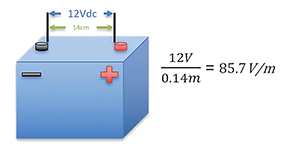
Striking a balance is the key. We want minimal emissions and maximum immunity. Both come at a cost, borne by the manufacturer and, in turn, the consumer. Costs can include expensive filters, chokes, sheathed cables, shielding over ICs, metal enclosures, and a limited choice of internal and external communications. This is where careful design reigns supreme, with a focus on leveraging product design to maximise EMC performance at minimal cost.
What was the first attempt?
In 1906, the International Electrotechnical Commission (IEC) was founded. It was recognised that a global body was needed to standardise electrical units, terminology, and equipment. This was in response to a growth in electrical technology in the late 19th century. The IEC brought together national committees worldwide to create a common technical language for the electrical industry. Since then, additional bodies have been established to address more specific technologies and products.
What should the levels and limits be?
Well, truth be told, it is still a compromise. Remember, standards are of their time. In the early days, Amplitude Modulation (AM) broadcast receivers played a big part in setting electrical emissions limits. AM receivers demodulate the peak envelope of radiated energy and convert it to sound. So, you could literally hear equipment interfering on your AM radio. Measuring noise floor is not straight cut; you need to agree on bandwidth, detector type, distance, and antenna.
While noise floors of approximately 20 to 40 dBuV/m field strength were not unusual, lower levels can be achieved in anechoic chambers and rural areas. A 40 dBuV/m limit was deemed reasonable for certain bands at 9 kHz bandwidth filtering at a distance of 10 m. This represents only 100 uV/m field strength. Compare that now to an immunity test level of 10 V/m or 140 dBuV/m, which is 100 000 times stronger than what is allowed to be emitted.
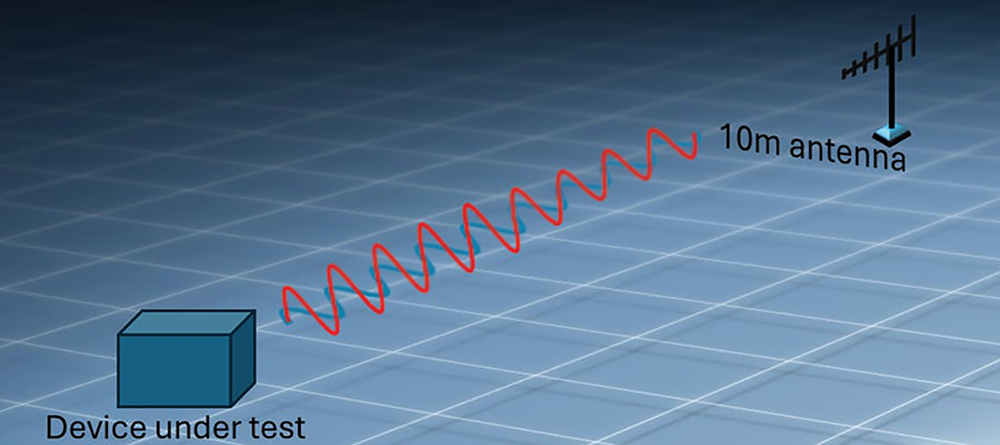 Figure 2. Measuring the emissions of a product over 10 m [Analog Devices].
These sample values work for some industrial frequency bands and serve as a baseline. Remember that compromises are made in Standards review meetings; cases can be made for changes, providing they are well documented and justified. Sometimes new technologies need to be considered, and out-of-date references need to be removed. Many of these standards are not free. To fund the organisations, most contributors volunteer their time to maintain high-quality documents, along with reasonable limits and levels, while keeping their companies’ interests at heart.
| Tel: | +27 11 923 9600 |
| Email: | [email protected] |
| www: | www.altronarrow.com |
| Articles: | More information and articles about Altron Arrow |






© Technews Publishing (Pty) Ltd | All Rights Reserved
 printer friendly version