


CH4 monitoring is gaining attention as governments, research institutes, and industry groups work to better understand and reduce greenhouse gas emissions.
In the oil and gas sector, European Union has already established clear CH4 reporting requirements, and several regulatory milestones have been implemented in recent years, each adding new expectations around measurement and reporting.
Operators are now required to carry out real CH4 measurements, not just estimates, and submit this data to authorities. In the United States, recent deregulation has slowed mandatory CH4 monitoring, although many leading operators continue voluntary measurements to manage leaks and maintain environmental performance. As a result, dependable leak detection and quantification tools are becoming increasingly important across the industry.
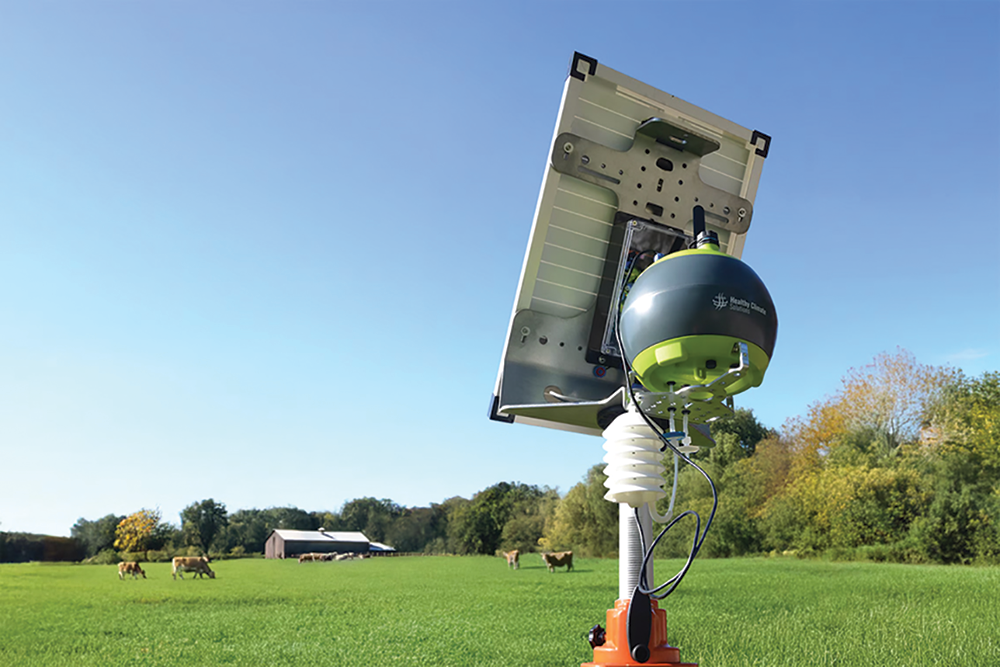 Figure 1. Continuous CH4 emission monitoring [Hamamatsu].
In the livestock sector, CH4 monitoring is at an earlier stage. Formal regulation has not yet been introduced, but several European countries, particularly the Netherlands and Belgium, are funding long-term measurement programs to better quantify CH4 emissions under real farm conditions. These initiatives aim to complement or refine the model-based emission factors currently used in national inventories, and are driving increased demand for sensing technologies that deliver stable, repeatable performance.
Engineering precision for real-world environments
Axetris, part of the Leister Group, is based in central Switzerland and focused on developing and manufacturing high-performance gas detection modules for CH4, ammonia (NH3), and CO2. Its laser gas detection (LGD) product line is used across a wide range of industries and applications, including oil and gas leak detection, fence-line monitoring, livestock emissions research, and medical breath analysis. These systems offer compact form factors, high sensitivity, and long-term stability, and are valued by research institutes, environmental scientists and system integrators who rely on precise, dependable data generation.
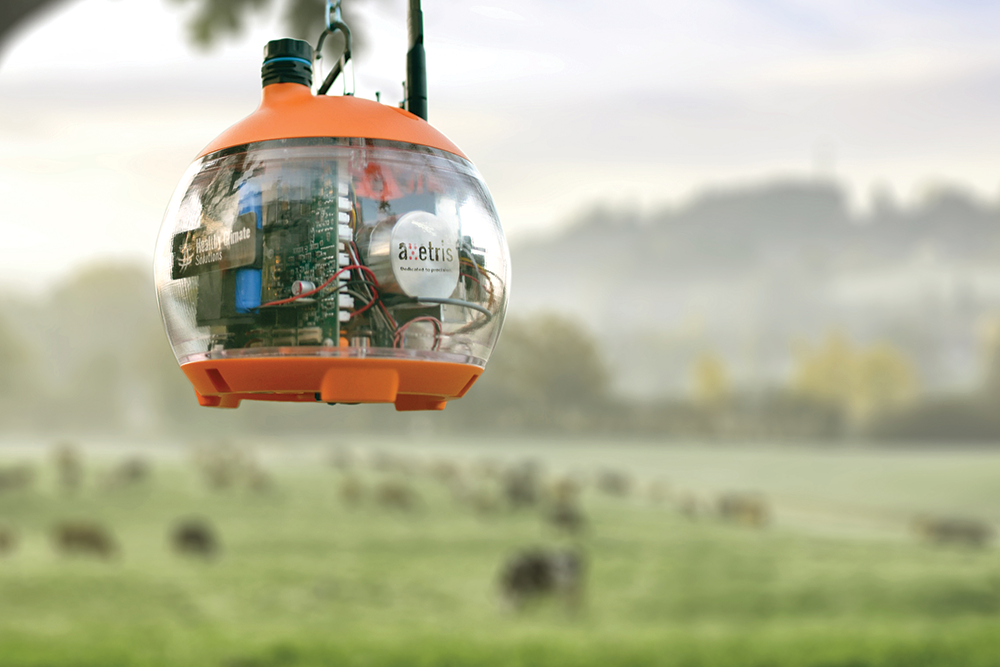 Figure 2. Axetris’ LGD compact CH4 monitoring [Hamamatsu].
The challenge of achieving stable sub-ppm detection
Developing a compact, field-ready CH4 sensor brings several engineering challenges. CH4 absorption in the near-infrared (NIR) region – around 1,6 μm – is relatively weak, making it challenging for compact TDLAS systems to detect the very small changes in optical transmission required for sub-ppm measurements. Although CH4 absorbs more strongly at 3,3 μm, the 1,6 μm region is preferred as it is covered by mature, stable, and compact telecom-grade lasers and detectors suitable for field applications.
The optical path for these sensors is limited by the small form factor, meaning that drift, vibration, and environmental noise have a greater impact on the signal, while fluctuations in polarisation can introduce additional measurement error. To compensate for these limitations, the optical components must work well together to preserve signal quality. The laser needs to maintain consistent beam alignment and wavelength stability, while the photodiode must deliver very low noise, low dark current, and strong responsivity at the relevant wavelength.
Axetris selected Hamamatsu Photonics’ InGaAs PIN photodiode to form the core detection element in its CH4 sensing systems more than 15 years ago, and it has since been the detector of choice. Low noise and dark current allow the photodiode to meet Axetris’ sub-ppm detection requirements, while the large active area helps to preserve alignment if the beam shifts due to temperature fluctuations or mechanical stresses. The low polarisation dependence loss (PDL) design of the photodiode further reduces signal fluctuations caused by polarisation changes, improving overall stability in compact TDLAS modules.
This long-running relationship has involved more than supplying components; Hamamatsu Photonics has provided practical guidance and technical support from the initial integration through to later optimisation work, helping Axetris to refine how the detector performed within the compact TDLAS architecture. Rui Protasio, product manager at Axetris, explained, “When we first integrated the photodiode, we had support from Hamamatsu Photonics on how to package it – things like the cap, anti-reflection coatings, and some custom options not shown on the website. That helped us to optimise the detector for our compact design. We have a very small optical path, so every source of noise becomes a problem, and the low-PDL photodiode really allowed us to reach the performance we needed without having to increase the form factor.”
The detector has proven consistent, reliable, and robust for more than a decade, helping Axetris to deliver stable, repeatable measurements in both research and industrial settings. Baz Matvichuk, head of sales and product management, noted, “Hamamatsu Photonics has been rock solid in terms of delivery, performance, and field reliability. The detector just works, and that is exactly what you need in this kind of system.”
| Email: | [email protected] |
| www: | www.hamamatsu.com |
| Articles: | More information and articles about Hamamatsu Photonics UK |






© Technews Publishing (Pty) Ltd | All Rights Reserved
 printer friendly version