


We all know that nature evolves to meet new challenges. Old lifeforms become extinct to make room for newer, better ones, and existing lifeforms evolve to become more efficient and better adapted to their environment.
Why should it be any different in the small form factor computing industry? Let us take a look at some of the recent evolutions in expansion buses and hypothesise what might come next.
The PC/104 Consortium introduced PCIe/104 in an attempt to provide PCI Express as an expansion platform for small form factor stackable systems. Unfortunately, they made two key mistakes: (1) they abandoned the highly popular PC/104 ISA bus in favour of the far less important PCI-104 PCI bus, and (2) they focused the new connector exclusively on PCI Express (PCIe), dedicating two-thirds of the connector to a x16 link, even though there is little or no requirement for PCIe x16 in small form factor systems.
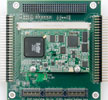
As a result, a small group splintered off to create a competing organisation, the SFF-SIG, and its own standard, SUMIT. SUMIT retained the ISA bus instead of the PCI bus (good) and provided a variety of ‘low-speed’ expansion options, including LPC (also good). Unfortunately, SUMIT also got it wrong, by adding every serial bus it could think of, even though some have little or no applicability to the small form factor market.
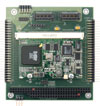
This kitchen sink mentality resulted in the SUMIT connector being overloaded with features that no one wants, like ExpressCard and Microwire, while coming up short on the ones that people do want, like PCIe.
Enter that all-correcting force: Evolution. The PC/104 Consortium recognised the shortcomings of PCIe/104 and created a new Type 2 specification. Type 2 adds LPC, USB and SATA to the connector, providing more options for I/O module designers. Type 2 is backwards compatible with Type 1, so existing products will still work in new systems. The SUMIT group made a minor update to its specification too, assigning a function to a reserved pin. However, they declined to add a life-saving second PCIe link to connector A, which would have made the connector far more useful.
Analysis of the two organisations’ websites indicates a far greater market acceptance of PCIe/104 than of SUMIT, based on the number of vendors and products listed. This lead is likely to expand as more vendors see the utility of the new PCIe/104 Type 2 pinout.
But Evolution is not done yet. Both PCIe/104 and SUMIT are guilty of key sins in the small form factor market: excess size, excess cost and (in the case of SUMIT) inferior connectivity. In small boards like PC/104, not only is every bit of PCB area precious, but the PCB edges are also critically important, since that is where the I/O connectors go.
The long connectors used in PC/104, PCI-104, PCIe/104 and SUMIT each occupy almost an entire edge of the board. In a typical two-connector configuration, up to half of the board’s ‘coastline’ is consumed by bus connectors. This leads to undesirable consequences, like ‘wings’ which violate the form factor, or even worse, omitting valuable features.
In addition, the cost of these connectors is an unwelcome burden. A PCIe/104 or SUMIT connector set costs as much as $20. Add just one I/O module, and that becomes $40. By the time it reaches the customer, that $40 easily becomes $80 or even $100. So much for the mantra ‘smaller, better, cheaper.’
Finally, both PCIe/104 and SUMIT have only a few reserved pins available for future definition. We all (should have) learned a lesson from ETX. When SATA came out, there were no pins left on the ETX connectors, so ETX vendors had to put the SATA connector on the module, which took up space and required a cable. Unfortunately, both PCIe/104 and SUMIT retain only four reserved pins, leaving them exposed to potential obsolescence once the next bus is introduced.
Many SBC vendors, having confronted the shortcomings of both PCIe/104 and SUMIT, appear to have thrown up their hands in despair and stayed away from both. For example, low-cost Asian manufacturers are almost completely absent from both standards. Customers suffer from the resulting limited choice and high prices.
So an opportunity exists for Yet Another Small Form Factor Bus Connector, one that has the following characteristics:
* It has the right combination of connectivity features that match processor chipsets and I/O chips;
* It has the smallest possible size while maintaining sufficient ruggedness;
* It has the lowest possible cost;
* It minimises the consumption of PCB coastline;
* It reserves sufficient pins for future functionality.
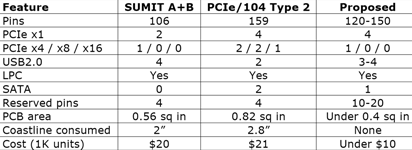
Table 1 summarises the features of SUMIT, PCIe/104 and a possible successor that incorporates the best of both while avoiding all their pitfalls. Think of it as the ultimate act of Evolution – a perfect fit solution to the needs of customers, using the ideal mix of today’s technologies while preserving sufficient room for future growth.
| Tel: | +27 12 493 0852 |
| Email: | [email protected] |
| www: | www.epd.co.za |
| Articles: | More information and articles about Electronic Products Design |






© Technews Publishing (Pty) Ltd | All Rights Reserved
 printer friendly version