The Erni KSG200 cable connector housing is intended for use with the TMC series, D-Sub connectors to DIN 41612, MIL-C-24308 and IEC 807-3. It was designed to fulfil the high ESD requirements and to provide shielding against EMI/RFI in accordance with new EMC laws. ESD protection is essential for high performance data transfer at high frequencies.
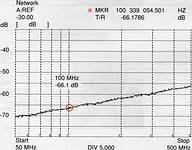
To ensure optimum ESD protection, the cable connector housing and the knurled screw heads are made of high performance plastic and satisfy the requirements of IEC 801-2. Operating temperature range is -65 to 185°C. To improve EMI/RFI shielding, two shielding plates are riveted to the half-shells of the housing. The shielding plates have a special design conceived after extensive testing which allows a very high level of shield attenuation. At 100 MHz more than -66 dB and at 500 MHz better than -55 dB. Comparison values for a metallised housing are approximately -55 and -45 dB respectively.
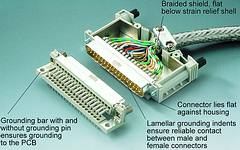
Figure 1. Structure of KSG 200 with construction details for shielding and ESD protection
The lamellar indents of the shielding plates at the contact points to the TMC connector and to the strain relief contributes greatly to this very high shielding level. The strain relief also connects the braided shield of the cable to the shielding plates. Cables with a diameter of up to 11 mm may be used.
A further major advantage of the housing is fast and easy assembly by means of snap latches on the two half-shells. Fixing screws prevent the two half-shells from separating (eg if the housing is dropped on the floor). For servicing, the two half-shells can easily be disassembled by removing the screws.
Figure 2. Shield attenuation diagram, measured using wire injection method
Clearing the Static: Electrostatic Discharge Actum
Manufacturing / Production Technology, Hardware & Services
A cordless ESD (Electrostatic Discharge) wrist strap does not work by grounding the person in the same way as a traditional wired wrist strap. Instead, it works by reducing or balancing the static charge on your body so that you are less likely to discharge electricity into sensitive electronic components.
Read more...EMC limits and levels Altron Arrow
Editor's Choice Circuit & System Protection
As soon as electronics and electrical systems started interfering with each other, the world had to come to some consensus. Considering physics is universal and does not care about what country electrical/electronic products are used in, it should be the same everywhere, right? It is nearly there, but not quite.
Read more...Safety relay for explosive areas IOT Electronics
Circuit & System Protection
Phoenix Contact has expanded its safety portfolio with the new PSR-MC35-EXI safety relay module, specifically engineered for use in potentially explosive environments.
Read more...Clearing the Static: Ensuring effective ESD control Actum
Circuit & System Protection
To maintain reliable electrostatic discharge control, regular testing and accurate measurement are essential, with grounding products and ESD testing equipment being vital.
Read more...Clearing the Static: The importance of ESD audits Actum
Circuit & System Protection
An ESD audit is the first step in establishing an effective static control programme in the workplace, and will help identify vulnerable areas and potentially hazardous static zones that require improvement.
Read more...EMI shielding materials application guide
Circuit & System Protection
TE Connectivity’s shielding solutions include electrically conductive elastomers, gaskets, knitted wire mesh, oriented wire, EMI shielding ventilation panels, shielded window, cable shielding and shielding components.
Read more...Clearing the Static: ESD containers and packaging Actum
Circuit & System Protection Vacuum forming ESD
Electronic components can be damaged by electrostatic discharges. To protect against such damage, electronic assembly parts are often transported or stored in vacuum formed component ...
Read more...Antistatic vinyl flooring Actum
Manufacturing / Production Technology, Hardware & Services
Vinyl is an affordable, antistatic tile or sheet with a life-span greater than 10 years and installed as a permanent electrostatic discharge floor.
Read more...Electrostatic discharge chairs Actum
Circuit & System Protection
An ESD chair forms an integral part of grounding within the electrostatic discharge protected area to prevent potential damage to products.
While every effort has been made to ensure the accuracy of the information contained herein, the publisher and its agents cannot be held responsible for any errors contained, or any loss incurred as a result. Articles published do not necessarily reflect the views of the publishers. The editor reserves the right to alter or cut copy. Articles submitted are deemed to have been cleared for publication. Advertisements and company contact details are published as provided by the advertiser. Technews Publishing (Pty) Ltd cannot be held responsible for the accuracy or veracity of supplied material.









 printer friendly version