


By using the OIS-P RF/ID (radio frequency identification) system at Fiat in Monte Cassino, Italy, and Daimler Chrysler in East London, South Africa, production and quality data for every vehicle moving down the production line is directly available at each automatic workstation, without links to cell or production computers. This contributes much to the flexibility of the manufacturing system.
To date, a large amount of OIS-P equipment from German company Baumer Ident has been installed for automatic identification of car bodies at several automotive factories. The largest installation in the world is the one in Fiat's most modern factory, at Monte Cassino, Italy. The largest OIS-P installation in South Africa is at Daimler Chrysler in East London.
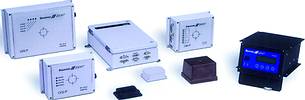
By using the OIS-P RF/ID (radio frequency identification) system at Fiat and Daimler Chrysler in East London, South Africa, production and quality data for every vehicle moving down the production line is directly available at each automatic workstation, without links to cell or production computers. This contributes much to the flexibility of the manufacturing system.
The modernised Fiat factory in Monte Cassino was re-inaugurated after a total investment of some 1900 billion lire. The factory is now claimed to be one of the most modern car factories in the world. At full capacity, it produces 2500 Tipos per day. The investments in equipment for automatic manufacturing are impressive: 570 AGVs have been installed instead of the traditional production line; 439 robots perform numerous, unmanned tasks, like welding and inspection; for automatic inspection, a total of 49 vision systems are also implemented; chassis welding is almost entirely automatic - robots perform 98% of the welding tasks; for the first time, laser welding is used for the chassis; in final assembly, the robots perform 40% of the total workload; robots mount dashboards, inner roofs, wind-screens and rear windows, mount all five wheels, engines and power trains etc.
Daimler Chrysler SA
A similar system to the one described at Fiat was installed at Daimler Chrysler in East London in 1999. The OIS-P Baumer Ident equipment was installed in the new paint shop (production volume of approximately 250 units a day). The system consists of 40 read/write stations (the Baumer Ident PC 3140/03A). RF/ID tags are 'married' to the vehicle at the entrance to the paint shop, and at the exit of the paint shop the tags are then removed for re-use. The program cycles for the tags are unlimited and they have a battery lifespan of around 10 years. These tags are also heat resistant and can cope with temperatures cycles up to 235°C. The system is further characterised by a high read/write speed, high immunity to electromagnetic noise, low power transmission and long communication range (effective reading distance of approximately 2 m).
Automatic identification with the OIS-P
The OIS-P system from Baumer Ident plays a vital role in the highly automated Fiat factory. OIS-P has been installed in several different parts of the factory including the main production line and various subassembly areas. Some 7000 data tags and some 700 read/write stations are currently implemented.
Early in the body shop, an OIS-P data tag is placed on a major chassis part. This data tag is programmed with information, unique to exactly one specific order. The automatic workstations along the welding line will thereafter receive their instructions from the information in this data tag as it passes by.
Upgrading of data tags is fairly simple. Recently a part of the body shop was upgraded to the new OIS-P 8 KB tag (the PC3004/22A). This is a smaller tag and comes at a lower price. Being compatible with the already installed system, the upgrade was easily performed.
In the factory, the highest concentration of OIS-P equipment is in the final assembly area. Here, an OIS-P data tag is placed outside on the vehicle's roof, using a magnetic holder. Again, automatic workstations pick up the stored information from this and determine which operation is to be performed. For every automatic operation, quality data is added to the programmed information in the OIS-P data tag. The OIS-P read/write stations are directly connected to various machine or station-programmable controllers, which of course, is a requirement for decentralised, automatic manufacturing of custom-built products. Connections are also made for PCs, where the monitor and keyboard offer interface capabilities to the workers - for 'back-up operation'.
Worldwide use
The OIS-P System has not only proven its worth in the automotive industry, but also in the fields of containerisation and materials logistics, and leading automotive manufacturers worldwide have relied on this technology for many years now.
Baumer Ident's Auto-ID systems are sold and supported by the company's own subsidiaries, as well as through a wide network of representatives and distributors.
Features of OIS-P
* Communication range up to 10 m.
* Heat resistant data tags up to 235°C.
* Insensitive against electromagnetic interferences.
* High communication reliability.
* High communication speed with objects up to 300 km/h.
* Fast access to selected data in filesystem on the data tag.
* Semi-active data tag of up to 128 KByte memory capacity with RAM technology.
* Long battery lifetime of up to 10 years.
* Many interfaces and protocols available off the shelf:
* RS232/RS422/RS485.
* Current loop.
* 3964R
* EUROX
* Interbus-S also with fibre-optics
* Profibus-FMS
* Profibus-DI-DPV1.
* Industrial ethernet (ISO on TCP acc. to RFC 1006).
* File transfer protocol (FTP server acc. to RFC 959).
For further information contact Baumer Ident representative in South Africa, Dürr South Africa, 041 363 5888.






© Technews Publishing (Pty) Ltd | All Rights Reserved
 printer friendly version