


Firstly, I would like to make it clear that I do not profess to be an expert on cryptocurrencies or investments. In fact, I consider myself a complete novice – totally new to this world and finding my way. If you, like me, know very little and would like some honest feedback from a fellow plodder, then read on as I explain the journey I have been on since March – the frustrations, the successes, the ups and the downs.
I had heard a lot about Helium mining but had no idea how it worked. To give a very broad explanation, Helium is a company whose goal is to cover the entire planet in LoRa, and to do this they conceptually divide an area into small hexagons. Any person can purchase an approved gateway, connect it to their Internet source, and prove that they are covering a certain area (an aggregate number of hexagons) to earn some Helium.

The system challenges the crowd-owned gateways to communicate with one another, thus validating the position of all gateways on the network. Thus you are constantly compensated, in Helium cryptocurrency, for ‘proof of coverage’.
If a node connects to your gateway and sends some data (such as temperature, humidity, etc,) you also earn some Helium.
At the other end of the spectrum, companies who design nodes can pay Helium some monthly money to have their devices communicate via the Helium network by connecting to a crowd-owned gateway, and this ensures a constant inflow of funds which get converted to Helium. At least… that is my understanding of this system, in very broad strokes.
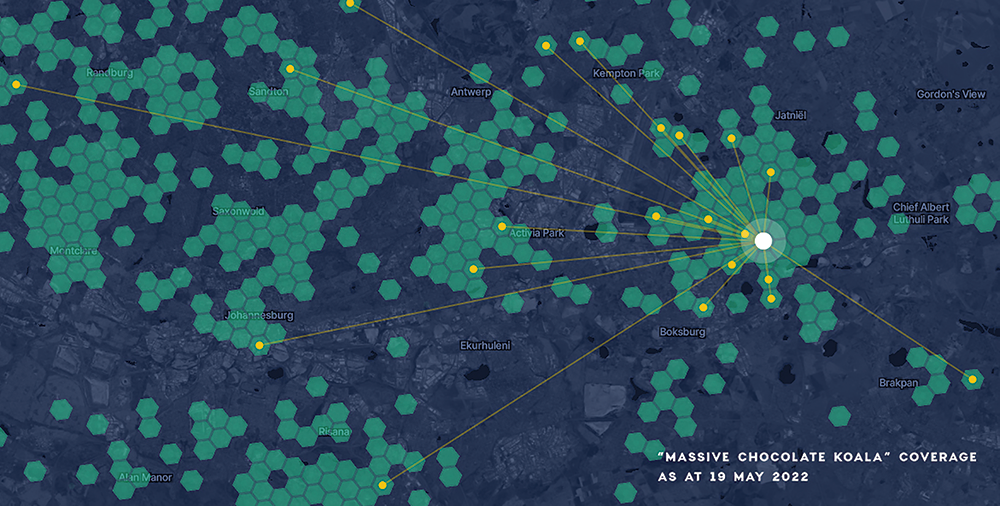 Figure 1. Massive Chocolate Koala coverage (Benoni home) as at 19 May 2022.
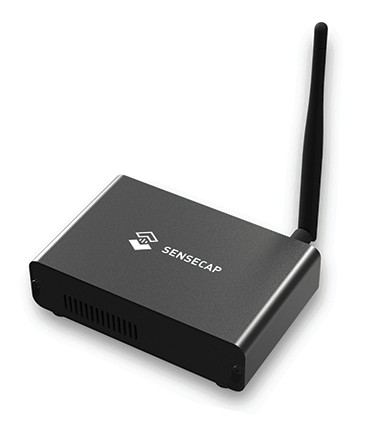
I started my journey by investing in a SenseCAP M1 gateway; two of them in fact. One is installed at my home in Benoni, and the second at my office in Randburg, roughly 50 km away. Both were installed with 6 dB antennas which I commandeered from our stock.
Since this is a crowd network and everything is visible, I have no reservations about revealing the names of my current gateways (and I say ‘current’ because, as you will read, one got cloned and had to be replaced), since you can find them on the Helium coverage map anyway
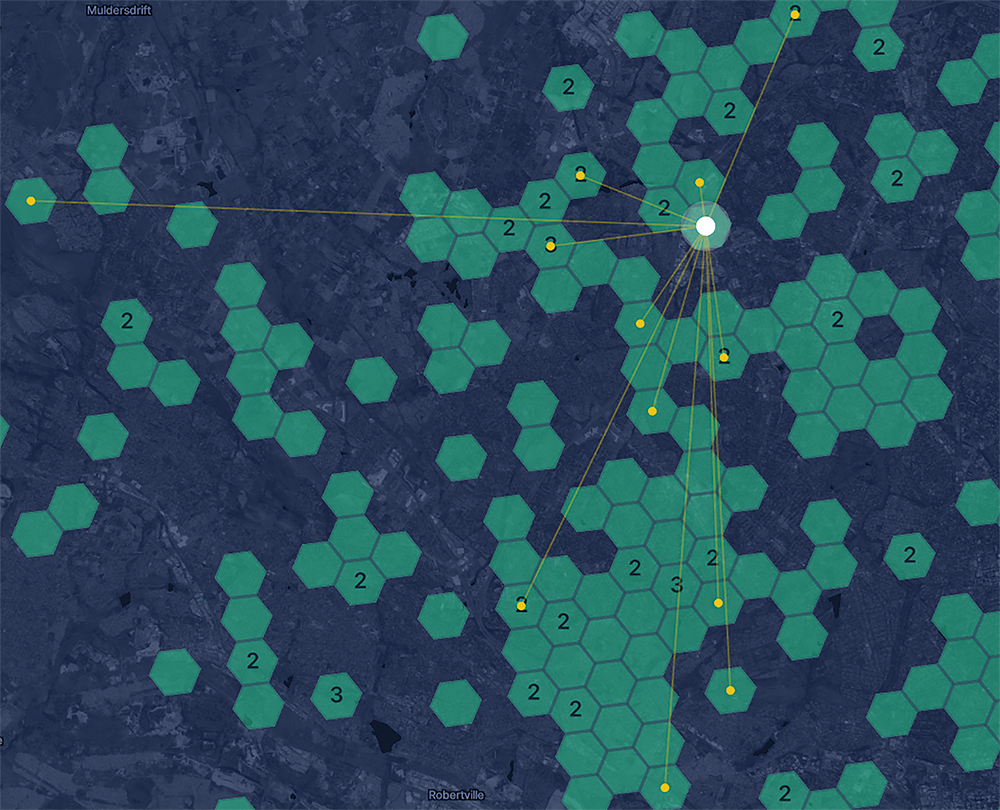 Figure 2. Striped Basil Crocodile coverage (Randburg office) as at 19 May 2022.
I was impressed with my first experience. I opened the box, followed the simple instructions, and found my gateway was awarded an amusing name, and was on the Helium network. This was my first home device. After a couple of days, I noticed my earnings were pretty shocking, nothing like I was expecting, and then discovered that the gateway needs to be connected via Ethernet cable, as the Wi-Fi on the device is not great for connectivity.
Okay, small glitch, no big deal, so I followed the instructions and connected via Ethernet. Boom! Earnings started to roll in. It was fairly small, in the vicinity of R20 per day. I then learned that coverage plays a major role – the more gateways you can ‘see’ around you, the more you earn. Well, that was no problem seeing as antennas and coverage are my game, so I boldly pressed on.
I used CLF400 cable (ultra-low loss – around 0,1 dBm per metre) and an outdoor 6 dB antenna. I then connected to my gateway via Bluetooth and changed the settings to indicate a new antenna gain and height, only to be prompted with a notice telling me this would cost 55 000 DC… and I had no idea what that meant. Nevertheless, I accepted this cryptic charge and found my wallet reduced by about R10 for doing so.
Oh well, all good, so onward we forge. Boom 2! Suddenly my gateway was alive and earning R50 to R75 per day – awesome. And then it died. Not quite dead as a doornail, more like a quivering death-rattle, earning under R10 per day. I could not understand this, until I checked the Helium coverage map and noticed that my device name, which is meant to be totally unique, came up twice when searching by name.
At the time of writing this (around mid-May), if you were to search for ‘Docile Coconut Griffin’ you would see two devices, one in Benoni (my first device) and one in Croatia. I was told the Croatian device is a clone – yet it is still on the Helium network, earning HNT at an alarming rate. My device, with the same name, went dead when this device came online, and I should also mention it came online with a month of ‘history’, yet I know it did not exist when I initially installed my device. To resolve this cloned device problem, my device was swapped out and hence, to this day, I have Massive Chocolate Koala running in Benoni instead, and it is stable.
I should mention that the Benoni device is at my primary site for testing antennas, so if you happen to have a look at the history, keep this in mind: I am doing this more to understand the technology and test antennas than anything else. There are days when it goes dead while I am making changes.
Now we turn our attention to the device at the Otto Wireless Randburg office. Understandably, the network infrastructure at the office is very different to my home environment. Aside from there being two managed switches between the device and the Internet source, there is also a physical Sonicwall firewall.
Having successfully deployed a device and resolved cloning at my home, I boldly strode ahead and installed a second device at our office. I followed the same steps, and I guess quite predictably… nothing worked. After registering my device on the SenseCAP Hotspot Dashboard, I noticed that it was displaying the status as ‘relayed’, meaning it has no Internet source. After investigating, I was told that there are three ports which need to be opened by the service provider, and that not all of them have these ports open as standard. I contacted our service provider and after a few days they assured me that the ports were indeed open.
I then turned my attention to our firewall. It turned out the SenseCAP M1 gateway had to be assigned a static IP address, and the ports opened through the firewall. I duly did so and, hey presto, everything worked! It only took about two weeks of experimenting and dealing with our outsourced IT company and service provider, but I had eventually got there...
And then the office was load-shed, the device went offline, and it took three days to return to service (it can take up to five days to synchronise into the blockchain). This is when I discovered the value of UPS backup power, and why so many people who purchase these devices also invest in backup power. I, however, did not do this, as our entire office was soon moving to a solar system.
Nevertheless, after a few days, the device came back online – and generated nothing. Helium notified me after a few days that my device was in fact offline. I logged into the device and everything appeared stable, except for the fact that it was offline. I followed some instructions, logged into the device, deleted the blocks, reset it and tried to turbo sync. This worked and I was back online 24 hours later.
Due to all the time delays, I had lost another week or two since load shedding. Our solar was then installed and I was forced to go through the entire process again – several times – until another week had passed. Just when all looked great, our network needed a reset and the SenseCAP M1 again lost sync. But I only discovered this after three days, and again it took me two more days to get it online.
Except it never did come back online. To this day, since the network reset, regardless of the fact that it is being assigned a static IP address, and regardless of the fact that all the port forwarding rules through our firewall and network are still in place and used to work, the device always shows ‘relayed’ when connected to our work network.
I have since moved the device onto its own LTE network, which runs perfectly. However, after all these resets, I suspect something has gone pear-shaped within the SenseCAP M1 software, because when logging directly into the device, Chrome simply gets an error, whereas Internet Explorer sometimes works. Strange. But it is now up and running.
So, what conclusions can be drawn from all this? Avoid resetting the device, as you will always lose earnings and in some cases you may battle for days, weeks in fact, to get back online. The device appears to be made to work very well with a home network, but the delays through a larger office network may be detrimental to synchronisation with the blockchain, as I suspect was the case with my second device.
My next step was to play around with antennas to see how much of a part they can play in this scenario. To find out what I learned – and earned – be sure to read the next issue of Dataweek in June.
| Tel: | +27 11 791 1033 |
| Email: | wireless@otto.co.za |
| www: | www.otto.co.za |
| Articles: | More information and articles about Otto Wireless Solutions |






© Technews Publishing (Pty) Ltd | All Rights Reserved
 printer friendly version