


For most of its life, RTK (Real-Time Kinematic) positioning lived a comfortable existence. It sat on survey poles and rooftops, under open sky, on a generous ground plane, with nothing nearby to argue with. It was a specialist’s tool, deployed in near-ideal conditions by people who understood exactly what it needed.

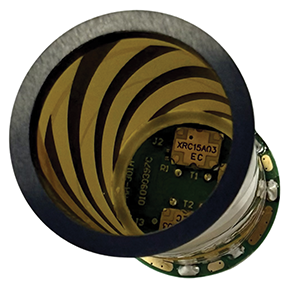
That era is over. RTK is now being designed into drone frames, autonomous robots, agricultural sensors and industrial trackers: products measured in grams and millimetres, not tripods and masts. The receivers have become smaller, cheaper and remarkably capable. Correction services are a subscription away. On paper, precision positioning has never been easier to deploy.
In practice, engineers building compact RTK products keep discovering the same thing: the hardest component in the system is no longer the receiver. It is the antenna.
The satellites have not changed. The neighbourhood has.
The physics behind RTK is inherently demanding. In addition to decoding the satellite’s navigation message, an RTK receiver measures the phase of the carrier wave itself, a signal with a wavelength of about 19 centimetres, and resolves position to a small fraction of it. That is what makes one- to two-centimetres accuracy possible. It is also why the whole system depends on the quality of the signal arriving at the antenna.
A survey antenna on a tripod in an open field operates in conditions that are close to those of a laboratory. Move that same positioning requirement inside a modern commercial product and the RF environment turns hostile. Metal enclosures and carbon-fibre structures reshape the antenna’s view of the sky. Batteries, processors and cameras crowd the board. Cellular, Wi-Fi and Bluetooth radios, often the very links carrying the RTK correction stream, sit centimetres from a GNSS front end trying to hear signals that arrive at the noise floor. Ground planes shrink. Reflections multiply.
At Synzen Precision Technology (SPT), this trend is visible across every industry the company serves. The receiver has not changed. The satellites have not changed. What has changed is the environment around the antenna, where signal quality determines everything that follows.
There is a hard commercial edge to this. Firmware can be patched after launch, and filter algorithms can be tuned. Antenna performance, however, is effectively locked in once a mechanical design is frozen. Of all the components in an RTK product, the antenna is the one whose mistakes are most expensive to correct and least visible until it is too late.
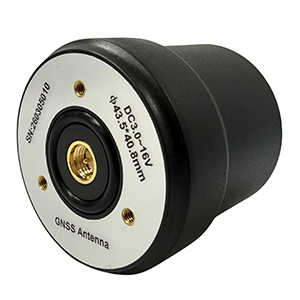
Why the quadrifilar helical is winning the small-product era
As RTK migrates into compact, mobile products, one antenna architecture keeps coming out on top: the quadrifilar helical.
It starts with polarisation. GNSS satellites transmit right-hand circularly polarised (RHCP) signals. A quadrifilar helical antenna is inherently matched to that polarisation and holds it across a wide field of view. That matters enormously for platforms that bank, pitch and tilt rather than sitting level on a pole. A drone in a turn or a robot on rough ground still sees the constellation cleanly.
This is not a laboratory nicety. Picture a sprayer drone banking hard over an orchard, a grader working a haul road, or a weeding robot threading vineyard rows on a slope. None of these platforms ever holds still, and none can afford a position that drifts every time the machine leans. The antenna has to keep its grip on the sky, while everything beneath it is constantly in motion.
The second advantage is what happens to signals the antenna should ignore. When a GNSS signal reflects off the ground, a vehicle or a building, its polarisation largely flips to left-hand circular. A well-designed helical rejects much of that reflected energy at the antenna itself, before it ever reaches the receiver, suppressing multipath at the source rather than asking the positioning engine to clean it up afterwards. In the cluttered environments where compact RTK products actually operate, that built-in rejection can mean the difference between a stable fix and one that wanders.
Add a stable phase centre, strong reception at low elevation angles, and no requirement for a large ground plane, and the helical antenna becomes the obvious choice for compact RTK products designed to operate on the move.
Built for the problem, not just the datasheet
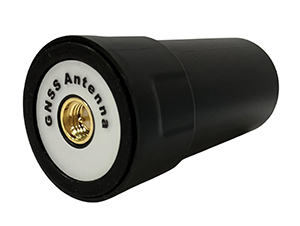
These are the problems, not a specification wish-list, that shaped SPT’s AQUILA family of active quadrifilar helical GNSS antennas.
The AQUILA is a 55,6 mm active helical that receives GPS L1/L2/L5, GLONASS L1/L2/L3, BeiDou B1/B2/B3 and Galileo E1/E5/E6. Its integrated low-noise amplifier delivers 33 dB of typical gain, enough to carry a clean signal through real-world cable runs and front ends. Where every gram and millimetre counts, the AQUILA LITE packs the same coverage into a 40 mm form factor with 35 dB of typical LNA gain, a fit for UAVs, robotics platforms, asset trackers and compact industrial receivers. Both variants are housed in IP67-rated enclosures and operate from -45°C to +85°C, because the products they are built into rarely enjoy gentle weather.
The antenna is a system decision, not a line item.
Even the right antenna is only half the solution. Placement, enclosure materials, ground plane geometry and proximity to other radios all influence real-world performance in ways that no datasheet can fully predict. An antenna that performs flawlessly on an evaluation board can behave very differently once integrated inside a finished product, positioned alongside a 4G modem and enclosed behind a painted plastic housing.
“Nine times out of ten, when a customer comes to us with an RTK product that will not hold a fix, the antenna was the last thing chosen and the first thing blamed,” says Chris Tomlin, SPT’s chief technology officer. “If it is embedded in the board or housing, that is a redesign. The projects that go smoothly are the ones where the antenna conversation happened in week one.”
This is where SPT’s breadth of expertise earns its keep. With standard and custom antenna design, RF system integration, hardware development and over-the-air chamber testing under one roof, the company tests the complete product, rather than the antenna in isolation. This approach uncovers coexistence and detuning problems, while they are still inexpensive to correct.
The teams shipping successful RTK products tend to share one habit: they treat the antenna as a system-level decision made at the start of the project, not a component selected at the end. Not because the antenna is the most complex part of the design, but because it is the one part whose performance cannot be recovered in software once the design is done.
Positioning technology is moving deeper into products and further from the rooftops, poles and tripods where it grew up. The receivers will keep shrinking. The correction services will keep improving, and the products they serve will stay in the field for a decade or more, which makes an antenna supplier’s long-term availability part of the specification, whether the datasheet mentions it or not.
Every RTK fix begins with a signal that has travelled 20 000 kilometres through space. Whether that signal ends exactly where it should is decided in the final few centimetres. At the antenna.
| Tel: | +27 11 781 2029 |
| Email: | enquiries@icorptechnologies.co.za |
| www: | www.icorptechnologies.co.za |
| Articles: | More information and articles about iCorp Technologies |






© Technews Publishing (Pty) Ltd | All Rights Reserved
 printer friendly version