


As the world moves from 3G to 4G and the much-hyped 5G, there is talk of a different kind of network, using the very low frequency networks around 450 MHz in Africa. These are wireless networks operating in the frequencies around 380 MHz, 410 MHz and 450 MHz.
Across the world, 65 countries have already deployed networks at these frequencies, and 21 of these deployments are in Africa – so Africa has more of them than any other world region. However, these deployments are in the early stages of planning. Namibia, Senegal, Nigeria, Uganda, Angola and Botswana all potentially have opportunities with the 450 MHz band.
In some of these countries the mobile operators are evaluating LTE and in others the regulators are in the process of awarding spectrum to implement new services. While companies wait to see how these countries will deploy 450 MHz, an informed view of the applications that are most likely to be deployed on these networks can be made.
The mobile network infrastructure is changing. The trend is that mobile operators are shutting down their 3G networks and aligning their services to offer 4G and LTE, and from there they will evolve to 5G. This means that they are releasing the 450 MHz spectrum, which will become available for new uses. The RF characteristics of the 450 MHz bands provide some clues as to who will want to use them and how.
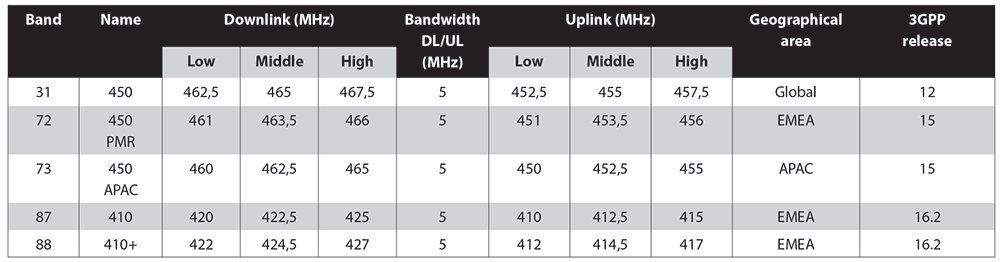 Table 1 – Table of channels within the 450 MHz bands.
What is different about the 450 MHz?
450 MHz is a comparatively low frequency compared to other popular wireless bands and the 4G frequencies between 698 MHz to 2690 MHz. Since frequencies are directly related to wavelengths, this means that the frequencies around 450 MHz use much longer wavelengths. This technical characteristic makes the networks suitable to support certain kinds of services.
It is a fact that longer radio waves can travel over longer distances, which means that 450 MHz networks are suitable to cover large areas of countryside, with fewer base stations needed to build the infrastructure. In fact, when compared with LTE/4G networks it turns out that 4G networks need roughly four times as many base stations as 450 MHz to cover the same area.
Radio waves at 450 MHz also have good propagation and an ability to pass through solid barriers such as walls and buildings. This means that the networks can be used to connect indoor installations and even installations underground, making them suitable to connect equipment installed in basements or possibly underground in mines.
However, 450 MHz is not just for rural areas. The same RF properties mean that it also works well in densely built-up urban areas.
What 450 MHz can do for Africa
The RF properties of the lower wireless frequencies can bring LTE services, known as LTE 450, to Africa with lower infrastructure costs than with higher frequencies. All the bands within the 450 MHz frequencies support LTE services LTE Cat 4, LTE-M and NB-IoT.
LTE Cat 4 is the next step in 4G LTE device capability. A Cat 4 device uses two antennas – a main antenna for transmit and receive, and a second antenna for receive only. The two antennas radiate in different patterns so that they will always provide a good signal in any orientation, as the device moves around and turns on different axes. LTE Cat 4 is good for high data rates, and ideal for devices that will be used on board vehicles. Therefore, these networks offer great potential for connected applications in transport, railways and bus services.
LTE-M is good for mobile services. One of the earliest applications of LTE-M was for solar-powered asset tracking services in Australia. The LTE-M connections are simple and secure and cover large areas with data integrity, including remote places and positions inside buildings. They will also be good for transport, logistics, and IoT services.
NB-IoT is used to connect large numbers of devices with smaller data payloads where the service needs to be secure and reliable. This service is more often used to monitor remote equipment, such as power grids and electricity meters, and would also work well for smart agriculture, monitoring soil conditions, or tracking livestock in the countryside, for example.
Besides these business applications, the 450 MHz spectrum could also open up broadband services to schools and health centres in the countryside and connect remote villages and farms, and it could support critical communications, such as police communications.
What are the commercial opportunities?
450 MHz offers a cost-effective solution for all these uses. The networks can be private, so they fit the needs of utilities, public safety communications, and transport operators who supply their employees with rugged phones or terminals.
The biggest opportunity, however, is likely to be for utilities. They can use dedicated private networks to manage remote equipment, power generation and distribution, and connect smart meters within customers’ homes.
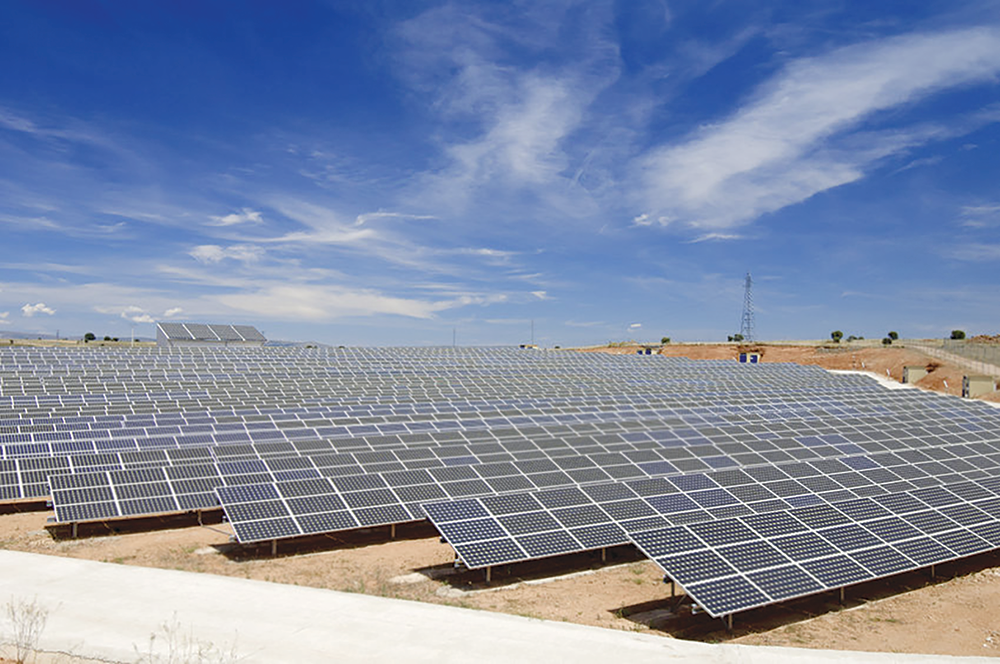 Figure 1 – The number of solar farms is set to increase.
The 450 MHz networks are perfect to support smart grids and the power generation infrastructure. The number of solar farms in Africa is growing and these can be controlled remotely. With a smart grid, the network can adjust as the level of the sunlight changes and balance the supply of energy to the demand from consumers. This concept is already working in Europe. LTE 450 is being used in this way in the Netherlands, where the utilities use smart meters on the same network to measure the amount of energy used by their customers.
Until now, the range of devices for 450 MHz networks has been limited, but this is changing. As the networks begin to roll out in different regions of the world, an increasing number of routers, smart phones and handheld devices are appearing on the market.
One factor that is making a huge difference is the number of components being launched onto the market. Since the 450 MHz networks now offer a serious business proposition, component manufacturers are keen to serve this market with new products.
During the last few months, launches of 450 MHz components have been seen. Several manufacturers have released modules certified for LTE Cat 4, or LTE-M connectivity and the manufacturers of chip antennas are developing for 450 MHz wireless devices. The antennas are the last part required to build the equipment for these new business applications. They will be used in smart meters, routers, data loggers, and rugged devices for transport and public safety.
Wireless developments worldwide
Wireless connectivity has been one of the greatest business success stories of the last decade. 88% of the world now has LTE cellular services. The business world is increasingly connected by cloud services, and consumers in the US and Europe own numerous wireless devices.
The miniaturisation of wireless components is a factor in this expanding take-up. Smaller devices are cheaper to manufacture, and they sell in larger volumes. As more devices are manufactured and sold, RF technology is becoming better understood, and more product designers are gaining the skills to add wireless connections to their designs. The placement of the antenna on the PCB is critical, however, allowing the signal to radiate in all directions to ensure good wireless performance.
The Internet of Things has grown steadily too, and it’s expected that there will be 3,5 billion cellular IoT connections by 2023. The 450 MHz networks could accelerate the delivery of these 21st-century services in Africa.
| Tel: | +27 11 781 2029 |
| Email: | enquiries@icorptechnologies.co.za |
| www: | www.icorptechnologies.co.za |
| Articles: | More information and articles about iCorp Technologies |






© Technews Publishing (Pty) Ltd | All Rights Reserved
 printer friendly version