AC axial fans
8 February 2012
Circuit & System Protection
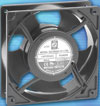
Orion Fans has developed a new line of ‘green’ AC fans with a smart thermal control. Designated the OA109AP111TB03 (TEMP Control) series, the axial fans feature a ball-bearing design, measure 120 x 120 x 38 mm and provide airflows of 63,3 to 96,7 CFM.
Similar in function to DC smart fans, the TEMP Control series’ smart thermal control reduces power consumption by increasing or decreasing fan speed according to the ambient air temperature but only requires a simple AC input rather than additional power supply requirements for a DC fan. This results in up to 30% energy savings over similar sized, single-speed fans. An added bonus is that the overall noise profile is reduced, enabling the fans to be used in environments where low noise is desirable.
The fans feature a ball-bearing system, impedance and thermally protected motor, and aluminium alloy frame with a UL94V-0 plastic impeller. The fans are provided with AWG #22 lead wires specified to UL1430 standards. Rated power for the series ranges from 9 W to 19,6 W at 115 V. Rated speeds range from 1200 to 2500 RPM, with noise levels of 23 1 to 43 8 dB and an operating temperature range from -10°C to +70°C.
For more information visit www.orionfans.com
Further reading:
EMC limits and levels
Altron Arrow
Editor's Choice Circuit & System Protection
As soon as electronics and electrical systems started interfering with each other, the world had to come to some consensus. Considering physics is universal and does not care about what country electrical/electronic products are used in, it should be the same everywhere, right? It is nearly there, but not quite.
Read more...
Clearing the Static: The importance of cleaning in ESD control
Circuit & System Protection
The proper cleaning of ESD-safe areas and equipment such as workstations, floors, mats, trays, and tools using specialised antistatic cleaners is vital to prevent ESD damage.
Read more...
Safety relay for explosive areas
IOT Electronics
Circuit & System Protection
Phoenix Contact has expanded its safety portfolio with the new PSR-MC35-EXI safety relay module, specifically engineered for use in potentially explosive environments.
Read more...
Clearing the Static: Ensuring effective ESD control
Actum
Circuit & System Protection
To maintain reliable electrostatic discharge control, regular testing and accurate measurement are essential, with grounding products and ESD testing equipment being vital.
Read more...
Clearing the Static: The importance of ESD audits
Actum
Circuit & System Protection
An ESD audit is the first step in establishing an effective static control programme in the workplace, and will help identify vulnerable areas and potentially hazardous static zones that require improvement.
Read more...
EMI shielding materials application guide
Circuit & System Protection
TE Connectivity’s shielding solutions include electrically conductive elastomers, gaskets, knitted wire mesh, oriented wire, EMI shielding ventilation panels, shielded window, cable shielding and shielding components.
Read more...
Clearing the Static: ESD containers and packaging
Actum
Circuit & System Protection
Vacuum forming ESD
Electronic components can be damaged by electrostatic discharges. To protect against such damage, electronic assembly parts are often transported or stored in vacuum formed component
...
Read more...
Electrostatic discharge chairs
Actum
Circuit & System Protection
An ESD chair forms an integral part of grounding within the electrostatic discharge protected area to prevent potential damage to products.
Read more...
Conductive ESD footwear
Actum
Circuit & System Protection
Conductive ESD footwear is used in conjunction with other grounding devices, such as a wrist strap, cord, and ESD surface mats, to provide a continuous path to ground.
Read more...
Clearing the Static: The importance of cleaning in ESD control
Actum
Circuit & System Protection
To prevent Electrostatic Discharge (ESD) damage to sensitive electronic assemblies and components, all production, handling, packaging, and storage must take place in an ESD-protected environment.
Read more...









 printer friendly version