High-availability 3U CompactPCI industrial enclosures for rugged environments
29 August 2001
Manufacturing / Production Technology, Hardware & Services
One of the key features that separates a well thought-out industrial enclosure design from one claiming to be designed for the task is its ability to remove heat. Heat is the fiend of the applications engineer - it reduces the overall MTBF of the system; it causes the system CPU(s) to lock or run at a reduced speed; it derates power supplies, damages batteries used for uninterruptible power supply units (UPS) and prevents hard disks from being used.
The text book industrial application sits in an hermetically sealed environment - one in which pollutants never enter, moisture and dust are filtered out and noise and vibration just do not exist. Reality builds a different picture that could almost be alien to the traditional designers of 19" systems. Not all applications are identical and therefore, based on this statement, not all industrially suited systems should look identical.
Traditional 19" off-the-shelf rack designs are constructed of conductive aluminium for optimum heat transfer and EMI shielding, are well-ventilated to allow heat to escape by convection and are readily available. Fan trays for forced air cooling partially alleviate the problem but require frequent maintenance and add to the bulk of the unit. However, the actual real-life problems with heat removal have not been properly addressed - until now.
Inova Computers is a leading manufacturer of high volume, low cost embedded industrial computing solutions based on the 3U CompactPCI form-factor. To justify this claim, a great deal of effort and manpower has been invested to investigate the properties of a well-engineered, conformant, functional and yet affordable industrial 19" enclosure.
Its research has shown that in the real world the working components within an enclosure need to be shielded from their immediate environment. This idea has hermetic overtones, which at first glance makes it unsuitable for use since free airflow is now prevented. Wrong! By dividing the enclosure into separate, compartments heat can be exchanged more efficiently through a combination of forced air circulation and convection cooling without jeopardising space or weight.
These practical results led Inova to develop a range of aluminium Cool Breeze CompactPCI enclosures that are impervious to foreign matter and yet allow EMI-shielded, CompactPCI boards to be fixed in place while still permitting a constant passage of air flow to prevent local hot-spot build-up. In fact, a complete system fitted with two high performance, passively cooled 450 MHz CPUs, power supply, UPS and I/O boards has a 'delta' of less than +5°C compared to the outside ambient.
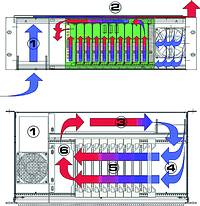
Figure 1. CoolBreeze 19” industrial enclosure for applications in harsh environments
Operation
Referring to Figure 1, ambient air is drawn by a fan through the bottom of the enclosure one and forced to the lid where it is guided across the entire surface area two collecting and removing heat as it flows. Chambers 1 and 2 are completely separated from the main chamber. The fan in the main chamber circulates the air 3 by drawing it from behind the backplane and forcing it into a cool air chamber 4 which cools the high-performance CPUs. Due to blocking seals the cool air is forced beneath the first CPU to the second single-slot CPU and then up to the lid. From here it transfers heat to the lid 5 as it flows across all boards and power supply before repeating the cycle 6.
For further information contact Sean van der Walt, Systematic Designs, (021) 555 3866, sean@systematic.co.za
Further reading:
Weller limited Black Edition soldering station
Testerion
Manufacturing / Production Technology, Hardware & Services
Weller’s WE1010 Black Edition Soldering Station is a premium limited-edition soldering station.
Read more...
Quick and easy shielding
Würth Electronics South Africa
Electronics Technology Manufacturing / Production Technology, Hardware & Services
Würth Elektronik expands its EMC product portfolio with nanocrystalline WE-FNCS sheets.
Read more...
Smarter local buying could reboot South Africa’s manufacturing sector
Manufacturing / Production Technology, Hardware & Services
With smarter localisation, clearer procurement rules and a more deliberate industrial strategy, public spending could again become a powerful engine for rebuilding factories, expanding supply chains and restoring confidence in South Africa as a place that makes things.
Read more...
The effect of seasonal changes on ESD performance in South Africa
Actum
Editor's Choice Circuit & System Protection Manufacturing / Production Technology, Hardware & Services
Electrostatic discharge performance is influenced by several environmental factors, with relative humidity being one of the most important. This is particularly relevant in South Africa, where seasonal changes can result in significant differences in humidity levels.
Read more...
High precision in-line conformal coating inspection system
MyKay Tronics
Manufacturing / Production Technology, Hardware & Services
Conformal coating is widely used to protect electronics from moisture or other environmental hazards. It is critical to know if coatings are properly applied; covering what is meant to be covered and not covering what should be exposed.
Read more...
Soldering day highlights
Manufacturing / Production Technology, Hardware & Services
JAPAN UNIX has published a new event report and highlight video from their UNIX SOLDERING DAY 2026 in Hungary. This event reflects on their commitment to supporting manufacturers not only through soldering automation systems, but also through technical education, live demonstrations, hands-on training, and practical engineering know-how.
Read more...
Clearing the Static: Electrostatic Discharge
Actum
Manufacturing / Production Technology, Hardware & Services
A cordless ESD (Electrostatic Discharge) wrist strap does not work by grounding the person in the same way as a traditional wired wrist strap. Instead, it works by reducing or balancing the static charge on your body so that you are less likely to discharge electricity into sensitive electronic components.
Read more...
Engineering trust in South Africa’s SMT sector
ZETECH ONE
Manufacturing / Production Technology, Hardware & Services
From a small Johannesburg start-up to a trusted SMT technology partner, Zetech One has spent four decades helping South African electronics manufacturers improve production quality, efficiency and reliability.
Read more...
The new reality of PCB material supply
Jemstech
Editor's Choice Manufacturing / Production Technology, Hardware & Services
How resilient manufacturing strategies are helping OEMs navigate a changing global supply chain.
Read more...
Streamlining Device Programming with the AutoBee-D1
Vepac Electronics
Manufacturing / Production Technology, Hardware & Services
The AutoBee-D1 desktop automated programmer is designed to simplify the programming of devices, while delivering consistent accuracy, high throughput and reduced manual intervention.
Read more...









 printer friendly version