

Editor's Choice


Potential risks of plasma treatment on PCBs

28 March 2025 Editor's Choice

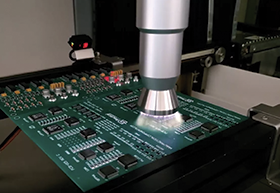
Plasma treatment involves exposing PCBs to an ionised gas, known as plasma, to alter the surface at a molecular level. This process is typically used to:

• Remove contaminants and improve cleanliness.

• Increase surface energy for better adhesion of coatings, solder masks, or adhesives.

• Modify surface properties for advanced manufacturing needs.

Despite these advantages, several risks must be managed to ensure safe and effective plasma application in EMS.

1. Excessive etching or surface damage

Cause: Over-treatment caused by prolonged exposure, excessive energy, or unsuitable gas selection.

Risk: May result in thinning of copper traces, microcracks, or even the erosion of delicate circuit features, compromising electrical performance and product reliability.

Solution: Carefully optimise treatment time and energy levels based on PCB material and design.

2. Contaminant residue

Cause: Contamination in the plasma chamber or low-quality process gases.

Risk: Residual contaminants left on the PCB surface can interfere with electrical performance, particularly in high-frequency applications.

Solution: Regular maintenance of plasma equipment and the use of high-purity process gases can minimise contamination risks.

3. Dielectric layer degradation

Cause: High-energy plasma interaction with the PCB’s insulation layers, such as solder masks or dielectric materials.

Risk: Damage to the dielectric layer reduces insulation resistance, increasing the risk of short circuits or dielectric breakdown.

Solution: Test and adjust plasma parameters to ensure compatibility with the dielectric materials used in PCBs.

4. Thermal stress

Cause: Plasma processes generating localised heat, particularly during prolonged treatment.

Risk: Thermal stress may lead to PCB warping, delamination of layers, or pad lifting.

Solution: Implement precise process controls to manage temperature and minimise thermal impact.

5. Electrostatic discharge (ESD)

Cause: Plasma processes can induce static electricity, especially in poorly grounded systems.

Risk: Static discharge can damage sensitive electronic components on the PCB.

Solution: Use ESD-safe equipment and ensure proper grounding during plasma treatment.

6. Latent structural damage

Cause: Microscopic cracks or imperfections introduced during plasma treatment.

Risk: These latent defects can propagate under stress during product operation, leading to eventual PCB failure.

Solution: Conduct quality inspections and tests after plasma treatment to detect and address hidden issues.

7. Chemical reactions from improper gas selection

Cause: The use of incompatible or contaminated gases during plasma treatment.

Risk: May result in unwanted chemical byproducts or surface modifications that degrade adhesion or electrical performance.

Solution: Choose gases carefully and ensure they are free from impurities or moisture.

Plasma treatment has become a cornerstone of modern EMS production, enabling precise surface preparation for complex PCB designs. However, unaddressed risks can lead to defects, reduced reliability, and increased production costs. By identifying and mitigating these hazards, EMS factories can ensure plasma processes deliver consistent results without compromising PCB quality. This is accomplished by optimising parameters, maintaining equipment, and implementing robust monitoring systems, allowing EMS factories to maximise the benefits of plasma treatment while minimising its potential dangers.


Credit(s)


Share this article:
Share via emailShare via LinkedInPrint this page

Further reading:

Quectel’s RG255C-NA and RM255C-GL accelerate 5G RedCap adoption
iCorp Technologies Editor's Choice Telecoms, Datacoms, Wireless, IoT
Quectel’s RG255C-NA and RM255C-GL modules represent a strategic move into this fast-growing segment, delivering Sub-6 GHz 5G connectivity optimised for mid-tier IoT applications.

Read more...
SDRs – Which RF architecture should you choose?
RFiber Solutions Editor's Choice Telecoms, Datacoms, Wireless, IoT
There are several common methods of implementing SDR architectures. This paper discusses which is best when meeting a specific need.

Read more...
Surviving the extremes: Understanding shock and vibration in MEMS sensors
Altron Arrow Editor's Choice Test & Measurement
By considering factors such as mechanical headroom, damping, and system-level robustness, designers can ensure that the chosen sensor not only survives, but performs reliably over time.

Read more...
A two-stage approach to super-wide input voltage range DC-DC converters
RFiber Solutions Editor's Choice
Teaser: In addition to handling the various input voltage ranges required, the SynQor line of InQor DC-DC converters are fully encased and ruggedised to handle the harsh environments that often accompany systems that have such challenging technical requirements.

Read more...
From the editor's desk: Engineering the future
Technews Publishing Editor's Choice
As we welcome the first issue of Dataweek in a new year, it is an exciting time to be part of the electronics community, especially for our readers. The pace of change across our industry continues to accelerate, reshaping how we design, build, and interact with technology.

Read more...
Barracuda commissions new IPC Class 3 aerospace facility
Barracuda Holdings Editor's Choice News
The company has commissioned a new dedicated IPC Class 3 facility in Somerset West. and has concluded a new investment partnership that will provide the capital and management capacity required to scale operations.

Read more...
The impact of harsh environments and ionic contamination on post-reflow circuit assemblies
MyKay Tronics Manufacturing / Production Technology, Hardware & Services
There is well documented historical proof that post-reflow circuit assemblies, when subjected to harsh environments, are particularly vulnerable to failure mechanisms, but modern electronic assemblies are far more susceptible to this phenomenon.

Read more...
Engineering copper grain structure for high-yield hybrid bonding in 3D packaging
Testerion Editor's Choice Manufacturing / Production Technology, Hardware & Services
The way copper grains are sized and distributed forms the metallurgical foundation of hybrid bonding, enabling lower bonding temperatures, greater reliability, and stable grain structures throughout integration.

Read more...
Understanding solder dross: causes and control strategies
Truth Electronic Manufacturing Editor's Choice Manufacturing / Production Technology, Hardware & Services
Dross formation is an inevitable consequence of wave soldering. It occurs when molten solder comes into contact with oxygen, forming metal oxides that float on the surface of the solder bath. Over time, this oxidation byproduct accumulates and must be removed to maintain solder quality and process consistency.

Read more...
Non-destructive techniques for identifying defects in BGA joints – TDR, 2DX, and cross-section-SEM comparison
MyKay Tronics Manufacturing / Production Technology, Hardware & Services
This whitepaper reports the results of a comparison of the following techniques: TDR, automatic X-ray inspection (AXI), transmission X-ray (2DX), cross-section/SEM, and Dye & Pry.

Read more...


While every effort has been made to ensure the accuracy of the information contained herein, the publisher and its agents cannot be held responsible for any errors contained, or any loss incurred as a result. Articles published do not necessarily reflect the views of the publishers. The editor reserves the right to alter or cut copy. Articles submitted are deemed to have been cleared for publication. Advertisements and company contact details are published as provided by the advertiser. Technews Publishing (Pty) Ltd cannot be held responsible for the accuracy or veracity of supplied material.


© Technews Publishing (Pty) Ltd | All Rights Reserved

