


Samtec is constantly developing new technology to improve its products and customers can be confused by this wealth of information.
‘The inner layer of a Nitrowave cable refers to the dynamic performance layer (DPL) that forms a key part of the construction of these coaxial cable. Nitrowave is Samtec’s range of high-performance RF solutions for microwave and mmWave applications, including full cable assemblies, cable connectors and board-level interconnects.
Controlling the relationship between the conductor and shield is critical when designing high-performance cables. Designing a shield is always a compromise between the best possible RF performance and the flexibility that the cable requires. Most manufacturers achieve this using a combination of foil tape or wrap as an inner layer and a woven braid which covers the foil
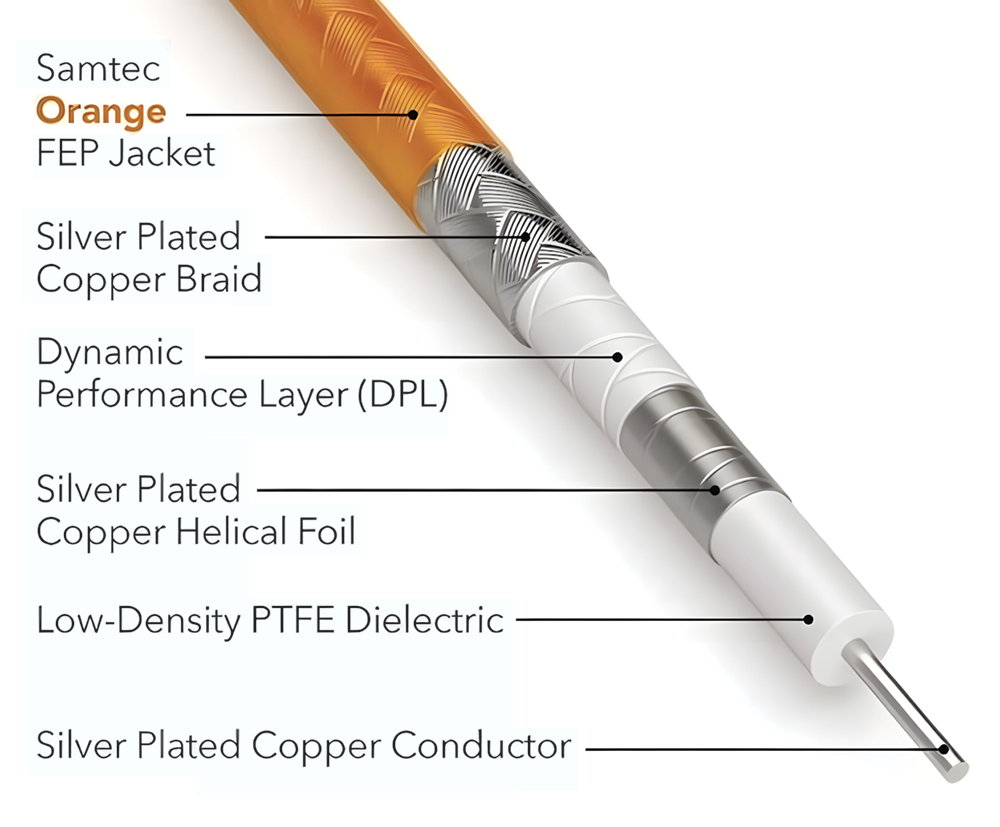 Figure 1. Nitrowave cable construction.
The Nitrowave cable uses silver-plated copper as the material for both the foil and braid, with an FEP (Fluorinated ethylene propylene) jacket in Samtec’s signature orange colour to provide protection in some of the toughest conditions. Designed for demanding applications in the aerospace and defence markets, along with instrumentation and computing industries, the FEP jacket delivers a high working temperature and resistance to abrasion.
However, the DPL is one of the most interesting features of Nitrowave. The DPL is a thin layer of PTFE placed between the foil and braid shields. Seemingly insignificant, the DPL is a key part of the Nitrowave story. Its primary role is to eliminate friction between the two elements of the shield, allowing the braid to move freely over the foil without damaging it. The DPL brings other improvements to overall reliability. The DPL layer wraps around the helical foil shield, improving its strength when flexing. It provides an interface between the delicate foil and the woven braid that surrounds it, which reduces the risk of conductive oxidation. The result is a cable with a higher flex cycle life and improved durability.
Improved electrical performance
The advantages of the DPL are not limited to improved mechanical performance. The improved physical properties also improve their electrical performance. DPL provides better phase stability. Phase is the name given to the position of a wave at a specific point in time within its cycle and is important when considering how RF signals travel along cables. A phase shift is therefore a change in the position of the wave, usually caused by external forces such as bending of the cable or changes in its temperature. Greater phase stability results in more consistent RF signals, even when the cable itself is flexing.
The DPL layer also helps to reduce the capacitive coupling. This is the effect of two separate shield layers. If in close contact, the two layers can act as the plates in a tiny capacitor. Even the tiny amounts of electrical charge that can build up between the layers have the potential to create unwanted noise, which will have an impact on signal integrity. The thin layer of PTFE that comprises the DPL is enough to help minimise that coupling and improve overall SI performance.
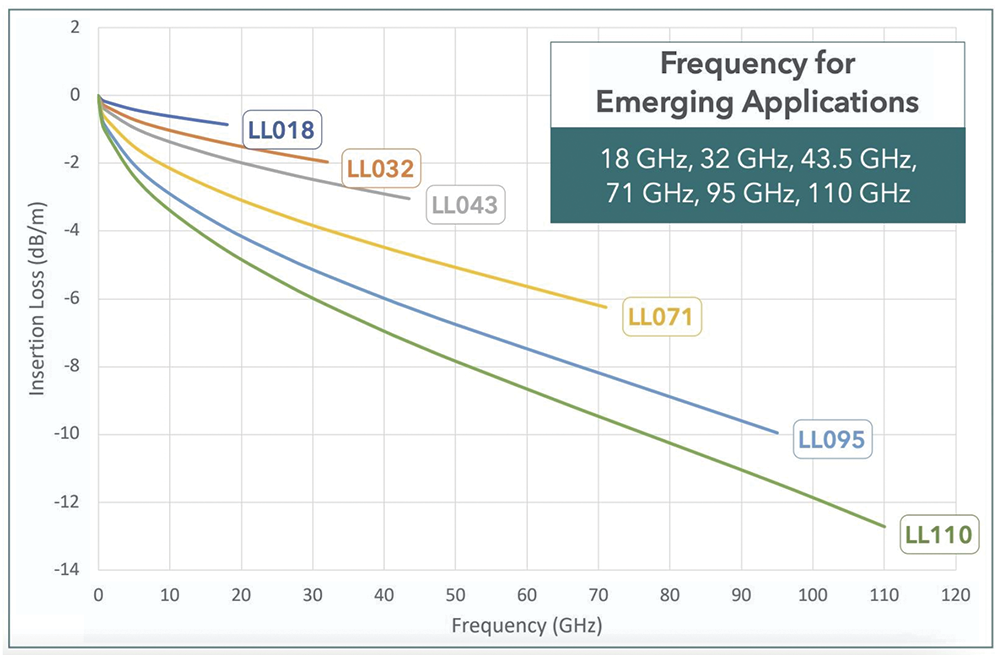 Figure 2. Frequency for emerging applications.
Nitrowave is not just one product. Instead, it is a family of cables, each optimised for different frequencies, ranging from 18 GHz up to a maximum of 110 GHz. These were selected with care following extensive studies of customer requirements, with each cable designed to deliver the best possible insertion loss across its own frequency range
| Tel: | +27 11 425 1400 |
| Email: | [email protected] |
| www: | www.spectrumconcepts.co.za |
| Articles: | More information and articles about Spectrum Concepts |






© Technews Publishing (Pty) Ltd | All Rights Reserved
 printer friendly version