

Editor's Choice


From the editor's desk: Progress meets reality

31 October 2025 Editor's Choice


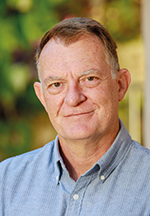
Peter Howells, Editor.

In the past few weeks two news story highlights caught my eye. The first was the news that in the first half of 2025, renewable energy, incorporating solar, wind, and to a lesser degree hydropower and bioenergy, has generated more electricity globally than coal did. To put numbers to it; renewables generated 5072 TWh vs coal’s 4896 TWh.

While this marks a milestone, for the first time, renewables have displaced coal as the largest electricity source globally, it was not read correctly by many commentators online. Many sources were spouting about how fossil fuels have been overtaken by renewable electricity generation, which is simply not true. Fossil fuels, combining coal, oil, and natural gas, still account for 61% of electricity generation. In fact, in the US, natural gas surpassed coal-fired turbines in 2023 to become the dominant electricity generation.

So, while this news is commendable and means we are on the right track, we need to realise that we still have a long way to go before clean energy is the main form of electricity generation.

The second item of news that I found very interesting, and somewhat relatable to the first, is that BYD is planning to build a supercharger network through South Africa. Executive vice president of BYD, Stella Li, recently dropped the bombshell during a press conference while visiting the country.

Li mentioned that BYD’s Megawatt Flash Chargers, currently being installed across various regions in China, will make up a charging network that will cover South Africa. Capable of providing 1 MW of power per vehicle connected to the network, these superchargers should provide up to 400 km of range to a vehicle in five minutes, just enough time to grab a coffee from a convenience store. (Note that this charging rate is currently limited to lab/ideal conditions).

While excited by the prospect, I am also sceptical regarding the timeline. Firstly, is Li intimately familiar with what is going on with South Africa’s electricity generation? I do know she had a meeting with the Eskom powers and signed a memorandum of cooperation aimed at advancing electric mobility. Besides that, however, I would love to know what else transpired during that meeting, but my guess would be that Eskom has promised the earth again without realising the implications of actually delivering.

Secondly, Li did state that the installation of these superchargers would start in BYD dealerships in South Africa before rolling out to strategic sites along the national highways. I am not sure whether she is aware that most of SA’s electricity transmission network has capacity constraints for new loads, and the likelihood of the current network being upgraded in the short term is slim to none.

Li also mentioned that the charging stations will use a combination of grid electricity and solar power, but did not disclose the ratio of each. This brings up another point: if Eskom cannot provide huge amounts of electricity to power these superchargers, they will need to rely on solar power. However, the solar PV infrastructure needed to provide enough power for a 1 MW charging station is enormous with an array comprising around 2000 solar panels being required (by my rough calculations).

So, while this news is welcome, I am slightly sceptical as to whether this country can implement it in the near term. In the long run, however, I do believe that reducing our dependence on fossil fuels and moving to cleaner renewable energy is ultimately a challenge I am willing to undertake.


Credit(s)


Share this article:
Share via emailShare via LinkedInPrint this page

Further reading:

Quectel’s RG255C-NA and RM255C-GL accelerate 5G RedCap adoption
iCorp Technologies Editor's Choice Telecoms, Datacoms, Wireless, IoT
Quectel’s RG255C-NA and RM255C-GL modules represent a strategic move into this fast-growing segment, delivering Sub-6 GHz 5G connectivity optimised for mid-tier IoT applications.

Read more...
SDRs – Which RF architecture should you choose?
RFiber Solutions Editor's Choice Telecoms, Datacoms, Wireless, IoT
There are several common methods of implementing SDR architectures. This paper discusses which is best when meeting a specific need.

Read more...
Surviving the extremes: Understanding shock and vibration in MEMS sensors
Altron Arrow Editor's Choice Test & Measurement
By considering factors such as mechanical headroom, damping, and system-level robustness, designers can ensure that the chosen sensor not only survives, but performs reliably over time.

Read more...
A two-stage approach to super-wide input voltage range DC-DC converters
RFiber Solutions Editor's Choice
Teaser: In addition to handling the various input voltage ranges required, the SynQor line of InQor DC-DC converters are fully encased and ruggedised to handle the harsh environments that often accompany systems that have such challenging technical requirements.

Read more...
From the editor's desk: Engineering the future
Technews Publishing Editor's Choice
As we welcome the first issue of Dataweek in a new year, it is an exciting time to be part of the electronics community, especially for our readers. The pace of change across our industry continues to accelerate, reshaping how we design, build, and interact with technology.

Read more...
Barracuda commissions new IPC Class 3 aerospace facility
Barracuda Holdings Editor's Choice News
The company has commissioned a new dedicated IPC Class 3 facility in Somerset West. and has concluded a new investment partnership that will provide the capital and management capacity required to scale operations.

Read more...
Engineering copper grain structure for high-yield hybrid bonding in 3D packaging
Testerion Editor's Choice Manufacturing / Production Technology, Hardware & Services
The way copper grains are sized and distributed forms the metallurgical foundation of hybrid bonding, enabling lower bonding temperatures, greater reliability, and stable grain structures throughout integration.

Read more...
Understanding solder dross: causes and control strategies
Truth Electronic Manufacturing Editor's Choice Manufacturing / Production Technology, Hardware & Services
Dross formation is an inevitable consequence of wave soldering. It occurs when molten solder comes into contact with oxygen, forming metal oxides that float on the surface of the solder bath. Over time, this oxidation byproduct accumulates and must be removed to maintain solder quality and process consistency.

Read more...
From the editor's desk: Could X-ray lithography disrupt the economics of advanced chip manufacturing?
Technews Publishing Editor's Choice
Advanced semiconductor manufacturing has reached a point where technical progress is increasingly constrained by economic reality, and the proposed use of X-ray lithography represents a bold attempt to reset these economics.

Read more...
Could the EU’s Cyber Resilience Act affect your electronics manufacturing business?
Altron Arrow Editor's Choice
South African companies exporting IoT devices to the European Union face a significant regulatory shift with the Cyber Resilience Act becoming mandatory in December 2027.

Read more...


While every effort has been made to ensure the accuracy of the information contained herein, the publisher and its agents cannot be held responsible for any errors contained, or any loss incurred as a result. Articles published do not necessarily reflect the views of the publishers. The editor reserves the right to alter or cut copy. Articles submitted are deemed to have been cleared for publication. Advertisements and company contact details are published as provided by the advertiser. Technews Publishing (Pty) Ltd cannot be held responsible for the accuracy or veracity of supplied material.


© Technews Publishing (Pty) Ltd | All Rights Reserved

