


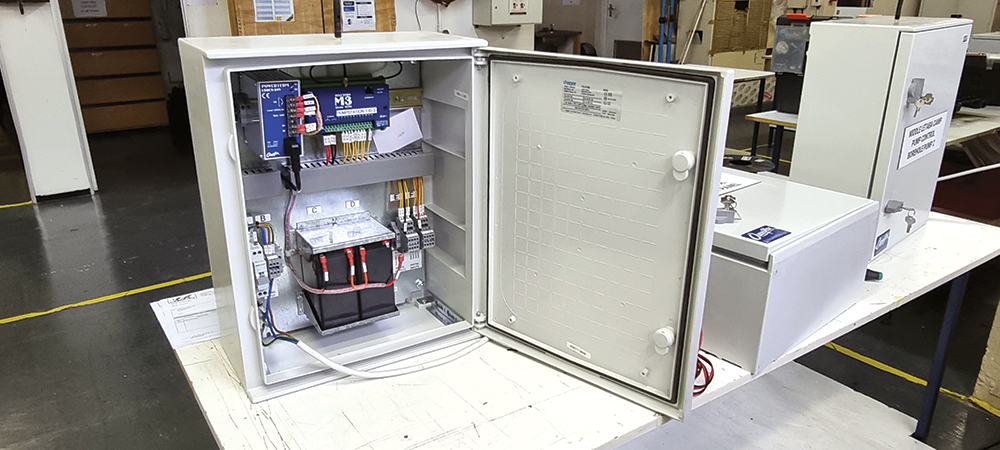
Wireless telemetry is often perceived as simply connecting remote assets to a network and transmitting data back to a control room. In practice, factors such as bandwidth limitations, terrain, line of sight, power availability, network traffic management and environmental conditions all influence performance. Over time, this has shaped the way reliable telemetry networks are designed.
One of the biggest misconceptions surrounding wireless telemetry is that modern digital radio networks behave in the same way as conventional wired Ethernet systems. While the technology has evolved significantly from the analogue radio systems used in earlier telemetry applications, the fundamental challenge of managing wireless traffic remains.
Early telemetry systems relied on analogue radios using techniques such as frequency shift keying (FSK) to transmit data signals. Modern systems now use digital communications via RS232, RS485, or Ethernet interfaces, simplifying connectivity. However, unlike a wired network, only one wireless device can successfully communicate on a frequency at any given time. If multiple devices attempt to transmit simultaneously, collisions occur, corrupting the data being sent.
Effective wireless telemetry relies on disciplined network management. Rather than continuously polling every remote node for information, modern managed wireless systems increasingly use “report by exception” techniques, where devices only transmit when a change or event occurs. Multi-point systems using carrier sense multiple access protocols (CSMA) allow nodes to listen to network traffic and wait for a gap to send a signal. This reduces unnecessary traffic and improves network efficiency.
The importance of wireless communication is also reflected in standards such as ISA100 Wireless and WirelessHART, which were developed to improve the reliability and determinism of wireless communications in automation environments. For Omniflex, this principle of ‘managed wireless’ has long been central to the design of telemetry systems, particularly in applications where network reliability and scalability are critical. Omniflex developed its own radio protocols (Conet m) from scratch using the experience gained over years of product development using original Radio techniques like MSK and FSK and adapted these to the new digital radio environment that requires “managed wireless” to achieve maximal performance on radio channels.
Designing telemetry systems for remote environments also introduces physical challenges often underestimated during system planning. Terrain, line-of-sight limitations, and environmental exposure can all impact network reliability, particularly where monitoring points are geographically dispersed. In many applications, telemetry equipment must operate in locations exposed to high temperatures, heavy rain, dust and vibration, making rugged product design and high IP-rated enclosures essential.
Power availability is another major consideration. Many remote telemetry sites do not have access to reliable mains power, meaning systems must operate using batteries and/or solar power. In battery-powered applications, reducing transmission frequency becomes critical to extending operational life, with some systems configured to wake periodically, transmit data and then return to a low-power sleep state to conserve energy.
Scalability becomes more important as telemetry networks expand. While cellular infrastructure can support large numbers of connected devices, licence-free radio systems require more careful management of bandwidth of network traffic. As devices are added, network efficiency can quickly degrade if communications are not properly controlled. This is one reason why peer-to-peer networking and managed wireless protocols have become increasingly important in industrial telemetry applications, helping to reduce unnecessary traffic and improve network responsiveness.
Omniflex’s experience developing industrial networking technologies has reinforced the importance of designing telemetry systems around openness and efficiency rather than unnecessary complexity.
The focus on simplicity also influences how telemetry data is visualised and managed. Traditionally, telemetry systems relied on large SCADA platforms for monitoring and control. However, engineers are increasingly moving towards more focused touchscreen HMIs that reduce maintenance overheads, software management, and cybersecurity risks associated with PC-based SCADA. In many applications, simpler architectures prove easier to deploy, maintain, and are more practical for long-term operation in harsh environments.
Ultimately, one of the biggest lessons from long-distance telemetry deployment is that reliability is rarely achieved through complexity alone. Careful network management, efficient communication protocols, rugged system design, and open architectures are critical to long-term performance.
| Tel: | +27 31 207 7466 |
| Email: | [email protected] |
| www: | www.omniflex.com |
| Articles: | More information and articles about Omniflex Remote Monitoring Specialists |






© Technews Publishing (Pty) Ltd | All Rights Reserved
 printer friendly version