


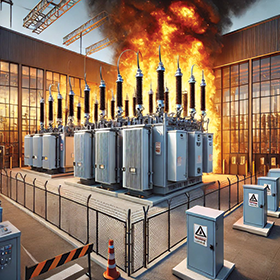
Transformer protection is not just a technical requirement; it is a vital component in ensuring the resilience and operational integrity of South Africa’s municipal power infrastructure. According to Michael van Niekerk, CEO of leading fire risk management company ASP Fire, transformers form the backbone of both corporate and municipal electricity distribution systems. When left unprotected or poorly maintained, the risks extend far beyond downtime, they can compromise entire networks, pose significant fire hazards, and result in expensive losses.
“Since transformers are such critical pieces of infrastructure, particularly in municipalities, any fault, be it an internal failure, short circuit, or thermal overload, can cause cascading outages, equipment destruction, and even endanger public safety,” explains van Niekerk.
The municipal imperative
While transformer protection is well understood in the corporate and industrial sectors, municipalities often underestimate the importance of routine inspections, proactive upgrades, and adequate fire safety planning. “Municipalities face increasing pressure to provide consistent, safe electricity. Any failure at the transformer level, especially in high-demand urban areas, can result in large-scale service disruption and public dissatisfaction,” notes van Niekerk.
Unprotected or deteriorating transformers are more likely to overheat or suffer from insulation breakdown, especially when exposed to fluctuating loads or external fire sources. These scenarios are entirely preventable with appropriate design, fire safety integration, and periodic evaluation of the infrastructure.
Transformer fluids and installation configurations
Van Niekerk outlines that not all transformers are created equal. “You will find oil-filled transformers using combustible mineral oils, dry-type transformers with gas insulation, and others filled with less flammable fluids. Each of these types comes with unique risk profiles and requires specific fire safety interventions, especially when installed near buildings or other electrical equipment.”
International best practices such as FM Global Property Loss Prevention Data Sheets and local guidelines from SANS, NERSA, and NRS form the benchmark for effective transformer protection. However, van Niekerk points out that local standards often fall short in critical aspects such as minimum safety distances between transformers and buildings, and the proper containment of flammable transformer fluids in the event of leaks.
“FM Global standards specify that transformers with less than 1900 litres of ignitable oil must be placed at least 7,6 m from exposed combustible walls. This distance can be reduced if fire-rated construction or barriers are used, but the principle remains; space and fire resistance save infrastructure,” he explains. In addition to horizontal separation, vertical separation is crucial. Fire-rated walls must extend at least 7,6 m above the transformer when adjacent structures lack fire-resistant construction.
The cost of complacency
Neglecting transformer maintenance and fire safety planning can be devastating. Municipal clients that fail to conduct regular inspections or ignore ageing infrastructure may face grid instability and extended service outages, fire damage to adjacent properties or substations, regulatory fines or compliance issues, expensive equipment replacement and insurance costs, and reputational damage and erosion of public trust.
“ASP Fire is uniquely positioned to assist municipalities with both passive and active fire protection solutions for transformers, whether indoors or outdoors, be it in solar energy installations or backup power facilities,” says van Niekerk. This ensures compliance, improves safety, and enhances the reliability of essential electrical infrastructure. “Regular inspections and upgrades of transformer protection systems are not optional, they are essential investments in public safety and energy security,” concludes van Niekerk.






© Technews Publishing (Pty) Ltd | All Rights Reserved
 printer friendly version