


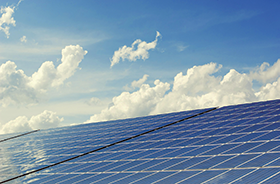
As the global energy sector races to meet net-zero commitments, utility-scale solar is undergoing a fundamental transformation. No longer defined by megawatt capacity alone, solar projects are now being evaluated on their ability to deliver dispatchable power, enhance grid stability, and provide critical ancillary services. Nowhere is this evolution more pronounced than in Africa, particularly South Africa, where the Just Energy Transition is accelerating the shift towards resilient, grid-integrated renewable energy.
“Across the continent, and especially in South Africa, we are seeing a strategic move away from variable-only generation,” says Jaco Uys, SVP Projects Sub-Sahara Africa at Scatec. “What matters now is whether a project can deliver clean energy consistently on demand day or night. This means thinking beyond solar panels, to fully integrated energy systems.”
South Africa’s Eskom-constrained grid has spotlighted the urgent need for firm, responsive power. Grid compatibility is no longer optional – it is central to energy planning. As Independent Power Producers (IPPs) are increasingly permitted to co-develop transmission infrastructure under the country’s new Independent Transmission Projects (ITP) framework, the focus is shifting to hybrid models that combine generation with advanced control technologies.
At the forefront of this movement is Scatec’s Kenhardt project, a hybrid solar-battery development in the Northern Cape. Boasting 540 MW of solar PV paired with 225 MW/1140 MWh of battery storage, Kenhardt delivers consistent dispatchable energy under a 20-year Power Purchase Agreement with Eskom.
“Kenhardt is not just a solar project,” notes Nic Bailey, SVP operational excellence and digitalisation at Scatec. “It is a demonstration of what is possible when you pair clean generation with flexible output. We are not just injecting power into the grid – we are actively supporting it.”
Both Bailey and Uys share further reflections on the state of the industry, “We are not witnessing seismic shifts in solar technology,” Bailey explained. “Instead, we are seeing incremental improvements in efficiency, equipment size, and LCOE year on year. That is a positive for IPPs like us – it allows for predictability in planning and stability in execution.”
“Amid challenges in the solar module market, the booming battery energy storage (BESS) sector is emerging as a vital growth area,” says Uys. “It is reshaping the value chain and fuelling supplier diversification.”
In this new era, solar-plus-storage is not a luxury – it is a necessity. Projects like Kenhardt prove that renewable energy can be clean, reliable, and bankable, aligning financial models with long-term energy security goals.
As South Africa continues to unlock private sector participation and modernise its energy infrastructure, the lessons from Kenhardt and other grid-resilient projects are resonating far beyond its borders. Hybrid solutions represent the next chapter in the solar story – offering not just power, but progress.
For more information visit www.scatec.com






© Technews Publishing (Pty) Ltd | All Rights Reserved
 printer friendly version