


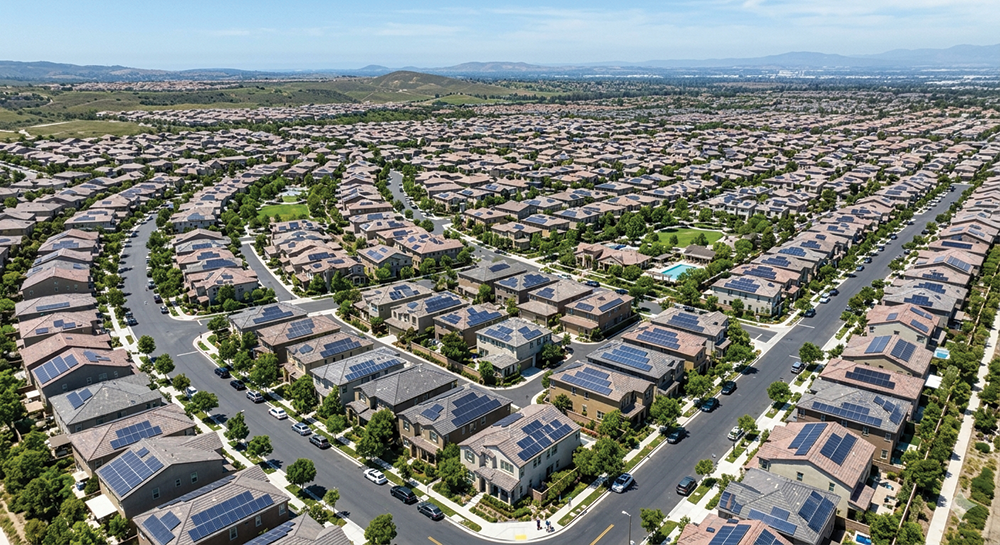
Across South Africa’s commercial property, hospitality, and leisure sectors, the solar story is well underway. Panels are on rooftops, inverters are specified, and developers are meeting compliance requirements at build stage. The generation side of the equation is largely solved.
The demand side is not. In most large-scale environments, nobody knows in real time which appliances are drawing load, when consumption peaks, or how much of the solar being generated is being used efficiently. Energy bills arrive and the conversation becomes guesswork. Faults surface late. Reporting to stakeholders, whether financial or environmental, is assembled manually, if at all.
The hardware doing the work
DIN-rail mounted load management devices, capable of measuring both power consumption and appliance temperature simultaneously, are now enabling a different approach. Installed at appliance level across a site – geysers, air conditioning units, lighting circuits – and communicating via WiFi or LoRa across environments where network infrastructure is inconsistent, these devices feed live data into centralised management platforms. Parameters are set once. The system manages itself.
Two deployments currently underway illustrate the range of application. A green leisure complex is using fleet load management devices to measure live energy consumption and environmental savings across its site - not just for internal cost control alone, but to report verified impact data back to its users. The ability to show real numbers, generated in real time, is becoming a differentiator in an environment where sustainability claims are increasingly scrutinised.
Separately, multi-property residential sites using solar are deploying the same hardware to control and manage geyser loads across buildings centrally, ensuring solar is consumed at the right time, grid draw is curtailed during peak periods, and every unit performs to the same parameters without requiring on-site intervention.
What measurement makes possible
The value of this approach becomes clearest when the data is analysed. A single smart solar geyser controller, measured over one month at a residential property in Johannesburg, recorded 89% solar usage for water heating, with grid consumption reduced to 11% and a saving of R1486 in that month alone. That is one device, one household, one month. Scaled across a managed fleet of appliances on a large site, the numbers shift from interesting to operationally significant.
For South African engineers and system designers, the opportunity is in building the electronics layer that makes this measurable, manageable, and provable. Not just installed – but evidenced. In a market where Eskom’s unreliability has made energy control a business priority rather than a sustainability aspiration, that distinction matters more than ever.
For more information contact Dark Line Technology Solutions,






© Technews Publishing (Pty) Ltd | All Rights Reserved
 printer friendly version