Quectel Wireless Solutions has announced that it has been awarded the ISO 26262:2018 Functional Safety Process Certificate by Bureau Veritas (BV), an industry-recognised third-party certification body. This milestone confirms that Quectel has successfully established a complete set of robust functional safety management process systems in accordance with ISO 26262 standards, providing continuous support for the design and manufacturing of products that adhere to international safety standards.
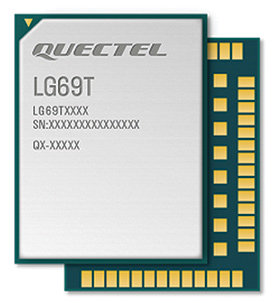
Quectel’s LG69T (AB) automotive-grade GNSS module has also received certification for meeting the stringent requirements of ISO 26262 ASIL B metrics, which underscores the ability of the LG69T (AB) to fulfil functional safety requirements, positioning it as a dependable solution for global automotive manufacturers.
Quectel’s LG69T (AB) is an automotive-grade high-precision GNSS positioning module based on the STMicroelectronics Teseo APP platform. When combined with multiple positioning technologies such as real-time kinematic (RTK) and dead reckoning (DR), this dual-frequency module can achieve centimetre-level positioning accuracy, nanosecond-level real-time response, and time and position sharing between vehicles.
The LG69T (AB) features over 40 safety mechanisms encompassing temperature detection, tracking channel checks, signal quality monitoring, voltage monitoring, and antenna monitoring, ensuring continuous monitoring of the module’s complete health status.
Norbert Muhrer, president and CSO of Quectel Wireless Solutions, commented, “Securing ISO 26262 certifications marks a significant milestone in Quectel’s commitment to delivering top-tier products and services to the global automotive market. With these certifications, our LG69T (AB) module, and forthcoming products, will play a pivotal role in advancing vehicle safety and the evolution of autonomous driving. Moving forward, we remain dedicated to creating more automotive-grade products that meet safety standards, contributing to the ongoing development of the intelligent driving industry.”
Wireless connectivity expanded iCorp Technologies
Telecoms, Datacoms, Wireless, IoT
Espressif Systems has introduced two new members of its ESP32 wireless SoC family: the ESP32-E22, the company’s first Wi-Fi 6E connectivity chip, and the ESP32-H21, an ultra-low-power Bluetooth LE microcontroller aimed at coin-cell and battery-powered devices.
Read more...Integrated X-band radar front-end module RF Design
Telecoms, Datacoms, Wireless, IoT
Qorvo has introduced an X-band radar front-end solution that enables defence system designers to achieve higher performance without increasing size, weight or prime power.
Read more...Introducing Aurata CST Electronics
Telecoms, Datacoms, Wireless, IoT
Antenova has launched Aurata SR4L112: a compact, high efficiency embedded 4G/LTE antenna engineered for long, narrow PCB designs.
Read more...Multi-constellation GNSS module in a legacy-compatible footprint Altron Arrow
Telecoms, Datacoms, Wireless, IoT
Telit Cinterion has announced the SE869eK2L, a single-frequency L1 GNSS module designed to help device manufacturers upgrade legacy positioning designs with improved performance and cost efficiency, while preserving design continuity.
Read more...Quectel expands 5G portfolio iCorp Technologies
Telecoms, Datacoms, Wireless, IoT
Quectel expands 5G portfolio with new Qualcomm- and UNISOC-based modules.
Read more...Compact RTK design: More than just the receiver iCorp Technologies
Editor's Choice Telecoms, Datacoms, Wireless, IoT
In practice, engineers building compact RTK products keep discovering the same thing: the hardest component in the system is no longer the receiver. It is the antenna.
Read more...Microchip advances Space-Grade timing performance ASIC Design Services
Telecoms, Datacoms, Wireless, IoT
Microchip Technology has expanded its atomic clock portfolio with the radiation-tolerant Space CSAC-SA65, a Chip Scale Atomic Clock designed to deliver precise timing for space systems.
Read more...Channel emulator for 6 G and Wi-Fi 7/8 Concilium Technologies
Telecoms, Datacoms, Wireless, IoT
With 400 MHz instantaneous bandwidth and support for carrier frequencies up to 23,6 GHz, Vertex 6.0 is the industry’s first channel emulator designed for next generation 6 G and Wi-Fi 7/8 testing.
Read more...Secure, low-power Bluetooth LE SoC NuVision Electronics
Telecoms, Datacoms, Wireless, IoT
Silicon Labs unveils BG2B, its lowest-power Bluetooth LE SoC with industry-leading power efficiency, security, and integration.
While every effort has been made to ensure the accuracy of the information contained herein, the publisher and its agents cannot be held responsible for any errors contained, or any loss incurred as a result. Articles published do not necessarily reflect the views of the publishers. The editor reserves the right to alter or cut copy. Articles submitted are deemed to have been cleared for publication. Advertisements and company contact details are published as provided by the advertiser. Technews Publishing (Pty) Ltd cannot be held responsible for the accuracy or veracity of supplied material.









 printer friendly version