


Since the introduction of the X10 communications protocol in 1975, which was designed for data communications over AC power lines in buildings, many wired and wireless networking protocols have emerged to meet the needs of various applications in this sector.
Examples used in building automation include KNX, an open standard based on the European Installation Bus (EIB) communication stack. The digitally addressable lighting interface standard, DALI, is used almost exclusively in industrial and commercial lighting control systems. Zigbee and Z-Wave are competing encrypted protocols developed for smart homes and other buildings, and are the first to really leverage mesh networking. Industry alliances were formed to promote all these standards and ensure interoperability within their respective ecosystems, but not interoperability between them.
In 2015, the Thread consortium was formed. Its goal was to create an IPv6-based wireless protocol for delivering secure, robust, reliable and easy-to-use networks. Being IP-based, Thread devices can connect directly to IP-enabled hubs, routers, smartphones, tablets and other devices. Thread simplifies network design by removing the need for central hubs or bridges.
Matter takes this concept further. The Connectivity Standards Alliance (CSA) positions Matter as ‘The foundation for connected things’ and describes it as an IP-based protocol to connect compatible smart home devices and systems, mobile apps and cloud services.
The Matter project started in late 2019, and the first edition of the standard was published on 4 October 2022. Version 1.2 was released a little over a year later, on 23 October 2023, expanding support for more home devices.
The smart home is still an emerging market
The opportunity for smart home growth drives Matter. The demand was created in 1975, but it wasn’t until 2023 – nearly half a century later – that analysts concurred that over half the homes in developed economies were using at least one smart device.
But that could mean just one smart speaker, a connected thermostat, or networked utility meter per home. A single smart device hardly demonstrates that the smart home dream has come true. Unacceptable complexity for users and lack of interoperability have been cited as the two main barriers to delivering smarter homes. Matter looks to address these issues and drive the smart home market to greater maturity.
What is Matter?
The logic behind Matter is simple: it’s an application layer protocol that works on any IPv6 network and provides support for Ethernet, Wi-Fi and Thread mesh networking. This is important because products and services from different vendors using Matter will now communicate seamlessly, eliminating many proprietary hubs and protocol translation requirements.
The Matter project is a collaborative effort lead by the CSA (Connectivity Standards Alliance) between Amazon, Apple, Samsung SmartThings and leading semiconductor manufacturers. These companies see Matter as a way of accelerating the growth of the smart home market by making device development easier, giving consumers a greater choice of compatible smart home products and services, and making home networks easier to understand and use.
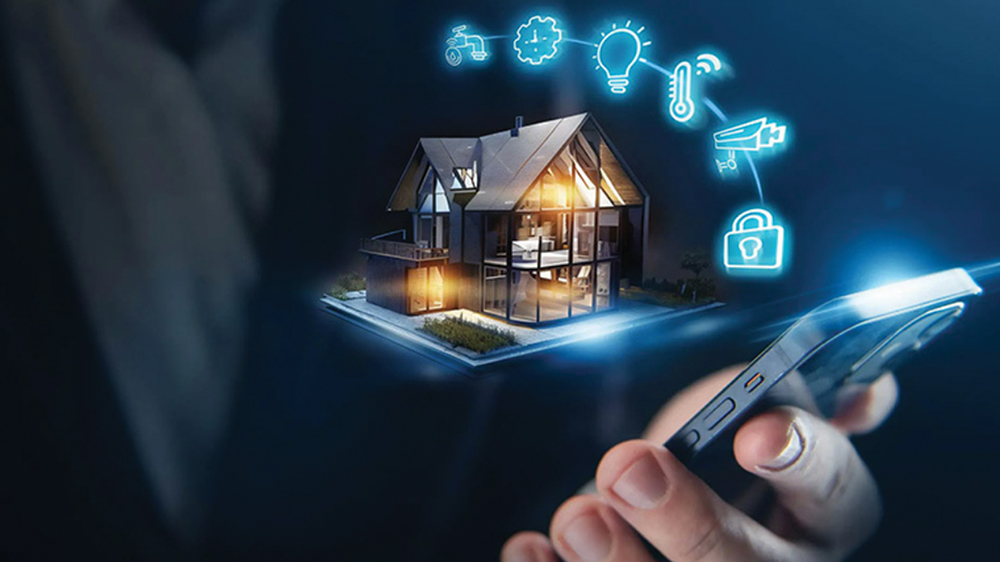
From door locks to fridges, robot vacuum cleaners to security cameras, using Matter should mean consumers only need one app and controller to manage and monitor all the smart devices in their homes, instead of one per ecosystem. There is now at least one Matter-compatible smart EV charger available, as part of a home energy management system.
Support for Wi-Fi and Ethernet is particularly significant because most smart home protocols were designed for devices that operate at low data rates. Smart utility meters are a good example. However, high-definition video from cameras demands high bandwidth connectivity, and Matter is the first protocol suited to both types of data.
Many homes already have one or more Matter controllers, even if they’re not labelled as such. For example, most hubs, displays, and smart speakers from Amazon, Apple, Google, and Samsung running the latest software versions include this functionality. Matter is also built into Android and iOS operating systems, which means smartphones and tablets can be used to control Matter-enabled home network devices.
Semiconductor companies are embracing Matter
From the outset, semiconductor companies saw the opportunity that Matter offers. The project now enjoys the support of around 200 firms. Almost every smart home device is based on a microcontroller (MCU) or a system-on-chip (SoC), and Matter source code is freely available on GitHub. Avnet Silica’s engineers help make it easy for its semiconductor supplier partners to support Matter-enabled product design.
Many homes will have smart devices that have been added over time, and consumers will be reluctant to ditch existing products. To that end, software development kits support bridging between Matter-enabled and non-Matter-enabled devices, eliminating another potential barrier to adoption. Of course, developers will need to write the code to integrate the Matter API into their solution and handle data transfers from the home system to the Matter API. Once done, everything in the smart home environment can be controlled using just one platform, irrespective of the ecosystem or manufacturer.
How much progress has the Matter protocol made?
Every new protocol has limitations and imperfections, at least at the outset. In less than two years, Matter has made remarkable progress as an enabling technology for smart homes. It could be argued that this technology has done more for the smart home than any other development since X10 in 1975. It’s the breadth of devices supported by Matter, and the subsequent transformation of the customer experience, that validate this as a breakthrough.
At the Embedded World show in Nuremberg in April 2024, Avnet Silica demonstrated how solutions from H&D; Wireless, Nordic Semiconductor, NXP, Panasonic Industry, STMicroelectronics, and U-blox can work together, thanks to Matter’s interoperability across platforms and devices.
An Apple HomePod, Google Nest Hub, and Amazon Echo were shown running Matter over Thread to control a range of devices. These included a Panasonic board based on a Nordic Semiconductor chipset, and NXP and ST boards, all with Bluetooth connectivity. A Nordic Semiconductor weather station that transmitted its data to other devices using Matter over Wi-Fi was also shown.
The demonstration emphasised IoT security, which is inherent in using Matter over Thread. This highlighted the future-proof nature of the open-source philosophy that underpins Matter.
According to data aggregator Statista, the smart home market will be worth $154,4 billion in 2024, rising at a compound annual growth rate of 10,67% to hit $231,6 billion by 2028. Household penetration of the technology will rise from 18,9% to 33,2% over that period, the firm says. There seems little doubt that Matter will be instrumental in making these predictions come true.
| Tel: | +27 11 319 8600 |
| Email: | avnet-silica-sales-southafrica@avnet.eu |
| www: | www.avnet.com/wps/portal/silica |
| Articles: | More information and articles about Avnet Silica |






© Technews Publishing (Pty) Ltd | All Rights Reserved
 printer friendly version