

Manufacturing / Production Technology, Hardware & Services


New hybrid handheld rework system - Part II

30 April 2008 Manufacturing / Production Technology, Hardware & Services

This is the second part of an article describing an innovative hybrid rework system from ERSA. Part one was published in the 16 April 2008 issue of Dataweek.

With the Hybrid Rework System HR100, IR radiation heat transfer is combined and enhanced via a precise amount of hot air. This unique hybrid tool can uniformly, safely and rapidly heat components ranging from 0201s up to SMD sizes larger than 20 x 20 mm. Three exchangeable hybrid adapters focus up to 200 W of heating power from the hybrid heating element, while neighbouring components remain protected from overheating and blowing away.

Homogenous heat radiation in the medium wavelength IR range, paired with gentle but concentrated convection, provides a unique mix for efficient rework soldering. For the small surfaces of modern CSP, QFN and MLF components, this combination of heating technologies provides ideal conditions for efficient heat transfer.

When compared to larger IR systems, the surface area profile of the radiation is quite small. Due to the shortened working distance to the component and the convective portion, however, the efficiency of the hybrid heat transfer is comparable or even superior to semi-automated IR machines (see Figure 4). Efficient and safe rework with the temperature gradients recommended by IPC is now possible with this bench-top unit.
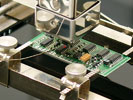
Figure 4. HR 100 directs heat energy  very close to the SMD
Figure 4. HR 100 directs heat energy very close to the SMD

With this innovative technology, ERSA has now bridged the gap between 'tools' and 'machines' with respect to rework. In general, bench-top rework applications are conducted by operators using a variety of handheld tools in order to complete their work quickly and safely. A hot air gun is frequently one of these tools, found on bench-tops around the globe. Such tools offer on the one hand quick and simple heating of SMDs, but on the other hand pose the serious risk of blowing away neighbouring chips. The hybrid tool offers all the advantages of a handheld hot air gun without the disadvantages. Flexibility combined with safety and process control are the value-added benefits of this new technology.

With the help of an integrated laser pointer in the ergonomic handle, the user focuses the hybrid heat energy to the component being worked without damaging the assembly housing. Even demanding repairs or component exchanges, for example, if the board is still inserted in the assembly housing, can be carried out without difficulty and safely with the hybrid tool (see Figures 5 and 6). This results in tremendous time savings for operators as they are no longer required to remove the PCB from its housing in order to perform rework.
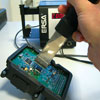
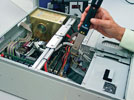
Figures 5 and 6. Problem-free and safe reworking on boards that are still installed in the assembly housings

Unlike hot air guns which require a myriad of different nozzles, the hybrid tool only needs three adapters and these are included standard with the system (see Figure 7). The visible countdown timer on the HR 100 offers operators the simplest form of process control which can be expanded upon to include closed-loop temperature profiling with an optional thermocouple (see Figure 8).
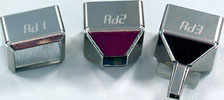
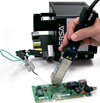
Figure 7. Three hybrid adapters are available for various component sizes

Figure 8. Closed-loop temperature profiling of PCB during rework

The HR 100 is a very flexible, low-cost solution for both beginners and advanced operators. When combined with the optional IRHP 100 (see Figure 9), however, this bench-top system can be expanded to offer many of the features seen in larger and more expensive rework machines. The Z-axis, height-adjustable tool holder for the hybrid tool and the X-Y PCB holder offer repeatable, machine-like results.
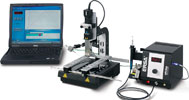
Figure 9. ERSA HR 100 and ERSA IRHP 100 set with laptop (not included)

The powerful and highly reactive 800 W infrared heating plate guarantees safe, bottom side, closed-loop heating of the assembly during rework. This additional power from the bottom combined with the efficient hybrid heating technology allows operators to handle the most difficult, heavy mass rework applications where hot air fails. Figures 10 and 11 depict a heavy mass SMD with a ground plane which has been desoldered from a ceramic plate attached to an aluminium carrier.
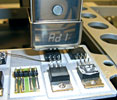
Figure 9. ERSA HR 100 and ERSA IRHP 100 set with laptop (not included)

Via a mini USB port, it is possible to connect the HR 100 to the tried and trusted ERSA IRSoft rework software platform which is used for all ERSA rework machines. This opens up new possibilities for operating this bench-top system.

The hybrid system now bridges the gap between rework tools and rework machines. In the same way as for the larger rework systems, the HR 100 can run a closed-loop, temperature-controlled process and document this completely via the IRSoft and PC interface (see Figure 12). Individual parameter settings, ramp-guided temperature profiles, 2-channel temperature recording and process documentation are all possible. Finally, password lockout and user administration rights offer a level of process safety not seen with hand-held or bench-top rework units.
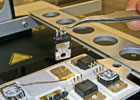
Figures 10 and 11. Heavy mass ceramic and aluminium SMD removal

Conclusion

Hybrid rework is not simply a fancy marketing slogan but rather the start of a new era for bench-top rework. The patented ERSA Hybrid Rework System HR 100 combines infrared and convection heating in a handheld device for safely soldering and de-soldering densely packed SMDs. Simplicity, flexibility, process control and documentation are the four pillars upon which this new technology is based.


Credit(s)


Share this article:
Share via emailShare via LinkedInPrint this page

Further reading:

Outscale your competition
Manufacturing / Production Technology, Hardware & Services
Attendees will be able to explore the benefits of AMD Kintex UltraScale+ Gen 2 FPGAs in high-performance Pro AV, test & measurement, industrial, and medical applications.

Read more...
MTN SA Foundation drives youth pathways into the digital economy
Manufacturing / Production Technology, Hardware & Services
The MTN SA Foundation, in partnership with Helios Towers and Datacomb Development Hub, has launched the MTN–Helios Towers 12-month ICT Learnership Programme, a pathway that takes young South Africans from digital training into real workplace experience.

Read more...
Downstream demand, system reliability, and the expanding role of engineering-led distribution
Manufacturing / Production Technology, Hardware & Services
[Sponsored] As South Africa’s semiconductor demand continues to be shaped by downstream system deployment rather than upstream fabrication, the importance of engineering-led distribution will continue to grow.

Read more...
The impact of harsh environments and ionic contamination on post-reflow circuit assemblies
MyKay Tronics Manufacturing / Production Technology, Hardware & Services
There is well documented historical proof that post-reflow circuit assemblies, when subjected to harsh environments, are particularly vulnerable to failure mechanisms, but modern electronic assemblies are far more susceptible to this phenomenon.

Read more...
Engineering copper grain structure for high-yield hybrid bonding in 3D packaging
Testerion Editor's Choice Manufacturing / Production Technology, Hardware & Services
The way copper grains are sized and distributed forms the metallurgical foundation of hybrid bonding, enabling lower bonding temperatures, greater reliability, and stable grain structures throughout integration.

Read more...
Understanding solder dross: causes and control strategies
Truth Electronic Manufacturing Editor's Choice Manufacturing / Production Technology, Hardware & Services
Dross formation is an inevitable consequence of wave soldering. It occurs when molten solder comes into contact with oxygen, forming metal oxides that float on the surface of the solder bath. Over time, this oxidation byproduct accumulates and must be removed to maintain solder quality and process consistency.

Read more...
Non-destructive techniques for identifying defects in BGA joints – TDR, 2DX, and cross-section-SEM comparison
MyKay Tronics Manufacturing / Production Technology, Hardware & Services
This whitepaper reports the results of a comparison of the following techniques: TDR, automatic X-ray inspection (AXI), transmission X-ray (2DX), cross-section/SEM, and Dye & Pry.

Read more...
Implications of using Pb-free solders on X-ray inspection of flip chips and BGAs
MyKay Tronics Manufacturing / Production Technology, Hardware & Services
With the move to Pb-free soldering, most of the attention has been paid to reflow temperatures, component compatibility, and reliability concerns, but the implications for inspection, particularly X-ray inspection, are equally important and often underestimated.

Read more...
The causes of solder balls in robotic soldering
Manufacturing / Production Technology, Hardware & Services
Solder balls (also known as solder splatter) are a major concern in many production sites as they may potentially cause shorts, leading to long-term impacts on product reliability.

Read more...
Material challenges for superconducting quantum chips
Manufacturing / Production Technology, Hardware & Services
To achieve the scalable and repeatable production of superconducting circuits for quantum technology products, players in the industry are leveraging semiconductor fabrication techniques.

Read more...


While every effort has been made to ensure the accuracy of the information contained herein, the publisher and its agents cannot be held responsible for any errors contained, or any loss incurred as a result. Articles published do not necessarily reflect the views of the publishers. The editor reserves the right to alter or cut copy. Articles submitted are deemed to have been cleared for publication. Advertisements and company contact details are published as provided by the advertiser. Technews Publishing (Pty) Ltd cannot be held responsible for the accuracy or veracity of supplied material.


© Technews Publishing (Pty) Ltd | All Rights Reserved

